
Introduction:
Every hour your machine sits waiting on a heat treatment cycle is an hour you’re paying for nothing. Manufacturers and machinists face constant pressure to cut lead times without dropping part quality. For them, prehardened steel isn’t just a material choice — it’s a process decision that changes your entire production economics.
So why does prehardened steel reduce machining time and costs? The answer goes beyond the spec sheet. Look at what happens on the shop floor: fewer steps, tighter tolerances held the first time, and tool life that doesn’t fail you mid-run. The sections below break down the real mechanics behind those gains — and where they matter most.
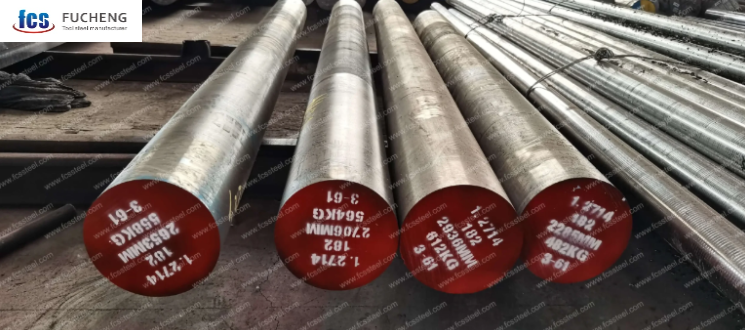
How Prehardened Steel Cuts Machining Time and Costs
The numbers are clear. Studies comparing prehardened tool steel against conventional grades show a 16% reduction in overall machining time. Run the full cost breakdown, and the savings add up fast.
Here’s a real example. One component made with Toolox 33 prehardened steel versus conventional W.Nr. 1.2312 steel delivered a 23% cost reduction — a €1,404 savings (from €6,130 down to €4,726). That gap held even when the conventional steel blank came at zero cost.
So what drives those numbers?
- No heat treatment steps — no stress relieving, no trips to outside facilities, no waiting around
- Single-setup machining — parts run start to finish without repositioning
- Better dimensional stability — tighter tolerances hit the first time, less scrap
- Lower tool wear — high thermal conductivity and strong ductility help your tooling last longer
Prehardened steel also ships with consistent, known mechanical properties. You know exactly what you’re working with before the first cut. That predictability cuts a hidden cost most shops never track: rework and scrap caused by heat treatment variability. Most shops absorb that cost quietly — prehardened steel removes it entirely.
What Makes Prehardened Steel Different?
- Fully Heat-Treated Before Delivery: The manufacturer handles the heating (800–900°C), quenching, and tempering. The steel arrives at your shop already sitting between 30–45 HRC (typically 28–45 HRC, depending on grade and condition).
- Zero Post-Machining Distortion: Standard annealed steel arrives soft (under 20 HRC) and must be hardened after you cut it—which is exactly when parts warp and tolerances drift. Prehardened steel eliminates this risky, scrap-producing step entirely.
- Smart Chemistry for Machinability: Specialized alloys like 4140PH use chromium-molybdenum and 0.4% carbon to balance serious toughness with workability. You can still easily turn, mill, and drill it.
- Ready for Immediate Use: You get locked-in, consistent mechanical properties right off the machine, saving you both the time and budget usually wasted on secondary heat treatments.
Prehardened vs. Standard Steel in Practice
- Pre-hardened Steel: Ready to machine and ready to use because no post-machining heat treatment is required. It holds its shape with superior dimensional stability and wins outright on wear resistance by handling friction and fatigue immediately.
- Standard Steel: Easy to machine but requires hardening afterward which adds warping risk and extra cost. It tends to move under thermal stress and handles friction or fatigue poorly in its soft state.
Eliminating Heat Treatment to Save Machining Time
Post-machining heat treatment steals days from your production schedule. Prehardened steel cuts this entire step out of your workflow. Skipping this process saves immense time. Here are the main reasons why:
- Zero furnace waiting: Normal stress relief burns 2 to 4 hours per batch. You cannot rush the slow cooling process. Prehardened steel bypasses this hold-up. You keep production moving fast.
- No outsourcing delays: Lacking an in-house furnace creates major delays. You must box, ship, and process parts at an outside shop. Then you wait for the return delivery. That adds full days of idle time. Prehardened material keeps the job right on your floor.
- Eliminates warpage risk: Heating metal right after precision machining causes tolerances to drift. Prehardened steel prevents thermal stress after cutting. Your dimensions stay locked in place. You get reliable parts every time.
- Stops inspection and rework: You stop wasting time checking for heat distortion. You also avoid fixing warped parts. The part finishes on the CNC machine and moves straight to the next stage.
Prehardened Steel Locks in Dimensional Stability
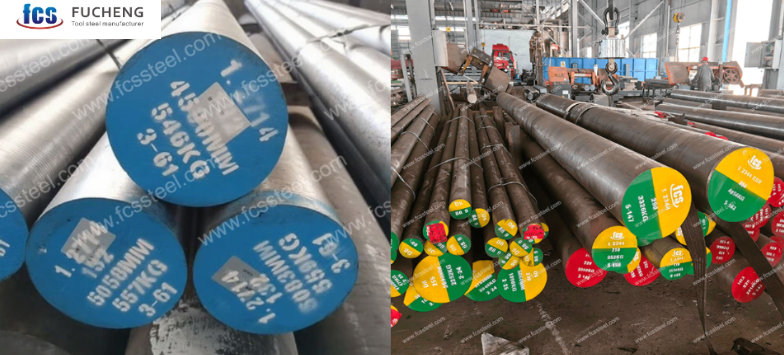
Dimensional instability is a quiet profit killer. When a finished die warps or a mold tolerance suddenly drifts, you have already paid for the damage. Conventional tool steels inherently change shape during post-machining heat treatment, but prehardened grades remove this variable entirely.
Here is what actually happens at the material level:
| Material State | Dimensional Behavior | Microstructure Risk |
|---|---|---|
| Standard Tool Steel | Warps and grows during the hardening process after you cut it. | Retained austenite (RA) is left behind, causing slow, unpredictable expansion over time. |
| Prehardened Steel | Holds the original machined dimensions perfectly from start to finish. | Transformation is fully completed at the mill. Minimal retained austenite (RA), reducing long-term dimensional drift |
In short: “You can’t hold a perfect tolerance if the steel itself wants to move tomorrow. Because prehardened tool steel finishes its structural transformation before it ever reaches your spindle, the dimension you cut today is the exact dimension you keep.”
Higher Cutting Speeds and Fewer Tool Changes
Prehardened grades—especially M-Steel variants—actually form a protective layer on your cutting tool while it spins. This blocks chemical wear and stops your cutter edges from chipping. You can push cutting speeds up by 50%, but your expensive inserts don’t burn out quickly.
Look at a real dry-cutting baseline test run at 272 m/min:
- Standard 42CrMo4: The tool degraded and failed in just 56 seconds.
- Prehardened M-Steel: Held out for 6 full minutes of continuous cutting.
You basically reverse the usual machining rules. You gain spindle speed, save money on carbide, and finally stop pausing jobs for mid-run tool swaps.
Cut Production Costs
1. Compare Your Cost Savings
| Use Case | Prehardened Steel Impact | Proven Savings |
|---|---|---|
| Deep Drawing Tools | Cost per piece drops by 37.5% | Lower labor and cycle costs |
| Forging & Casting | Saves $0.35 per pound of steel | $70 Million saved across 200 million lbs |
2. Tool Life and Less Downtime
| Production Stage | Standard Steel | Prehardened (e.g., P20, 718H) |
|---|---|---|
| Heat Treating | Outside fees and furnace wait times | Ready to use on delivery. No extra steps. |
| Tool Wear | Frequent insert failures and chips | Better wear and metal fatigue resistance |
| Machine Stops | Routine blocks for machine resets | Fewer unexpected stops and checks |
Key Takeaway: The math is simple. You cut out furnace bills. You also stop waiting on shipping delays. Prehardened grades improve wear resistance. You skip heat treatment after machining. Plus, your tools last twice as long without resets. This drops your overall cost-per-part as order volume grows.
Best Applications of Prehardened Steel
Prehardened steel cuts production costs in high-stress jobs. You save money and time right from the start. Look at the top uses below:
- Die and mold manufacturing: Toolmakers use this material for injection molds and extrusion dies. You skip heat treatment after fabrication entirely. This process locks in tight tolerances. Plus, it often doubles the life of your cutters.
- Automotive and heavy industry: Try this metal for crankshafts, gears, and mining crusher parts. Your parts skip the post-hardening phase. So, they avoid warping risks completely. They also stand up to heavy, constant impacts.
- Oil and gas operations: Use this steel for drill collars and downhole tools. The metal handles extreme pressures and sudden temperature swings. It does all this without causing schedule delays.
- Industrial machinery and aerospace: Builders use it for turbine parts and generator shafts. You get stable mechanical strength straight off the machine. The material firmly holds its shape under intense stress.
Choosing the Right Grade
Grade selection is where the real leverage lives. Pick the wrong hardness range and you swap one problem for another. You either chase machinability at the cost of performance, or fight tool wear on material that’s harder than your job needs.
The table below shows what changes as hardness climbs:
| Condition | Hardness (HRC) | Tensile (MPa) | Elongation (%) | Machinability |
|---|---|---|---|---|
| Annealed | 18–22 | 655 | 25% | Excellent |
| Prehardened | 28–32 | 965–1,030 | 17% | Good |
| Quenched/Tempered | 30–50 | 1,250+ | 12% | Fair |
Match Hardness to the Operation First
28–32 HRC is the sweet spot for most prehardened work. Think fixtures, dies, molds, and precision shafts. 4140 prehardened hits this range: tensile strength 965–1,030 MPa, yield 760–850 MPa. Positive-rake carbide with sharp edges cuts it well. Grades like HPM38 and 1144 (HRC 30) fall in the same zone and offer strong free-machining characteristics.
Go up to 30–36 HRC for CNC precision work that needs a tighter balance between strength and toughness. Above 35 HRC, switch to PCBN or PCD tooling. Above 45 HRC, plan for grinding or EDM.
The core rule: use the lowest hardness that meets your strength requirement. That one choice protects tool life and keeps production running at full efficiency.
Conclusion
The numbers make sense. Prehardened steel skips heat treatment delays. It keeps your parts accurate. Your tools last much longer too. You get more than just raw metal. You win back machine hours. This protects your profit margins.
We offer top-grade prehardened tool steel at FCS. These specific grades cut your cycle times. They stop bad parts right at the source. Stop paying for furnace wait times. Forget about scrapped materials.
Ready to cut costs? Contact FCS today. Send us your current job specs. Our team will pick the right grade for your exact needs. This maximizes your savings