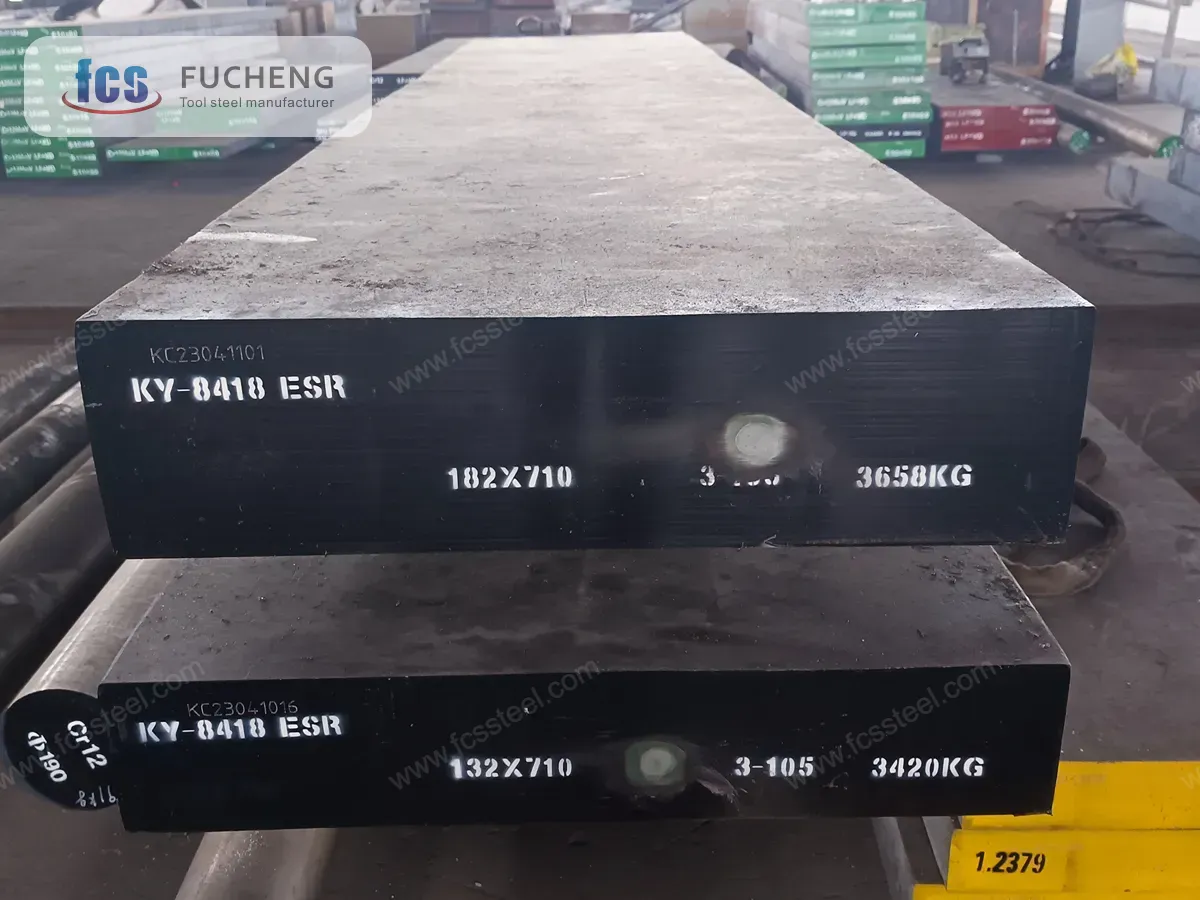
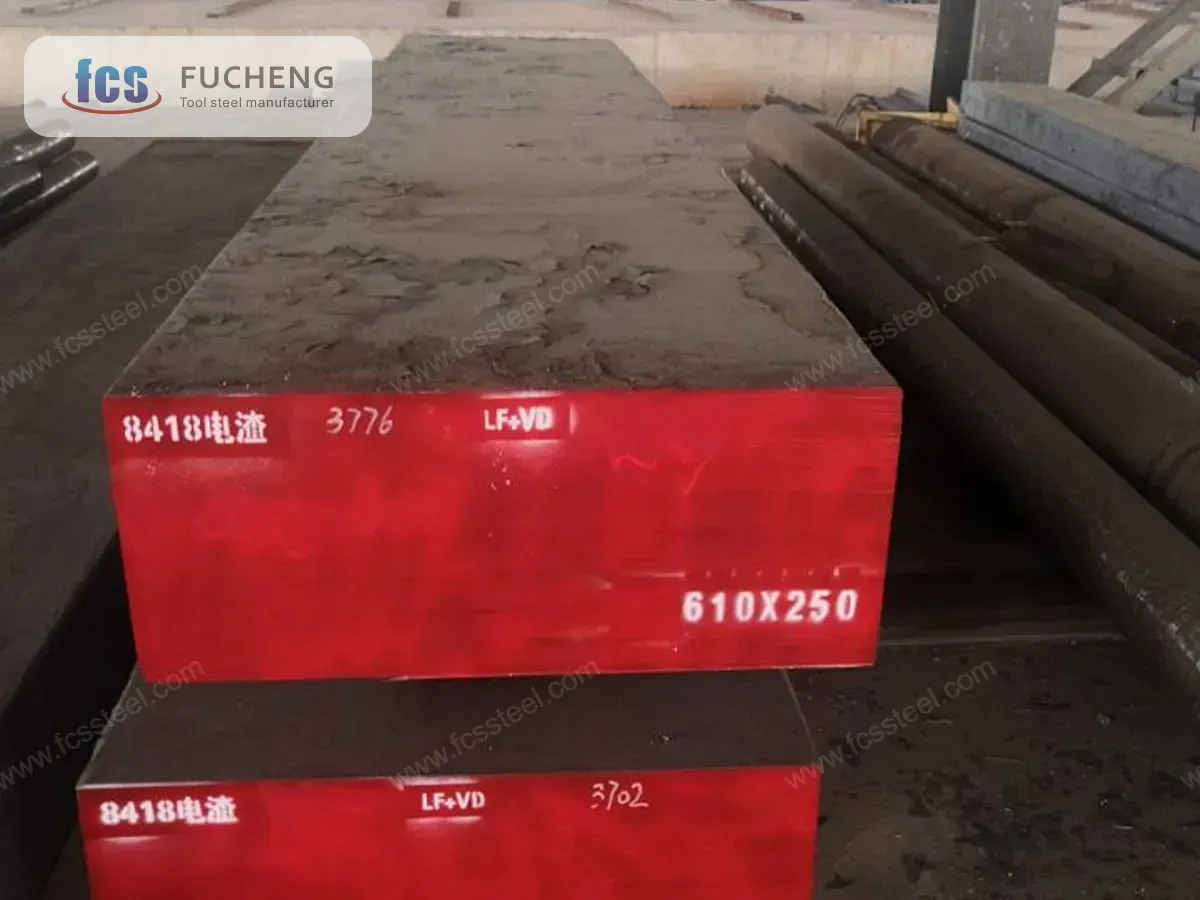
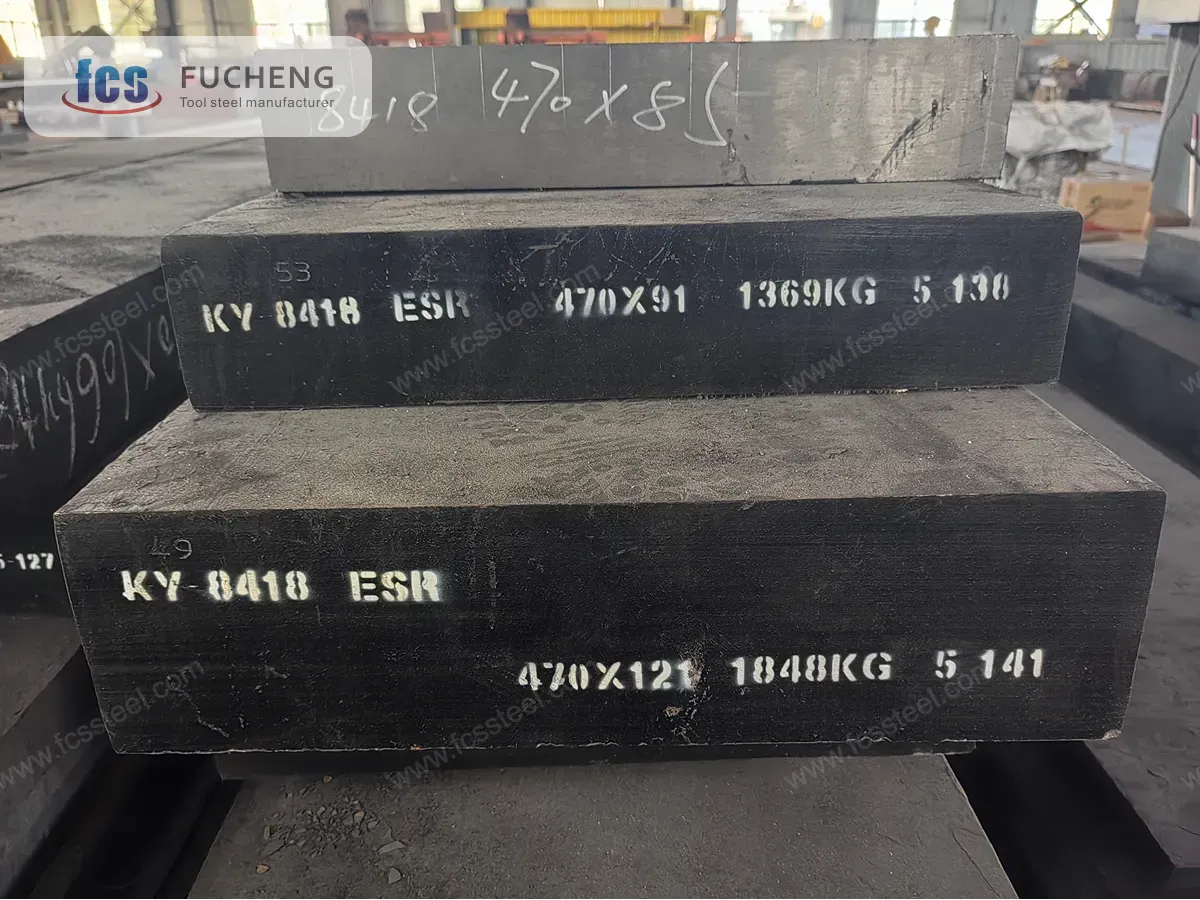
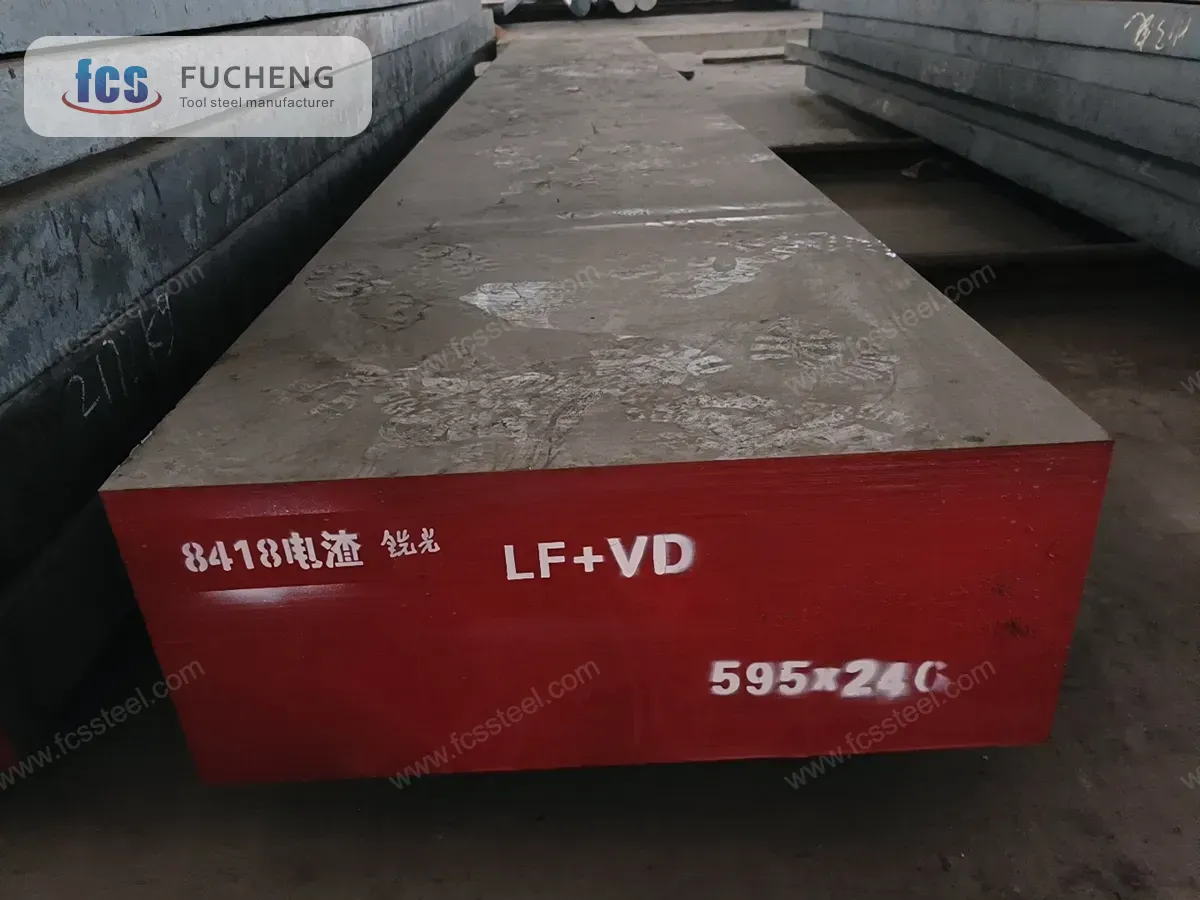
FCS 8418 Tool Steel
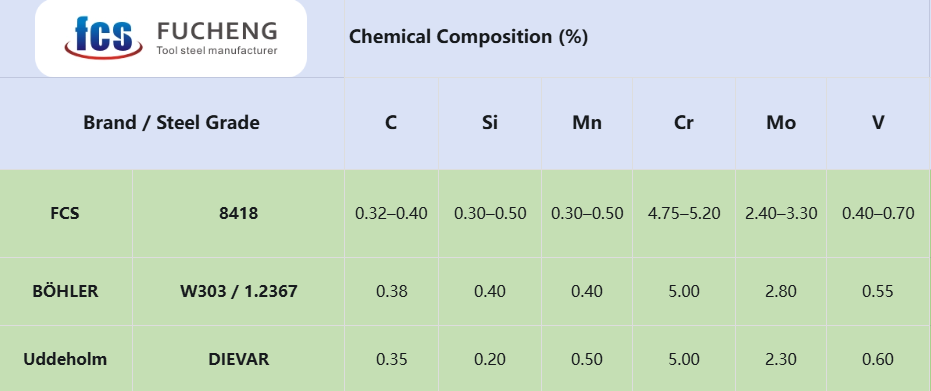
FCS 8418 is a chromium-molybdenum-vanadium hot work tool steel for die-casting molds, hot-forging dies and hot-extrusion tooling. Reference materials include DIN/W-Nr. 1.2367, BÖHLER W303 and Uddeholm DIEVAR, listed for comparison rather than as exact equivalents. It is supplied under the FCS brand and is not original ASSAB, BÖHLER or Uddeholm material.
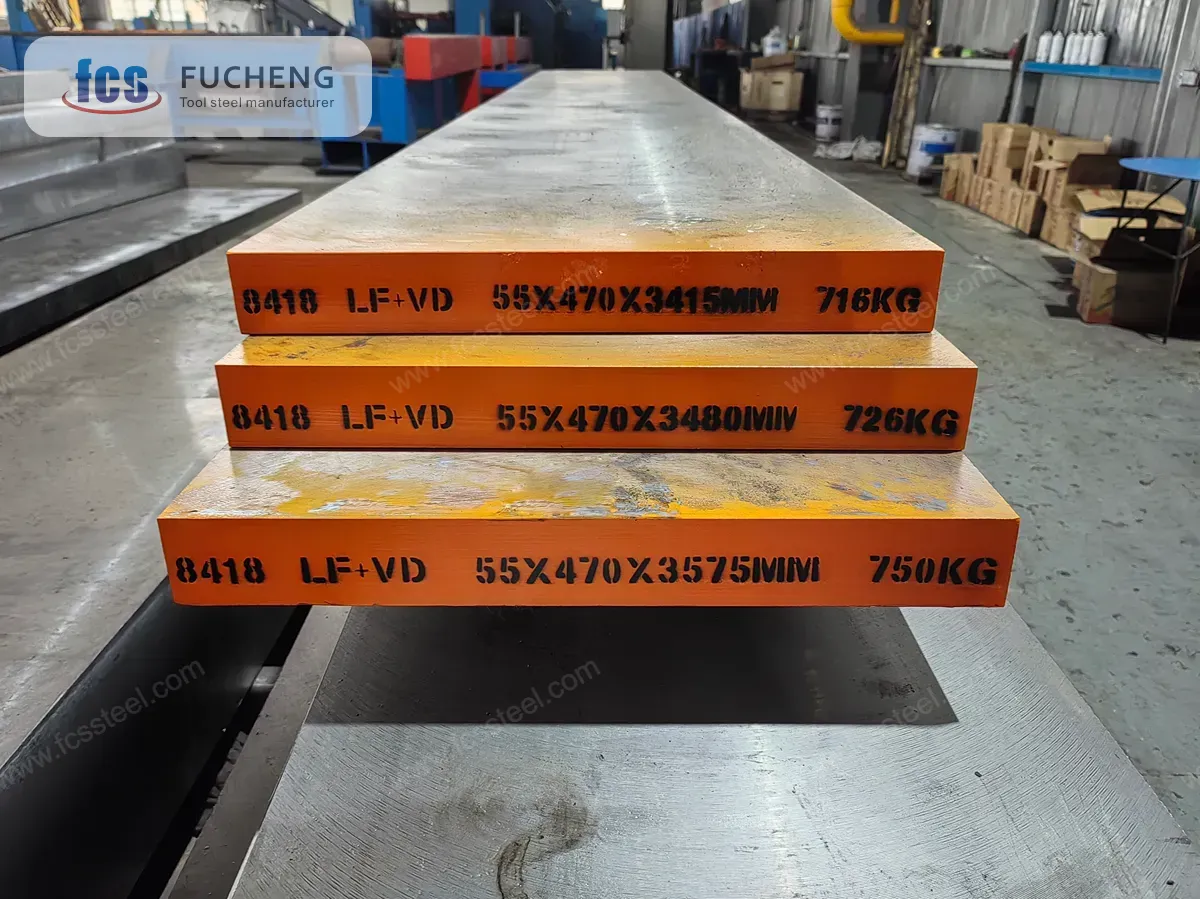
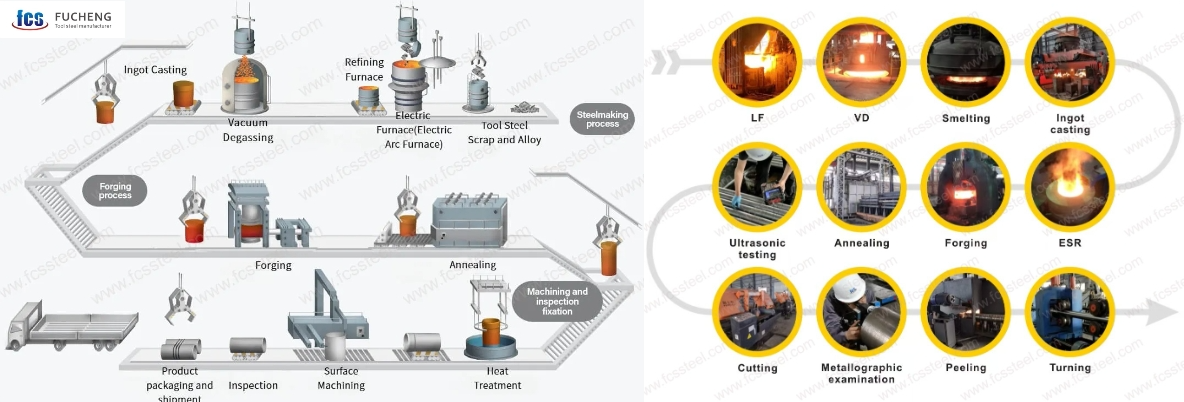
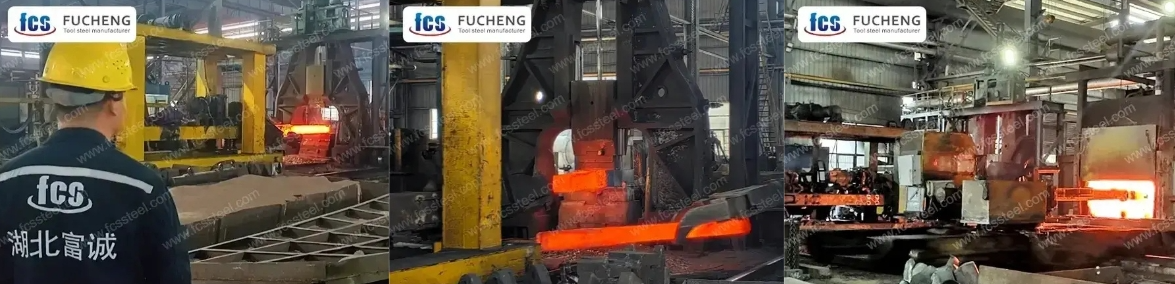
The published FCS 8418 production route includes ladle refining (LF), vacuum degassing (VD), electroslag remelting (ESR) and forging. The material is supplied in the annealed condition with a listed delivery hardness of ≤229 HBS. Required ultrasonic testing (UT), acceptance criteria and inspection documentation should be specified when requesting a quotation.
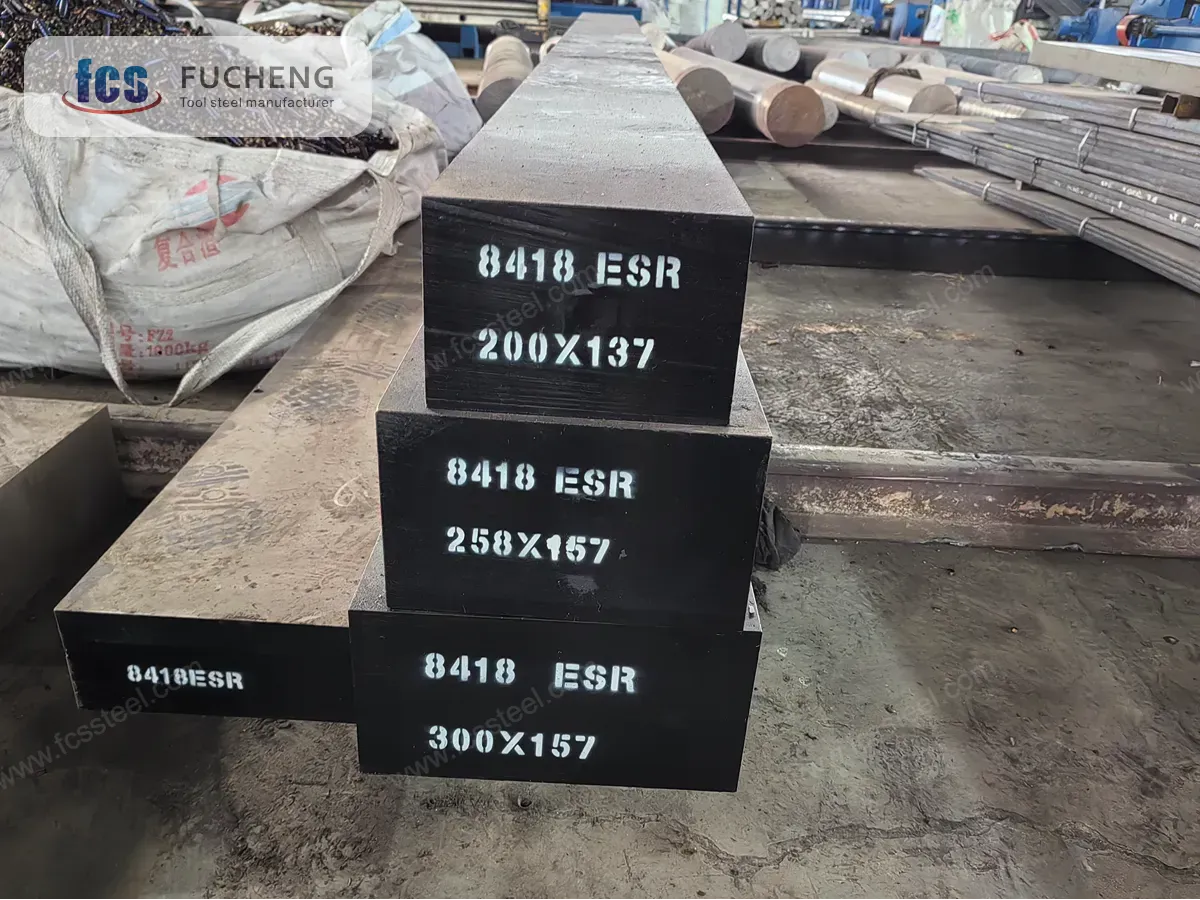
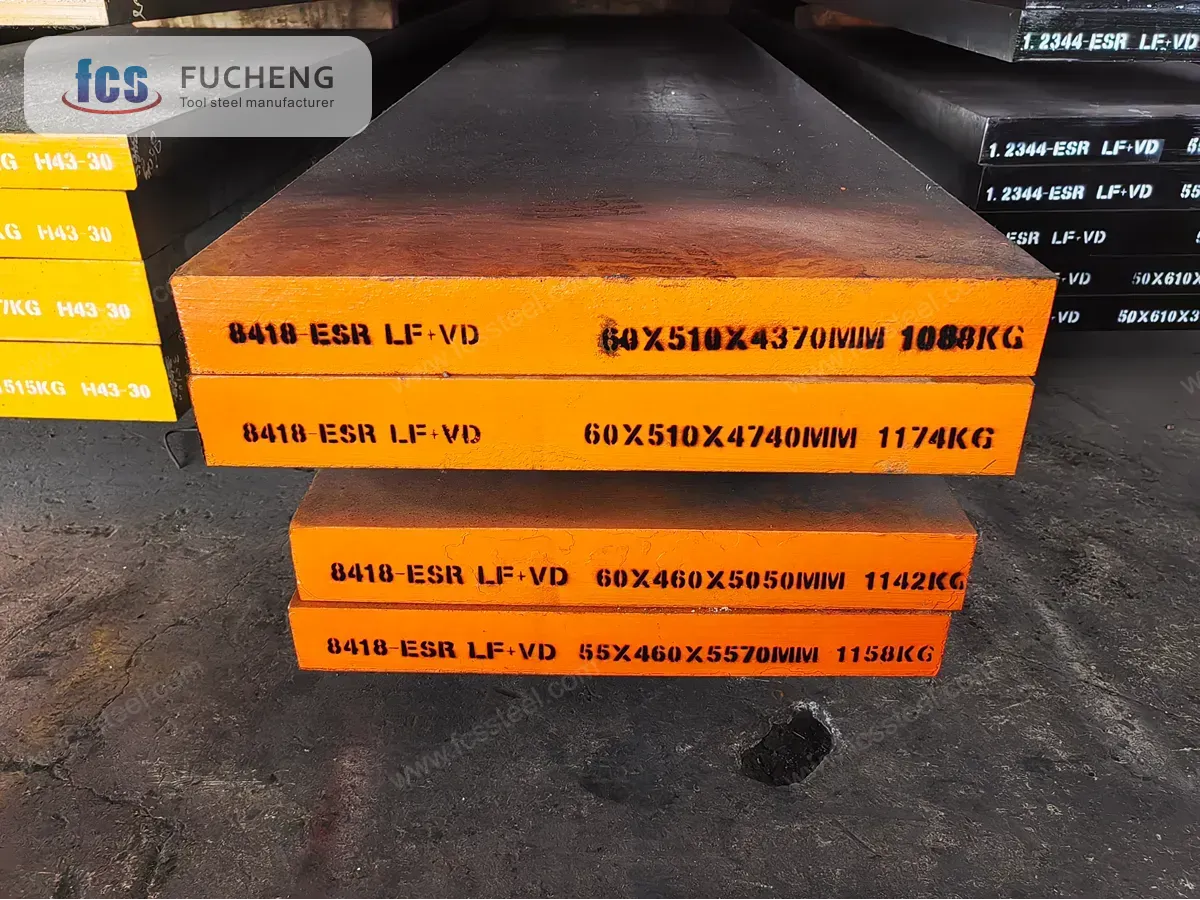
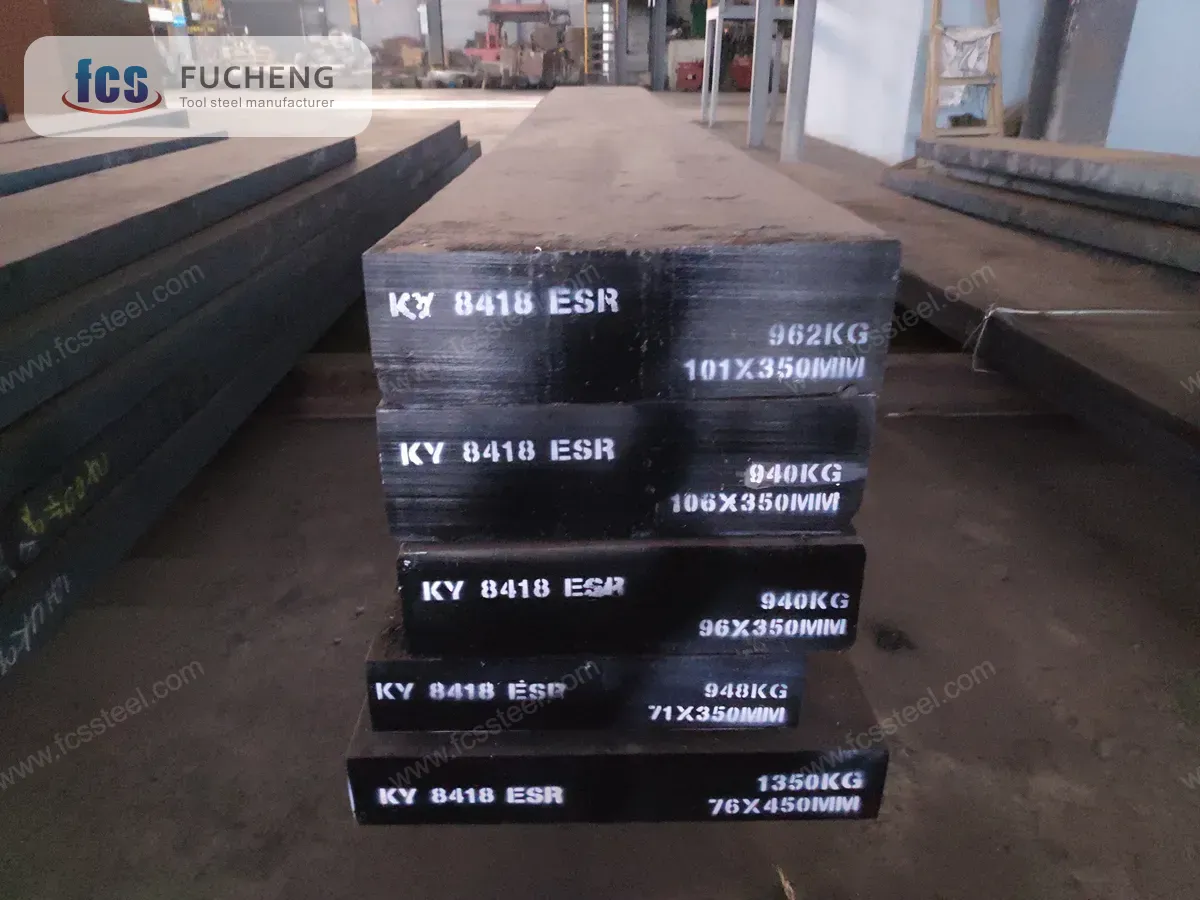
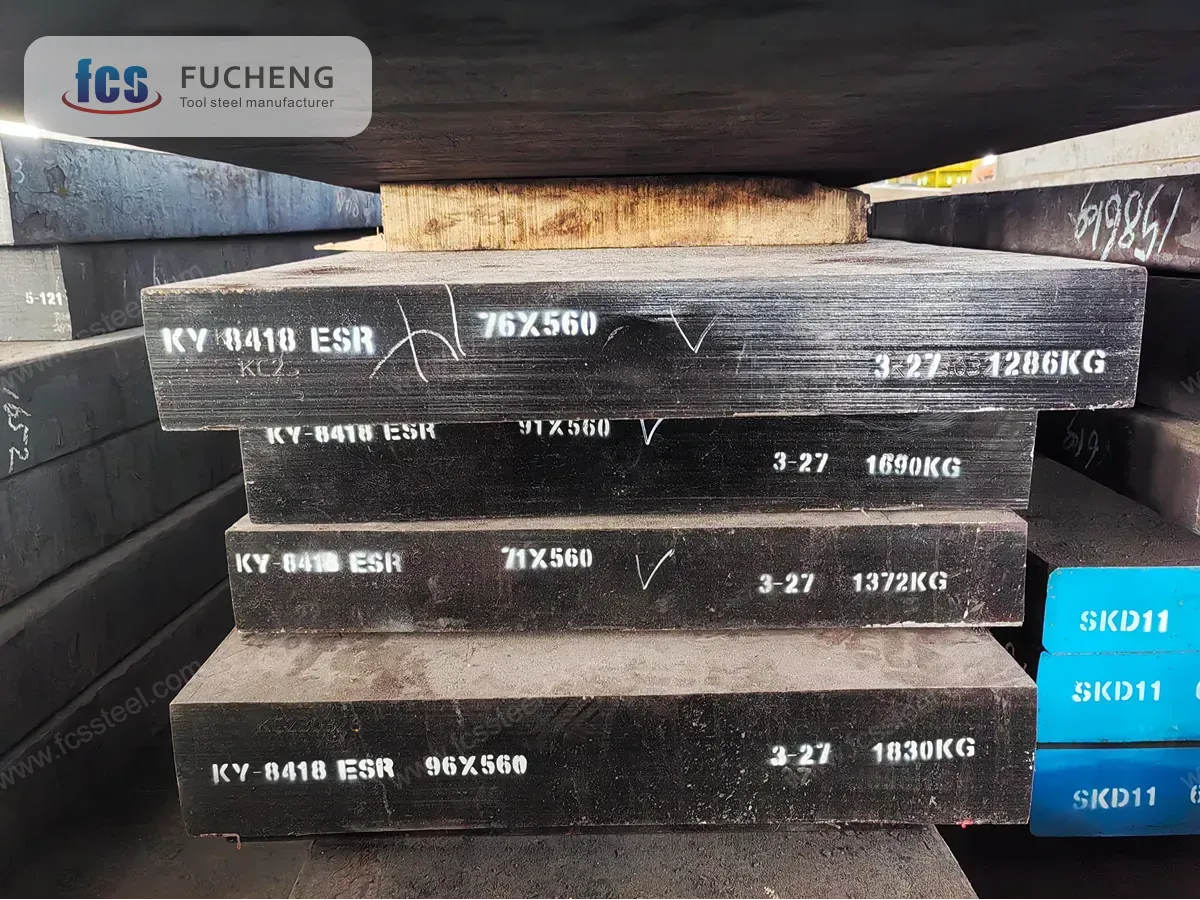
Tool Steel Size Range
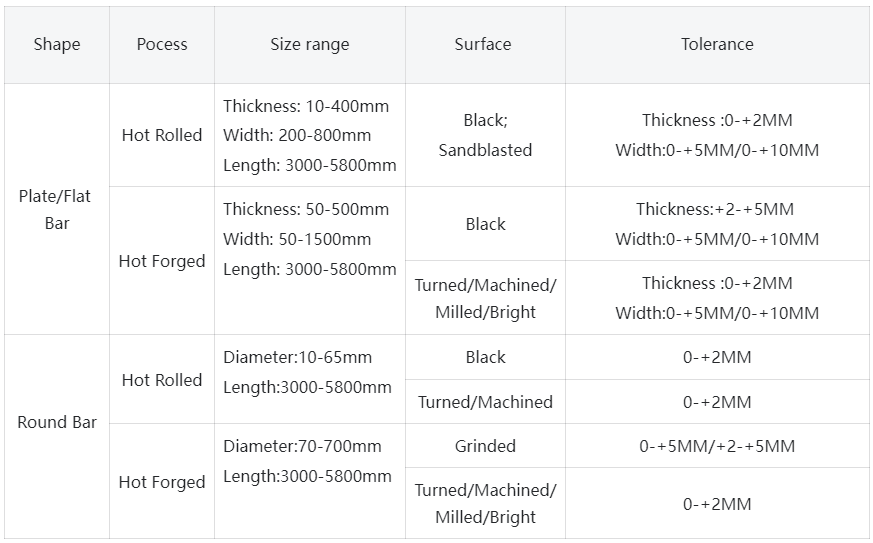
- Round Bar: Specify the required diameter, length and machining allowance.
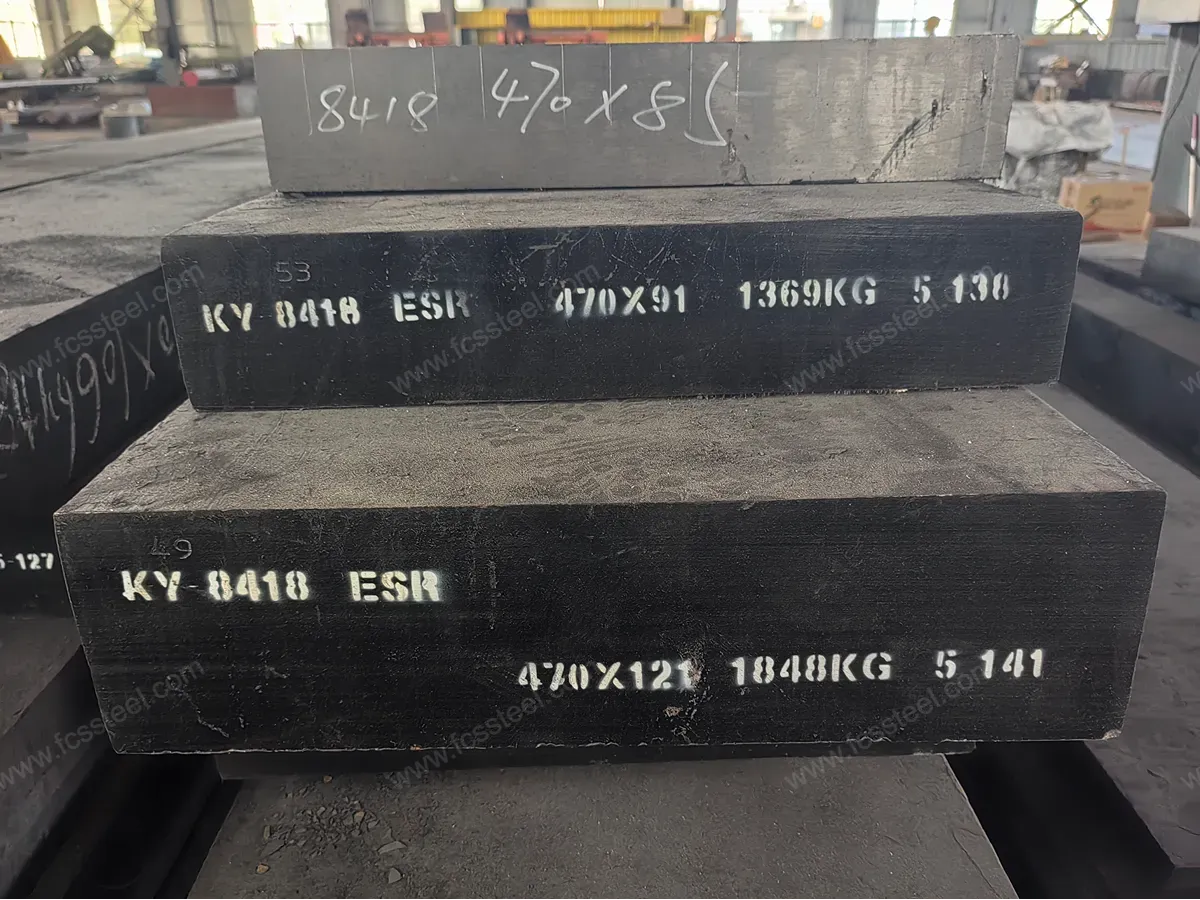
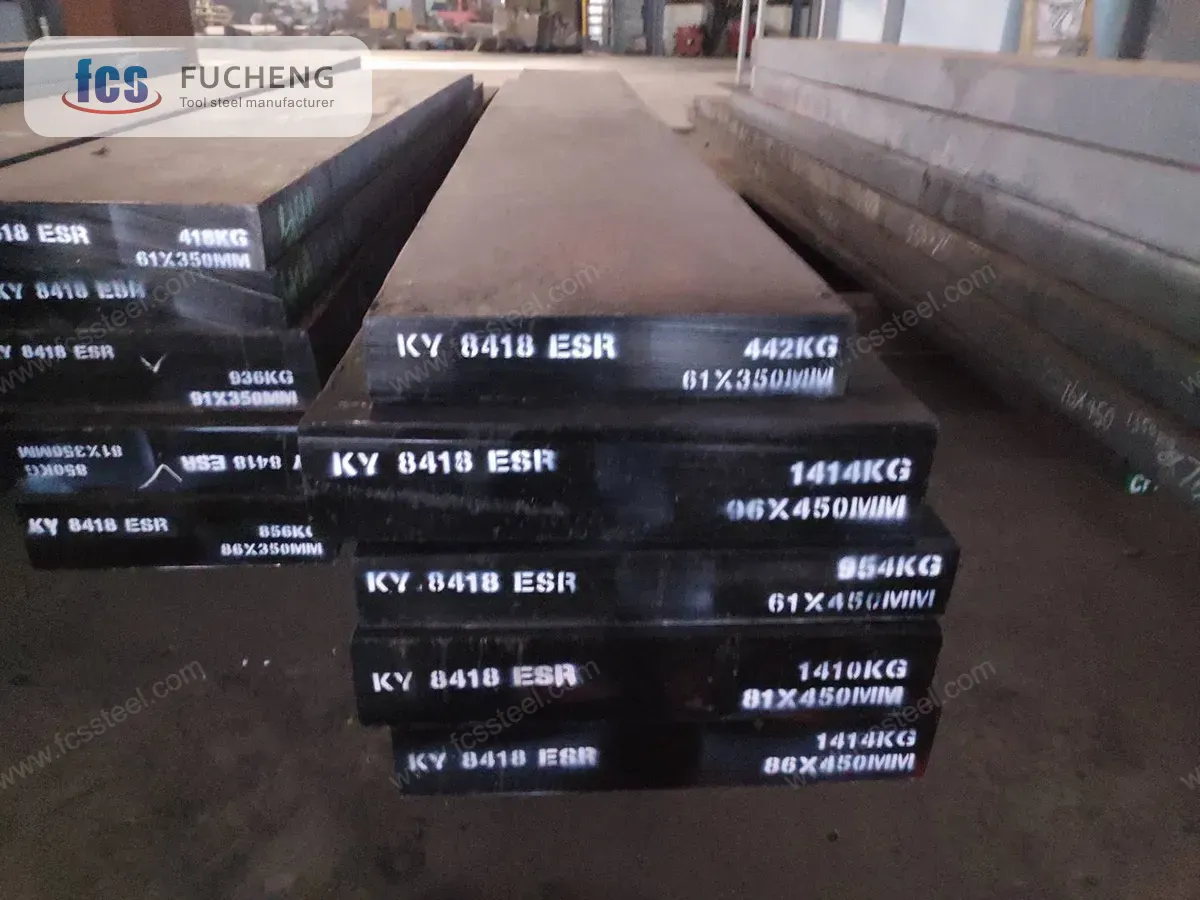
- Flat Bar: Specify the required thickness, width and length.
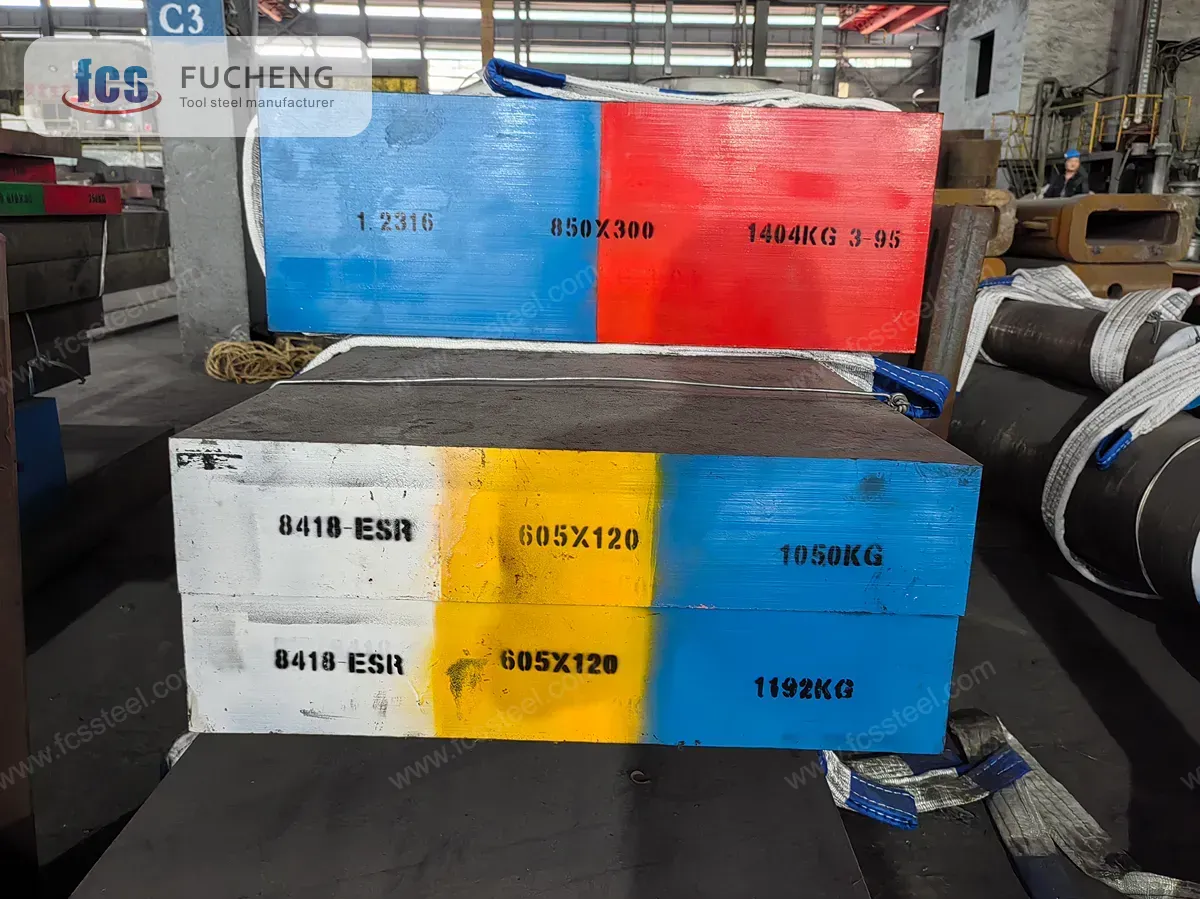
- Forged Block: Specify overall dimensions, machining allowance and inspection requirements.
- Custom Forging: Submit a drawing and the required delivery condition for quotation.
Available dimensions, tolerances and quantities are subject to the agreed quotation.
Tool Steel Surface Finish
Specify your required surface condition: black/as-forged, ground, sandblasted, turned, machined or milled. The supplied finish and machining allowance are defined in the order.
Tool Steel Chemical Composition
Tool Steel Reference Grades
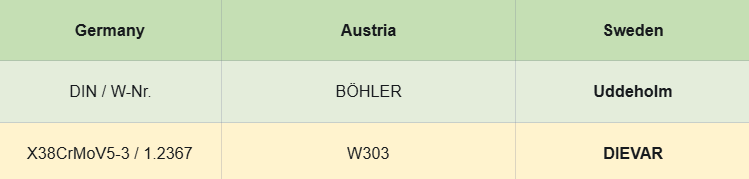
The reference materials for comparison with FCS 8418 are as follows:
- Germany (DIN / W-Nr.): X38CrMoV5-3 / 1.2367
- Sweden (Uddeholm): DIEVAR
- Austria (BÖHLER): W303
W303 / 1.2367 provides a chemical-composition reference, while DIEVAR provides a comparison for hot work applications. These materials are not stated to be exact equivalents of FCS 8418.
Tool Steel Specifications
Tool Steel Customized Options

- Custom Surface Conditions: Specify black/as-forged, sandblasted, ground, turned, machined or milled surfaces.
- Custom Chemical Requirements: Additional chemical limits can be submitted for technical review and incorporated into an agreed material specification.
- Custom Specifications: Specify round-bar diameters, flat-bar thickness and width, block dimensions and machining allowances.
- Custom Packaging Requirements: Specify corrosion protection, protective wrapping, wooden cases and handling requirements for storage and transportation.
- Production to Technical Agreements: Submit drawings, samples or technical requirements for assessment and quotation.
- 8418 Tool Steel Electroslag Remelting (8418 ESR): ESR is included in the published FCS 8418 production route. Additional cleanliness and internal-quality requirements should be specified in the order.
Tool Steel Smelting process
Tool Steel Physical Properties

Tool Steel Physical Properties
- Density: Approximately 7.80 g/cm³ at 20°C.
- Elastic Modulus: Approximately 210 GPa at 20°C.
- Thermal Conductivity: Approximately 31 W/(m·K) at 400°C and 32 W/(m·K) at 600°C.
- Mean Coefficient of Thermal Expansion: Approximately 12.7 × 10⁻⁶/K over 20–400°C and 13.3 × 10⁻⁶/K over 20–600°C.
- These values apply to Uddeholm DIEVAR in the hardened and tempered condition, approximately 44–46 HRC.
Tool Steel Mechanical & Performance Properties
- Thermal Fatigue Resistance: The product is described for applications involving repeated heating and cooling, where surface heat checking is a concern.
- Thermal Shock Crack Resistance: Relevant to hot work tooling exposed to rapid temperature changes.
- Hot-Wear Resistance: Relevant to working surfaces in repeated contact with hot metal.
- Resistance to Plastic Deformation: Relevant to maintaining tool geometry under combined thermal and mechanical loading.
- Heat-Treatment-Dependent Performance: Final working hardness and mechanical properties depend on heat treatment, section size and tooling requirements. The annealed delivery hardness is not the finished tool’s service hardness.
Tool Steel Product Applications
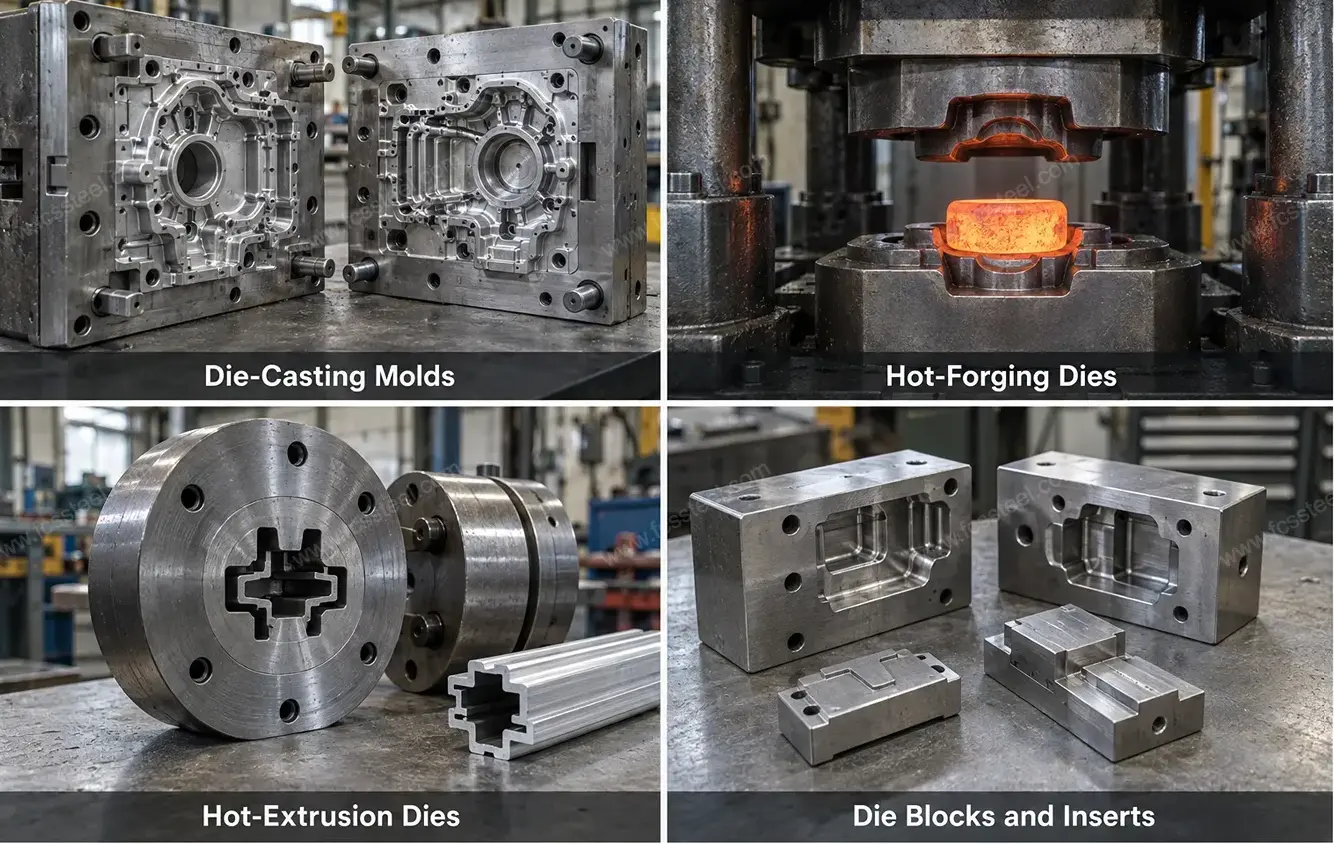
- Die-Casting Molds: Non-ferrous alloy die-casting molds, including aluminum, magnesium and zinc applications.
- Hot-Forging Dies: Tooling for hot-forging operations, selected according to the workpiece alloy, forming temperature and loading conditions.
- Hot-Extrusion Dies: Extrusion tooling assessed according to the processed alloy, operating temperature and die geometry.
- Die Blocks and Inserts: Cavity blocks and replaceable inserts within these hot work applications, subject to assessment of section size, cooling and mechanical loading.
Additional information
| Weight | 45 kg |
|---|---|
| Dimensions | 165 × 60 × 25 cm |