
Ask ten suppliers for a quote on DIN 1.2344 tool steel, and you will likely see price gaps of 20% or even more. On paper, the grade and dimensions might look exactly the same. So why the massive difference?
In special steel manufacturing, there is no such thing as a magical discount. A 20% price drop almost always means compromised chemistry, skipped production steps, or relaxed quality limits. Sure, the cheaper bar looks fine when it arrives. But when that low-cost steel cracks during heat treatment or a die bursts mid-production, the resulting financial claims will instantly wipe out any initial material savings.
As a source manufacturer, FCS Tool Steel breaks down the six real metallurgical and processing factors driving these 1.2344 price gaps. Knowing exactly what you are paying for is the only way to protect your tooling projects from costly failures.

1. Chemical Composition and Cross-Standard Differences
DIN 1.2344 defines an allowable composition range, not one fixed chemistry. Two mills can comply with the same standard while delivering different heat analyses.
|
Element |
Typical range (wt.%) |
Main contribution |
|---|---|---|
|
C |
0.35–0.42 |
Hardness, strength, carbide formation |
|
Cr |
4.80–5.50 |
Hardenability, oxidation resistance |
|
Mo |
1.20–1.50 |
Hot strength, temper resistance |
|
V |
0.90–1.10 |
Wear-resistant carbides, grain-growth control |
|
Si |
0.80–1.20 |
Deoxidation, tempering behavior |
|
Mn |
0.25–0.50 |
Hardenability |
|
P, S |
≤0.030 each |
Impurity control |
Reference values. Confirm the applicable standard edition before using them as contractual limits.
DIN 1.2344, ASTM H13, JIS SKD61, and GB 4Cr5MoSiV1 tool steel belong to the same 5% chromium hot-work tool steel family, but their specifications are not identical. While DIN 1.2344 mandates Molybdenum (Mo) at 1.20–1.50%, some alternative standards allow it to drop as low as 1.10%.
Molybdenum and vanadium are high-cost ferroalloys. It’s an open secret in the industry: to offer that tempting 20% discount, some mills will intentionally target this absolute 1.10% Mo minimum limit to slash their raw material costs. They technically meet the “equivalent” spec, but this cheaper formulation drastically reduces the steel’s high-temperature yield strength and thermal fatigue resistance.
Buyer check: Compare the governing standard and actual heat analysis on the MTC, not just the grade name. Request OES results for C, Si, Mn, Cr, Mo, V, P, S, and Ni.
2. Melting Route: Conventional vs. ESR vs. EFS
Different metallurgical routes create entirely different levels of cleanliness, internal structure, and ultimately, cost. 1.2344 generally comes in three distinct tiers.
|
Route |
Indicative cost multiple |
Indicative price |
Key characteristics |
|---|---|---|---|
|
EF/EAF + LF + VD |
1.0–1.3x |
$2–6/kg |
Standard gas control, baseline performance |
|
1.4–2.2x |
$4–12/kg |
S ≤0.005%, minimal inclusions, mirror polishable |
|
|
EFS |
Process-dependent |
Premium over conventional |
AS6 regular, AS1–AS3 premium grain structure |
Cost multiples and price ranges are indicative market references. Actual pricing depends on dimensions, delivery condition, and quantity.
Conventional EF+VD steel works fine for general tooling. But if your project demands high-end mirror polishing, ESR (Electroslag Remelting) is a practical upgrade. The secondary remelting dramatically improves inclusion control and lowers sulfur to 0.005% or less.
The EFS Misconception
What if your die needs maximum resistance to thermal fatigue and cracking? This is where EFS (Extra Fine Structure) comes in.
Let’s clear up a common misconception: EFS is not just another type of melting furnace. It is actually a rigorous mechanical and thermal methodology.
-
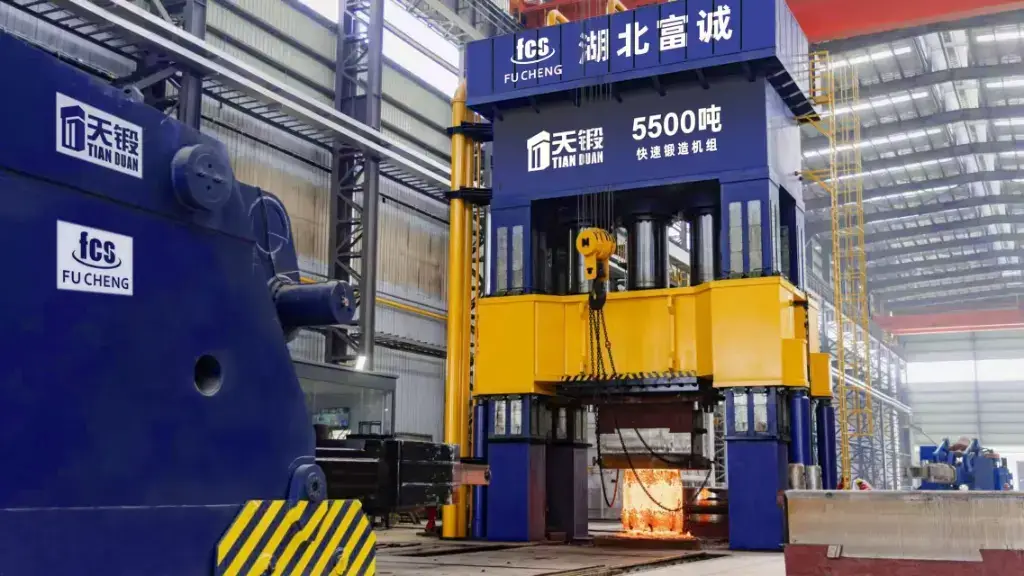
The Process: Achieving true EFS requires heavy multi-directional forging—often utilizing massive equipment like a 5,500-tonne press—combined with a prolonged spherical annealing cycle.
-
The Grain Size Difference: This massive mechanical effort physically crushes coarse dendritic structures. While a standard annealed 1.2344 block might have a coarse AS9 grain size, a true EFS process refines that down to AS6 or better. Our premium EFS heats even reach an ultra-fine AS1 to AS3 structure.
Yes, tying up a heavy forging press and running extended furnace hours increases the manufacturing cost. But the resulting structural density is an absolute game-changer for high-pressure die-casting molds.
Buyer check: Don’t just accept “EFS” as a vague marketing label on a quote. Require the manufacturer’s specific process definition and ask for metallographic evidence of the grain size.
3. Delivery Condition and Heat Treatment

Delivery condition changes both the purchase price and the processing left for the buyer.
|
Condition |
Processing |
Cost implication |
|---|---|---|
|
Annealed, black surface |
Annealing |
Lower finishing cost; buyer machines and heat treats |
|
Annealed, peeled |
Annealing + surface removal |
Extra machining, 3–5% material loss |
|
Turned or ground |
Precision machining |
Black bar to h8 ground finish adds 25–60% |
|
Hardening + tempering |
Indicative 20–40% premium over annealed |
The Q&T premium is based on public procurement data for 4140/42CrMo and should be treated as an indicative reference.
If you outsource heat treatment, published service pricing shows harden-and-temper at approximately $2/kg plus a minimum charge, though prices vary by region and provider. Vacuum heat treatment typically runs higher.
Annealed stock machines easily but still needs quenching, tempering, straightening, and stress relief later. Q&T stock reduces downstream heat treatment, yet higher hardness wears cutting tools faster and increases grinding or EDM cost. Compare total cost, not sticker price.
Buyer check: Specify delivery hardness, surface condition, dimensional tolerance, and whether heat treatment or machining is included.
4. Forming Route: Hot Rolled vs Heavy Forged
Shape and forming route shift the cost baseline before chemistry or heat treatment enters the discussion.
|
Product |
Price multiple vs black hot-rolled round bar |
|---|---|
|
Black hot-rolled round bar |
1.00x |
|
Flat bar |
1.05–1.20x |
|
Plate |
1.10–1.35x |
|
Block / forged billet |
1.20–1.60x, complex shapes 1.8–2.5x |
|
Ground / polished bar |
1.25–1.60x |
|
Precision-turned bar (TGP) |
1.40–2.00x |
These multiples are indicative reference values for comparison purposes, not fixed market ratios.
The forming route depends heavily on the size you need. Hot rolled bars are perfect for smaller diameters (typically under Φ90 mm). The production is fast and cost-effective. However, rolling doesn’t provide enough reduction ratio to eliminate center porosity in heavier sections.
For large dimensions (Φ100 mm and above) and heavy modules, you absolutely need heavy forged blocks. We use a massive 5,500-tonne hydraulic press for multi-directional forging to literally crush coarse dendritic structures. This guarantees high core density and isotropy. Naturally, the heavy equipment depreciation and energy costs make forged steel more expensive than rolled stock.
When you get into non-standard large diameters (250–450 mm), free forging or ring rolling can push prices 25–80% higher than catalog sizes. Also, don’t forget the machining allowance: rough turning takes 0.75–1.50 mm per side, resulting in a 3–8% total material loss from cutting and crop ends.
Buyer check: Always compare the supplied dimensions, forming route, and usable material weight. Make sure you are pricing orders based on the raw billet weight plus the inevitable machining loss.
5. Ultrasonic Testing and Acceptance Classes
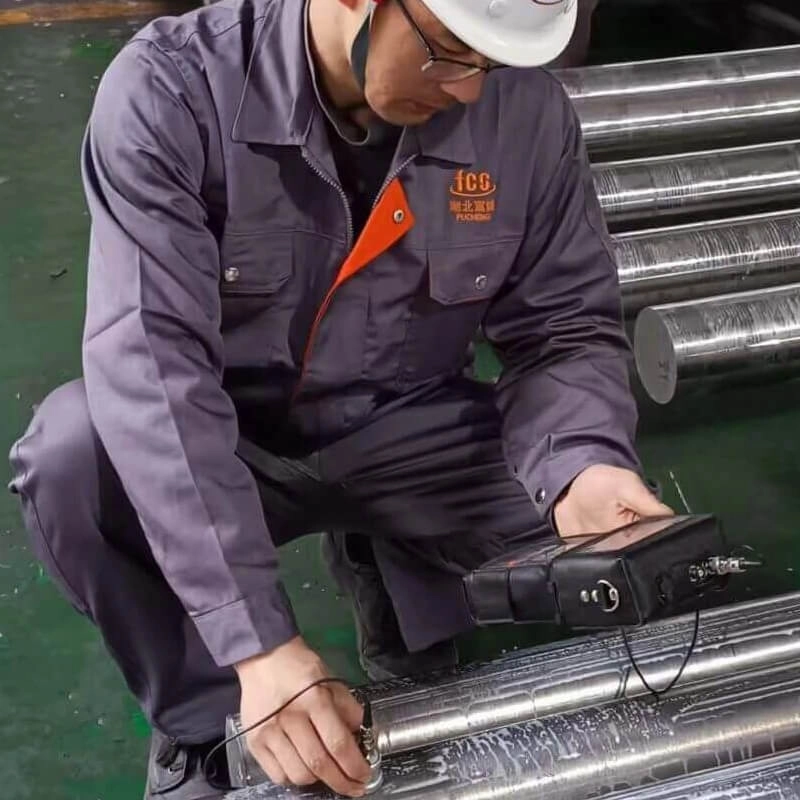
Ultrasonic testing detects internal discontinuities. “100% UT tested” does not define the acceptance level. The standard, edition, and acceptance criteria must also be stated.
|
Cost driver |
|
|---|---|
|
C/c |
Basic acceptance; lower evaluation and rejection risk |
|
D/d |
Stricter criteria; more evaluation and rejection risk |
|
E/e |
Highest process control; highest rejection risk |
Higher UT classes require stricter evaluation and create more risk of nonconforming material. Additional evaluation, segregation, downgrading, or rejection increases cost. UT on large sections or forgings adds an indicative $50–300 per piece, or roughly 1–5% of material value. Price depends on product dimensions, manufacturing route, actual internal quality, and specified acceptance criteria.
Buyer check: Specify the SEP 1921 edition, exact acceptance class, product form, and required UT report.
6. Grade-Mixing Prevention and Export Packaging
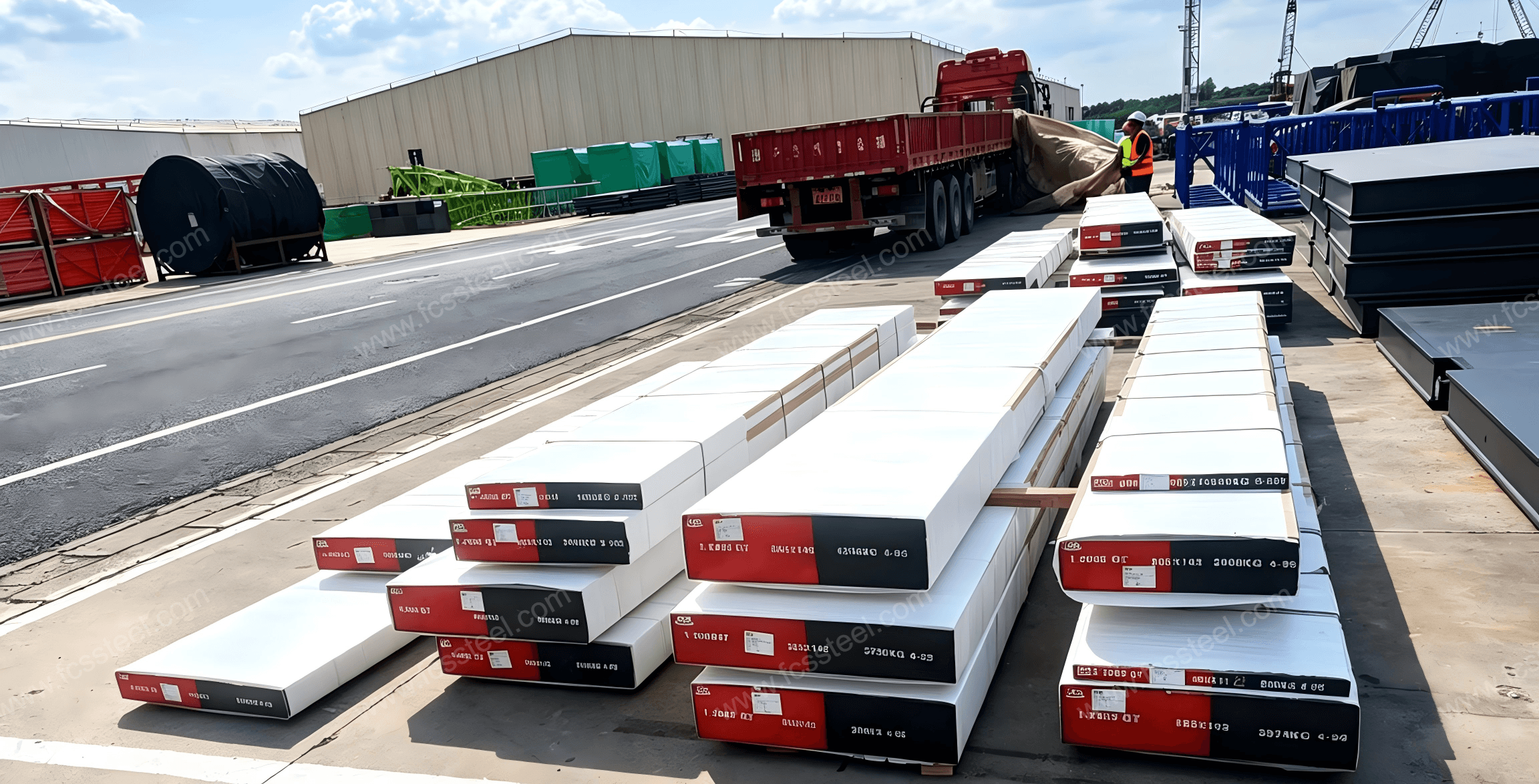
This factor often goes unnoticed until a problem occurs.
|
Item |
What it covers |
Indicative cost impact |
|---|---|---|
|
PMI verification |
Handheld XRF re-testing before loading; steel matched to heat number and MTC |
Per heat, batch, or piece, depending on scope |
|
EN 10204 3.1 MTC and traceability |
Chemical analysis, inspection records, heat-number chain |
Adds 1–3%; higher scope 2–8% |
|
OES and hardness testing |
Carbon verification by OES; hardness spot checks |
OES $50–200 per heat; hardness $20–100 per batch |
|
VCI/VPCI packaging and strapping |
Anti-rust film, end-color coding, six-side painting, steel strapping |
Packaging adds 1–4% |
A broken traceability chain means uncertified material. OES can verify carbon content, while handheld XRF generally cannot confirm carbon adequately for complete H13 grade verification. Confirm certificate scope, traceability, inspection frequency, packaging requirements, quantity, and delivery schedule.
Commercial Factors Affecting Quotes
Technical specifications are only part of the price. Commercial conditions also matter:
-
Order quantity: Larger orders may reduce unit handling and processing costs.
-
Stock availability: Standard sizes from existing inventory may be more economical than custom production.
-
Lead time: Urgent scheduling can affect production and logistics costs.
-
Incoterms and freight: EXW, FOB, CIF and DAP quotations cover different cost scopes.
For distributors and stockholders, compare the same grade, dimensions, delivery condition, inspection scope, quantity and delivery terms. Otherwise, the price difference may reflect different products or services rather than different steel quality.
Why Source Directly from FCS Tool Steel?
We manufacture steel. Hubei Fucheng Special Steel Co., Ltd. (FCS) has supplied global stockholders and industrial buyers from our 40,000㎡ heavy manufacturing facility in Huangshi, China, since 2007.
-
TÜV-Certified Quality: We run an audited TÜV NORD ISO 9001:2015 certified system. You get exact heat-number traceability and a verifiable EN 10204 3.1 MTC with every batch.
-
True Production Capacity: We maintain a 25,000-ton annual capacity, with 5,000 tonnes of ready stock on our floor for faster turnaround times.
-
Heavy Forging Muscle: Our 5,500-tonne hydraulic forging press handles large block consolidation and the multi-directional forging required for premium Extra Fine Structure (EFS) material.
-
Tailored Melting Routes: Whether your project needs standard EF+LF+VD or ultra-clean ingots from our six dedicated ESR furnaces, we build the steel to match your application.
We supply Full-Container Loads (FCL) of 1.2344/H13, 1.2379/D2, SKD11, SKD61, and other mold steels to the global market.
Get a mill-direct quote without middleman markups. Visit fcssteel.com and send our technical team your requirements, including grade, dimensions, delivery condition, and UT scope. We will price your order based on those specs.
Conclusion: Smart 1.2344 Steel Sourcing
Hunting for the absolute lowest quote on 1.2344 tool steel often costs more in the long run due to unexpected tool failure, extra machining time, or inconsistent batches. But you don’t need to pay top dollar for ESR remelting or excessive testing if your tooling application doesn’t require it.
Smart sourcing requires knowing what you pay for. A higher price makes sense when it brings tangible value to your production line, like tighter chemistry control, precision machining that saves hours of prep time, or strict UT inspections before milling.
For bulk buyers and distributors, comparing prices requires an apples-to-apples baseline: equivalent material, matching delivery conditions, and the same quality evidence.
Ready for a Transparent Quotation?
If you are tired of mysterious price gaps and vague supplier answers, work with a partner who understands your technical needs. FCS Tool Steel helps you find the most cost-effective manufacturing route for your project.
Send your specific 1.2344/H13 requirements to our technical team today. Include your required dimensions, delivery condition, and UT specs, and we will provide a clear, competitive quote with zero hidden surprises.