Introduction:
Finding a reliable German supplier for 1.2365 tool steel involves more than comparing prices or checking a datasheet. For cold work tooling, long-term performance depends on metallurgical consistency, rolling precision, heat-treatment compatibility, and the supplier’s ability to deliver repeatable quality over time.
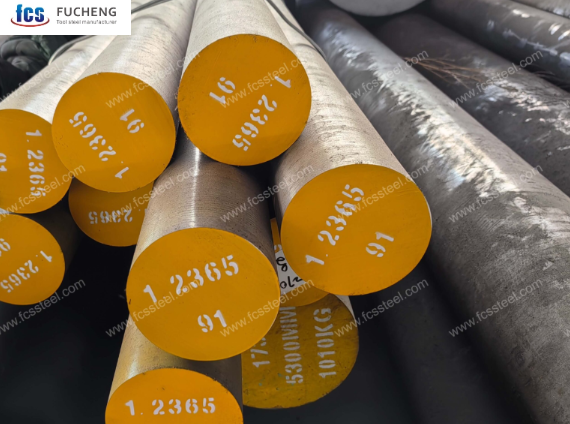
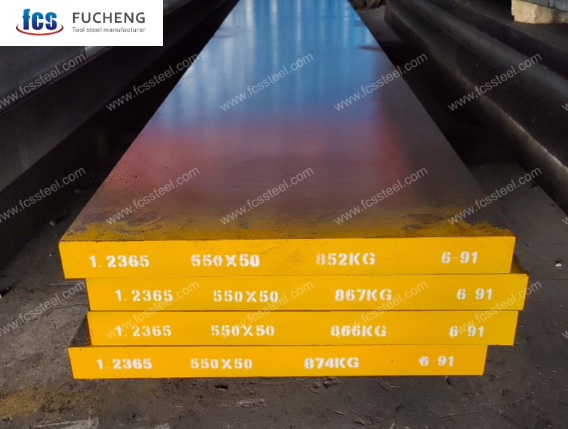
1.2365 (DIN X32CrMoV12-28) steel is a high-chromium cold work steel valued for wear resistance, compressive strength, and dimensional stability. These properties make it suitable for forming tools, cutting dies, blanking punches, and precision gauges. At the same time, the alloy’s relatively high chromium and carbide content make it sensitive to processing variations. That is why supplier selection plays a critical role in real-world results.
Germany remains one of the most reliable sourcing regions for 1.2365 tool steel. Its steel industry combines long metallurgical tradition with modern process control, traceability, and logistics infrastructure. However, German suppliers differ widely in scale, specialization, and service models. Some focus on high-volume rolling, others on downstream processing or fast stock delivery.
This guide reviews four commonly used German suppliers of 1.2365 tool steel. Rather than promotional claims, the focus is on how each supplier creates value for different types of buyers, and where each option makes practical sense.
Hoesch Hohenlimburg GmbH (Hagen)
Hoesch Hohenlimburg is a wholly owned subsidiary of thyssenkrupp Steel Europe AG and specializes in hot-rolled steel strip and special profiles. The company operates from Hagen in North Rhine-Westphalia and supplies primarily European industrial customers.
With external sales of approximately €745 million and annual production volumes exceeding 700,000 tons, Hoesch occupies a position between specialty producers and large integrated mills. For buyers of 1.2365, this combination of scale and specialization is often attractive.
Production Capabilities Relevant to 1.2365
Between 2011 and 2013, Hoesch invested more than €20 million to modernize its hot-rolling mill. The upgrade focused on thickness control, flatness, and dimensional repeatability—factors that directly influence cold work tool steel performance.
Key technical parameters include:
- Strip width: up to 685 mm
- Thickness range: approximately 1.3–16 mm
- Maximum coil weight: 15 tons
- Rolling configuration: 9-stand mill with advanced gauge control
In practical terms, these capabilities allow Hoesch to supply rolled strip with relatively tight tolerances and low residual stress. For 1.2365 users, this often translates into less corrective machining and more predictable distortion behavior during heat treatment.
Logistics and Traceability
Hoesch uses digital inventory and slab-tracking systems that improve material flow and order fulfillment speed. While this may sound like a logistical detail, it has a direct impact on lead time reliability and batch traceability—both important when sourcing tool steel for repeat production.
Buyer Profile Fit
Hoesch Hohenlimburg is best suited for buyers who require rolled 1.2365 strip with consistent geometry and are ordering medium to larger batch sizes. It is less focused on small custom orders or downstream processing services.
Best fit:
Manufacturers prioritizing dimensional consistency and rolling quality over ultra-short delivery times.
Thyssenkrupp Steel Europe AG (Duisburg)
Thyssenkrupp Steel Europe operates Germany’s largest integrated steel plant in Duisburg. With crude steel capacity of around 11 million tons per year, the site represents industrial scale in its purest form.
For tool steel buyers, this scale is not about flexibility but about supply security and process stability.
Scale and Process Stability
The Duisburg site uses Basic Oxygen Furnace (BOF) steelmaking and supplies customers in more than 40 countries. Large volumes enable stable raw material sourcing, consistent melting practices, and robust quality management systems.
Hot Strip Mill 2, one of the core production units, processes around 5 million tons annually and supports a wide range of high-grade steels. Although automotive applications dominate, the same production discipline applies to special grades such as 1.2365.
Typical rolling capabilities include:
- Strip widths: up to 2,030 mm
- Thickness range: approximately 1.5–25.4 mm
Investment and Long-Term Outlook
Recent investments of around €800 million in continuous casting and logistics systems underline Thyssenkrupp’s strategy to focus on fewer but higher-value steel products. The company is also transitioning toward lower-emission steelmaking, which may become relevant for customers with sustainability requirements.
From a buyer’s perspective, these investments reduce the risk of sudden supply interruptions and support long-term framework agreements.
Buyer Profile Fit
Thyssenkrupp is not the fastest or most flexible option for small orders. Lead times are typically longer, and minimum order quantities can be higher. However, for buyers who value long-term availability, certification, and traceability, few suppliers offer comparable security.
Best fit:
Large-volume buyers, automotive tooling suppliers, and companies operating under strict regulatory or certification regimes.
Buderus Edelstahl GmbH
Buderus Edelstahl, headquartered in Wetzlar, represents a different category of supplier. Founded in 1731, the company has evolved into a specialty steel producer with strong downstream processing capabilities.
Annual production is approximately 360,000 tons, positioning Buderus well below integrated mills but above niche distributors. This middle position enables flexibility without sacrificing metallurgical control.
Processing Depth and Flexibility
Buderus offers a broad range of processing routes:
- Open-die forgings
- Die forgings
- Hot and cold strip
- Semi-finished products with optional heat treatment
For buyers of 1.2365, this means material can be sourced closer to final shape, reducing internal machining effort. This is particularly relevant for complex tooling or when internal heat-treatment capacity is limited.
Industry Experience
Buderus supplies customers across automotive, mechanical engineering, wind energy, power generation, and heavy industry. This cross-sector exposure gives its technical teams practical insight into how 1.2365 behaves in different applications, not just in laboratory tests.
Recent ownership changes may reshape parts of the organization, but production continuity remains in place. For buyers, the key consideration is Buderus’ role as a processing-oriented specialist, rather than a pure rolling mill.
Buyer Profile Fit
Buderus is well suited for customers who need processed or semi-finished 1.2365, especially for forging-based tooling or applications requiring tailored heat treatment.
Best fit:
Toolmakers seeking technical support, processing services, or near-net-shape supply rather than raw mill strip.
Stahlportal / Stahlhandel Gröditz GmbH
Stahlportal, operated by Stahlhandel Gröditz GmbH, is a stockholding distributor rather than a steel producer. This distinction defines its value proposition.
The company keeps multiple tool steel grades, including 1.2365 (X32CrMoV12-28), in stock for immediate delivery. In many cases, this eliminates the long lead times associated with mill orders.
Speed and Responsiveness
Stahlportal offers cut-to-size sawing and ships directly from stock. For maintenance tooling, replacement parts, or urgent projects, this speed can outweigh the price advantages of mill-direct sourcing.
The company also stocks complementary grades, allowing buyers to consolidate purchases across multiple materials.
Technical Interaction
As a distributor, Stahlportal does not develop steel grades, but its staff provides practical, application-focused advice based on day-to-day customer needs. This can be helpful for smaller buyers who require guidance but cannot justify mill-level engagement.
Buyer Profile Fit
Stahlportal is not designed for large, cost-optimized batch sourcing. Instead, its strength lies in availability and flexibility.
Best fit:
Small to medium buyers, urgent orders, and maintenance tooling where delivery speed is critical.
Comparative Supplier Overview
| Supplier | Core Strength | Typical Order Size | Lead Time Profile | Best Use Case |
|---|---|---|---|---|
| Hoesch Hohenlimburg | Rolling precision, flatness control | Medium to large | Stable, scheduled | Precision rolled strip |
| Thyssenkrupp Duisburg | Supply security, certification | Large / contract | Longer but predictable | Automotive & regulated tooling |
| Buderus Edelstahl | Processing depth, flexibility | Small to medium | Medium | Forged or semi-finished tools |
| Stahlportal | Stock availability, speed | Small / urgent | Very fast | Maintenance & replacement tooling |
How to Choose the Right Supplier for 1.2365
From a buyer’s perspective, the right supplier depends on three practical questions:
- What form of material do you actually need?
Rolled strip, forged blocks, or semi-finished components lead to different supplier choices. - How sensitive is your process to lead time?
Planned production favors mills; urgent needs favor stockholders. - What level of technical interaction do you require?
Some projects need metallurgical support, others only reliable delivery.
Answering these questions internally often narrows the supplier list quickly.
Conclusion
There is no single best German supplier for 1.2365 tool steel. Each supplier reviewed here serves a different sourcing strategy.
Hoesch Hohenlimburg focuses on rolling precision, Thyssenkrupp provides unmatched supply stability, Buderus Edelstahl offers processing expertise, and Stahlportal delivers speed from stock. Understanding these differences allows buyers to align supplier choice with real operational needs.
In tool steel sourcing, reliability over time matters more than short-term cost savings. Choosing the right partner for 1.2365 is an investment in predictable tooling performance, lower scrap rates, and smoother production planning.