Picking the wrong tool steel isn’t just a budget leak—it’s a production killer. I’ve seen it a thousand times: a mold cracks mid-run or a cutting edge dulls before lunch, leaving engineers staring at a dead line and a mountain of scrap. With dozens of grades like P, M, and T-series floating around, it’s easy to feel buried in data sheets.
But here’s the “old hand” secret: success boils down to balancing hardness, toughness, and wear resistance against the raw stress of your specific job. This guide cuts through the marketing fluff to compare grades side-by-side. I’ll show you the classic selection blunders that wreck tooling and give you a battle-tested framework to pick the right steel, every time. Let’s get it right the first row.
What Is Tool Steel and Why Grade Selection Matters
Tool steel is a category of carbon and alloy steel built for one purpose: making things that cut, shape, or form other materials under extreme stress. Carbon content runs between 0.7 and 1.5 wt% — sometimes as high as 2.1% — paired with alloying elements like chromium, tungsten, molybdenum, and vanadium. These elements form carbides inside the steel matrix. Those carbides deliver the key traits: hardness reaching 58–66 HRC, strong wear resistance, and the ability to hold up at high temperatures.
Each alloying element does a specific job:
Element
What It Contributes
Chromium (Cr)
Wear resistance, hot hardness
Tungsten (W)
High-temperature strength, edge retention
Molybdenum (Mo)
Toughness, carbide formation
Vanadium (V)
Fine carbides, abrasion resistance
Nickel (Ni)
Toughness and polishability in mold steels
Carbon content is a balancing act. Push it above 1.0% and you gain strength and hardenability. But brittleness goes up and weldability drops. That tradeoff sits at the center of grade selection decisions.
The AISI Grading System: A Practical Map
The AISI system groups tool steels by hardening method, operating temperature, and primary stress type. Know these groups and you cut your selection time in half:
W-series (water-hardening): Simple, high-carbon grades hitting 64–66 HRC — suited for low-shock cutting tools, not much else
O-series (oil-hardening): Better toughness, good machinability — dies and punches
A-series (air-hardening): Less distortion during heat treat, stable dimensions — cold-work tools and shear blades
D-series (high-carbon/high-chromium): Extreme wear resistance up to 66 HRC — long-run blanking and punching dies
S-series (shock-resisting): Built for impact — heavy punches, chisels
H-series (hot-work): Low carbon (0.3–0.4%), maintains hardness to 540°C — forging and extrusion dies
T/M-series (high-speed): Red-hardness to 650°C — drills, end mills
P-series (plastic mold): Built for high polish and tight tolerances — injection molds
The logic is simple: harder service conditions — more heat, more abrasion, more impact — demand more alloying elements and a stronger carbide structure. A W-series grade works fine for a basic bench tool. Put it near a hot forging die and it will fail fast.
4 Common Tool Steel Selection Mistakes in Practice
Running Cold-Work Steel in Hot Environments: Pushing grades like D2 above 400°C destroys their internal carbide structure. The hot hardness drops fast. This breeds thermal fatigue cracks. Your die fails early. Consider hot-work steels here for better tool life.
Chasing Wear Resistance Over Toughness: High-wear steels like D2 lack impact strength. Heavy stamping or shearing demands high shock resistance. High-wear steel gets too brittle for these tough jobs. It chips right away. So, balance your toughness and wear needs for better results.
Specifying P20 for Optical Molds: P20 fails to hold a mirror polish during long production runs. You will spot finish issues after about 10,000 shots. Carbide banding ruins the surface finish. This causes massive optical part rejections. Pick a cleaner steel grade for polished plastic parts.
Botching the Heat Treatment: Steel performance starts in the oven, not just the mill. Over-austenitizing kills toughness. Under-quenching leaves soft spots. These weak areas speed up wear and deformation. Proper heat treatment gives you maximum tool life.
Tool Steel Grades for Plastic Injection Molds (P-Series & A-Series)
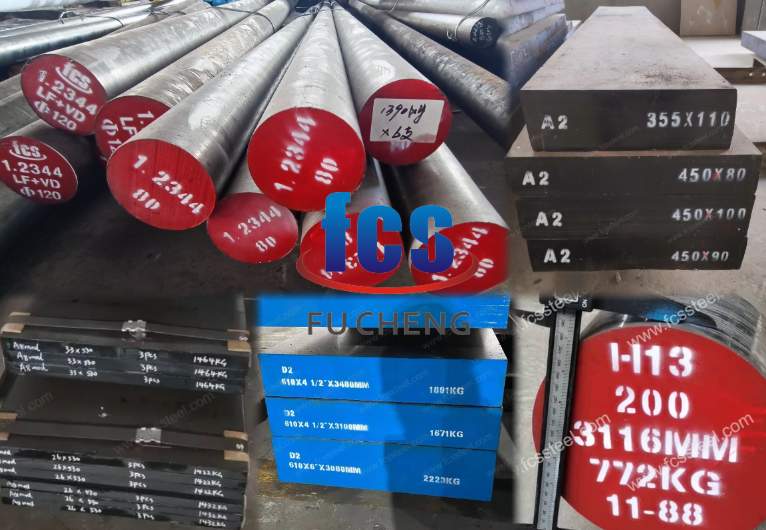
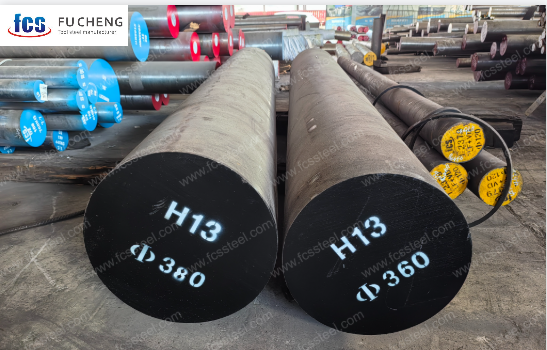
Your plastic type and production volume dictate your mold steel choice. P20 serves as an everyday baseline. It ships pre-hardened straight to your shop. This makes the metal perfect for standard runs under 100,000 cycles. Plus, you avoid all heat-treat risks. Some projects demand extreme dimensional accuracy. A2 gives you incredible stability for those jobs. It resists warping. Heavy high-volume runs require a step up to H13. This material outlasts the rest. You might process corrosive resins like PVC. Or you might want a true lens-quality mirror polish. Go straight to 420SS to meet those specific needs.
Cycle count under 100k with non-abrasive resins → P20 pre-hardened. Easy to machine, no heat treat risk.
Corrosive plastics like PVC → 420SS pre-hardened (HRC 30–35) or hardened S-136 (HRC 48–52). Corrosion resistance cuts erosion by 50% versus P20.
High polish required → P20 lens-grade (HRC 28–30) or 420 pre-hard (HRC 30–35). Both deliver consistent lens-quality finishes.
Cycle targets over 100,000? Step up to H13 or hardened 420SS. The machining gets harder, but you gain 2–3x the service life compared to a P20 build. That trade-off pays off fast at high volumes.
Tool Steel Grades for Cold-Work Dies (O/A/D-Series)
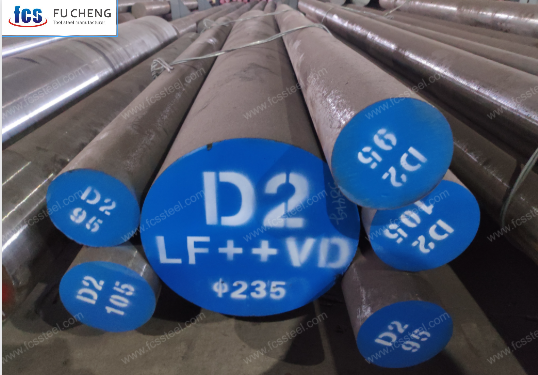
Choosing cold-work dies requires balancing wear against toughness. O1 acts as your everyday workhorse. You can machine it with little effort. It keeps distortion low during the oil quench. These traits make it great for short-run blanking. Strict dimensional stability calls for A2. It air-hardens well and hits a solid middle ground. Heavy production runs demand a step up to D2. It gives up some impact strength. In return, you get extreme wear resistance. D2 outlasts A2 by two or three times in brutal, high-abrasion jobs.
Choosing the Right Grade: A Practical Framework
Steel
Toughness
Wear Resistance
Best Application
O1
Good
Moderate
Low-volume general punching
A2
Medium
Medium
Precision blanking (~200k cycles)
D2
Low
Very High
High-wear long runs (500k+ cycles)
Grab O1 for quick short-run jobs. Pick A2 for balanced stability. Choose D2 for maximum wear life.
Tool Steel Grades for Hot-Work Dies and Forging Dies (H-Series)
Heat destroys hot-work tooling through repeated temperature changes. Your steel choice must control this specific stress. H13 stands as the industry standard. It stops thermal fatigue cracking up to 600°C. This makes it perfect for standard die-casting cavities. Harder strikes require tougher tooling. H11 lowers wear resistance slightly. It boosts impact toughness instead. So, it shines for hot punches and gripper dies. Extreme jobs require a different focus. Processes over 600°C force H13 to soften. H21 steps in here. It handles the intense heat of heavy hot extrusion. Just avoid heavy physical shocks.
Choosing the Right Grade: A Practical Framework
Steel
Impact Toughness
Temp Limit
Best Application
H11
High
~600°C
Hot punches, heavy shock loads
H13
Moderate
~600°C
Die-casting cavities, thermal fatigue
H21
Low
>600°C
Heavy hot extrusion
Pick H11 for heavy shocks. Use H13 for thermal fatigue. Temperatures over 600°C demand H21.
Tool Steel Grades for Cutting Tools (M & T-Series)
Red hardness means everything in cutting tools. Heat softens regular metal. The cutting edge fails fast. High-speed steels (HSS) fix this problem. They hold their strength up to 700°C. M2 serves as a standard workhorse. This grade tackles everyday drilling and milling jobs without hassle. Tough metals like titanium push M2 past its limits. Switch to M42 for those hard jobs. Its high cobalt mix gives you extreme heat resistance. T15 stands out in the tungsten group for one big reason. It handles ultra-abrasive cuts. Standard blades wear out fast in these gritty conditions.
Choosing Your Grade: A Practical Guide
Steel
Hardness (HRC)
Key Feature
Best Application
M2
62–65
Great value
Everyday drills, end mills, standard cuts
M42
68–70
Extreme heat resistance
Titanium, stainless steel, superalloys
T15
64–67
Maximum wear resistance
High-wear cuts (EDM required)
Start with M2 for standard daily work. Grab M42 for superalloys. Solid carbide costs more money. Buy these rigid tools for continuous, high-speed runs without heavy impact.
Tool Steel Grades for Hand Tools and Shock-Resistant Applications (W & S-Series)
W-series steel gives you the oldest, cheapest choice. Grades like W1 reach 60–65 HRC. Use them for standard chisels and light bench tools. Keep these tools cool. Avoid heavy impact. Push them past 200°C, and they crack. Hard hits break them as well.
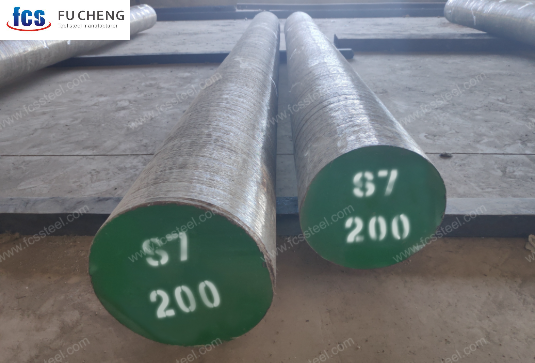
The S-series steps in to fix this. These shock-resisting grades use less carbon. They add silicon and molybdenum instead. They absorb heavy, repeated hits. Your tools will not shatter. S7 leads this group. It air-hardens. This prevents warping. Plus, you get massive impact toughness for rough jobs.
Choosing Your Grade: A Practical Checklist
W1: Lowest cost, water-hardened. Use this for light-duty chisels and basic hand tools.
S5: Top impact toughness. Pick this for heavy punches and headers.
S7: Air-hardening with maximum shock resistance. Grab this for jackhammer bits, heavy hammers, and chipper knives.
Pick W1 for tight budgets and light bench work. Choose S7 for parts that take a serious, repeated beating. Need help matching the correct steel grade for your next project? Contact our team today for a quick quote.
How to Match Steel Grade to Your Application
Four variables drive every grade selection decision: hardness, toughness, wear resistance, and the environment your tooling works in. Everything else is secondary. Get these four right, and the grade picks itself.
Most engineers optimize for one property and ignore the others. That’s where tooling failures start.
The Four-Factor Framework
Application type sets the category. A cold-work blanking die and a plastic injection mold cavity sit in different stress worlds — even if both show up as “mold steel” on a purchase order.
Environment determines corrosion needs. Standard shop air? Carbon-based tool steels handle it fine. PVC or chlorinated resins running through the mold? You need corrosion-resistant grades like 420SS or S-136. The chemistry of your workpiece material is part of your operating environment — don’t overlook it.
Performance requirements rank your priorities. Not every application needs 66 HRC. A P20 mold running polypropylene at 100,000 cycles doesn’t need D2-level wear resistance. Building it to that spec burns money and machining time for no real gain.
Cost and availability close the decision. Premium grades like M42 or PM T15 deliver real performance gains. But no EDM capability in your shop? Production volume doesn’t justify the price gap? Those gains stay on paper.
Reading the Trade-Offs
Every grade gives up something to gain something else. Higher hardness means lower toughness. Better wear resistance means harder machining. More alloying elements push cost up and weldability down.
Priority
What You Gain
What You Give Up
Max hardness
Wear resistance
Toughness, weldability
Max toughness
Impact resistance
Edge retention
Corrosion resistance
Service life in harsh environments
Machinability, cost
Machinability
Faster toolpath, lower cost
Hardness ceiling
Conclusion
Choosing the right tool steel grade isn’t guesswork — it’s engineering. P20 for a plastic injection mold. H13 for a forging die. M2 for a high-speed cutting tool. Every decision comes back to the same core factors: operating temperature, impact load, wear resistance, and the cost of getting it wrong.
The best machinists and tooling engineers don’t memorize every grade. They understand why certain steels behave the way they do. That understanding is what lets them handle unfamiliar applications without second-guessing every choice.
So here’s your next move. Pull up your current or upcoming tooling project. Identify the dominant failure mode — wear? Heat? Shock? Then cross-reference it against the grades covered here. That one habit keeps you from making the most expensive tool steel selection mistakes before they happen.
The right grade is out there. Now you know how to find it.

 Your plastic type and production volume dictate your mold steel choice. P20 serves as an everyday baseline. It ships pre-hardened straight to your shop. This makes the metal perfect for standard runs under 100,000 cycles. Plus, you avoid all heat-treat risks. Some projects demand extreme dimensional accuracy. A2 gives you incredible stability for those jobs. It resists warping. Heavy high-volume runs require a step up to H13. This material outlasts the rest. You might process corrosive resins like PVC. Or you might want a true lens-quality mirror polish. Go straight to 420SS to meet those specific needs.
 Choosing cold-work dies requires balancing wear against toughness. O1 acts as your everyday workhorse. You can machine it with little effort. It keeps distortion low during the oil quench. These traits make it great for short-run blanking. Strict dimensional stability calls for A2. It air-hardens well and hits a solid middle ground. Heavy production runs demand a step up to D2. It gives up some impact strength. In return, you get extreme wear resistance. D2 outlasts A2 by two or three times in brutal, high-abrasion jobs.
 W-series steel gives you the oldest, cheapest choice. Grades like W1 reach 60–65 HRC. Use them for standard chisels and light bench tools. Keep these tools cool. Avoid heavy impact. Push them past 200°C, and they crack. Hard hits break them as well.
The S-series steps in to fix this. These shock-resisting grades use less carbon. They add silicon and molybdenum instead. They absorb heavy, repeated hits. Your tools will not shatter. S7 leads this group. It air-hardens. This prevents warping. Plus, you get massive impact toughness for rough jobs.
W-series steel gives you the oldest, cheapest choice. Grades like W1 reach 60–65 HRC. Use them for standard chisels and light bench tools. Keep these tools cool. Avoid heavy impact. Push them past 200°C, and they crack. Hard hits break them as well.
The S-series steps in to fix this. These shock-resisting grades use less carbon. They add silicon and molybdenum instead. They absorb heavy, repeated hits. Your tools will not shatter. S7 leads this group. It air-hardens. This prevents warping. Plus, you get massive impact toughness for rough jobs.