
Introduction
When buyers evaluate Tool steel, they often compare grade designations, hardness values, and Chemical Composition certificates. While these factors are important, they do not fully explain why two pieces of the same steel grade can perform very differently in service.
The real difference often lies in the manufacturing route.
Cleanliness, toughness, carbide distribution, dimensional stability, fatigue resistance, and polishing performance are all influenced by the equipment used during production. Each piece of equipment solves a specific metallurgical challenge. Together, they determine whether a steel becomes a reliable tooling material or a future failure.
Understanding the equipment behind Tool Steel manufacturing allows engineers and purchasing managers to evaluate suppliers based on capability rather than grade names alone.
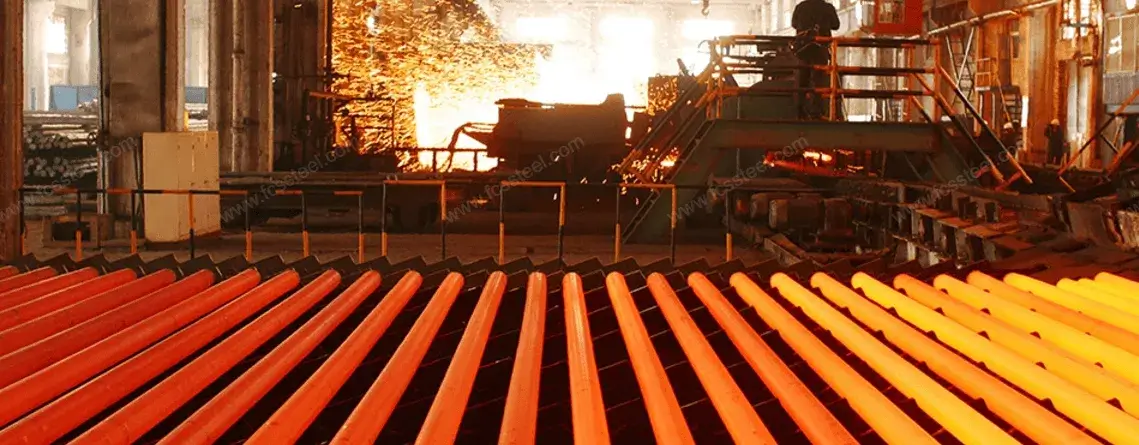
| Stage | Equipment | Primary Function |
|---|---|---|
| Melting | Electric Arc Furnace | Melt scrap and alloying elements |
| Refining | Ladle Furnace | Chemistry adjustment and desulfurization |
| Degassing | VD / VOD | Gas removal |
| Remelting | ESR | Cleanliness improvement |
| Solidification | Casting Equipment | Form billets and ingots |
| Deformation | Hydraulic forging Press | Densify structure |
| Forming | Hot Rolling Mill | Produce commercial sections |
| heat treatment | Annealing, Hardening, Quenching & Tempering Equipment | Develop final properties |
| Inspection | OES, Hardness Testing, UT, Metallography | Verify quality |
| Finishing | Band Saw & Six-Face Milling | Prepare delivery condition |
1. Electric Arc Furnace (EAF)
Modern tool steel production begins in the Electric Arc Furnace (EAF). Graphite electrodes generate electric arcs exceeding 3,000°C, melting scrap steel and alloying elements into liquid metal.
The EAF provides the flexibility required for producing various tool steel grades, including H13 (1.2344), D2 (1.2379), P20 (1.2311), and M2 High-Speed Steel.
Its primary role is establishing the target chemical composition. However, melting alone cannot produce premium-quality tool steel. Oxygen, nitrogen, hydrogen, and non-metallic inclusions are still present after this stage, making secondary refining essential.
2. Ladle Furnace (LF)
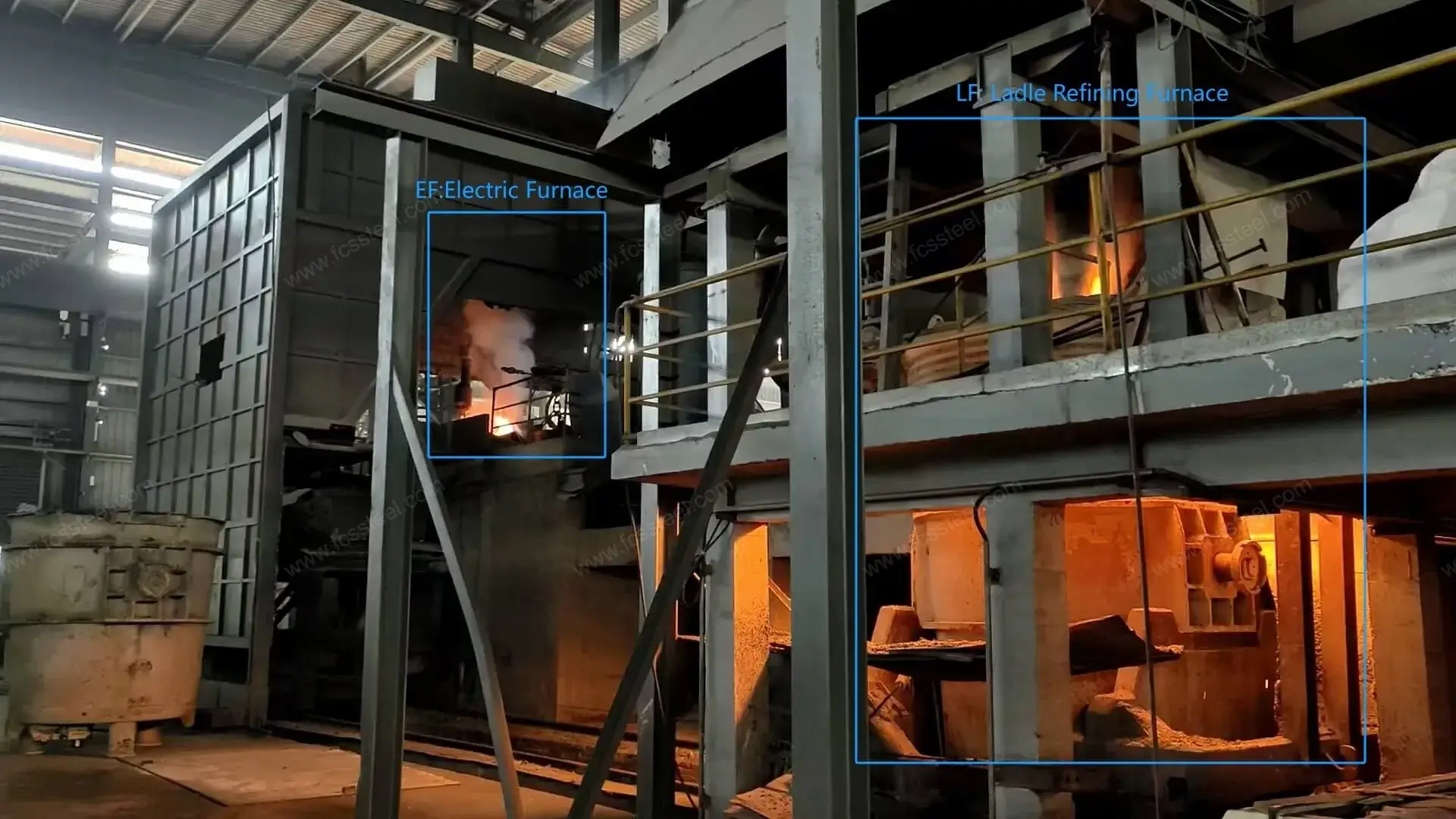
The Ladle Furnace is responsible for transforming molten steel into a controlled metallurgical product.
Argon stirring promotes temperature uniformity and alloy distribution while helping inclusions float into the slag layer. The LF is also the primary desulfurization station.
Sulfur forms Manganese sulfide inclusions that reduce transverse toughness and increase anisotropy. Modern LF practice can reduce sulfur from approximately 0.020–0.030% to below 0.005%, while premium ESR grades often begin with sulfur levels below 0.003%.
Without effective ladle refining, achieving consistent tool steel quality from heat to heat becomes extremely difficult.
3. Vacuum Degassing (VD/VOD)
Some of the most damaging defects in tool steel originate from dissolved gases.
Hydrogen can cause flaking and delayed cracking, while excessive nitrogen and oxygen reduce overall material quality.
Vacuum Degassing removes these gases under low-pressure conditions. Typical hydrogen content may decrease from 4–6 ppm after melting to below 2 ppm following vacuum treatment. Premium grades often target hydrogen levels below 1 ppm.
For Stainless mold steels and corrosion-resistant grades, Vacuum Oxygen Decarburization (VOD) allows Carbon reduction while preserving chromium content.
The result is improved toughness, reduced cracking risk, and more reliable heat treatment performance.
4. Electroslag Remelting (ESR)
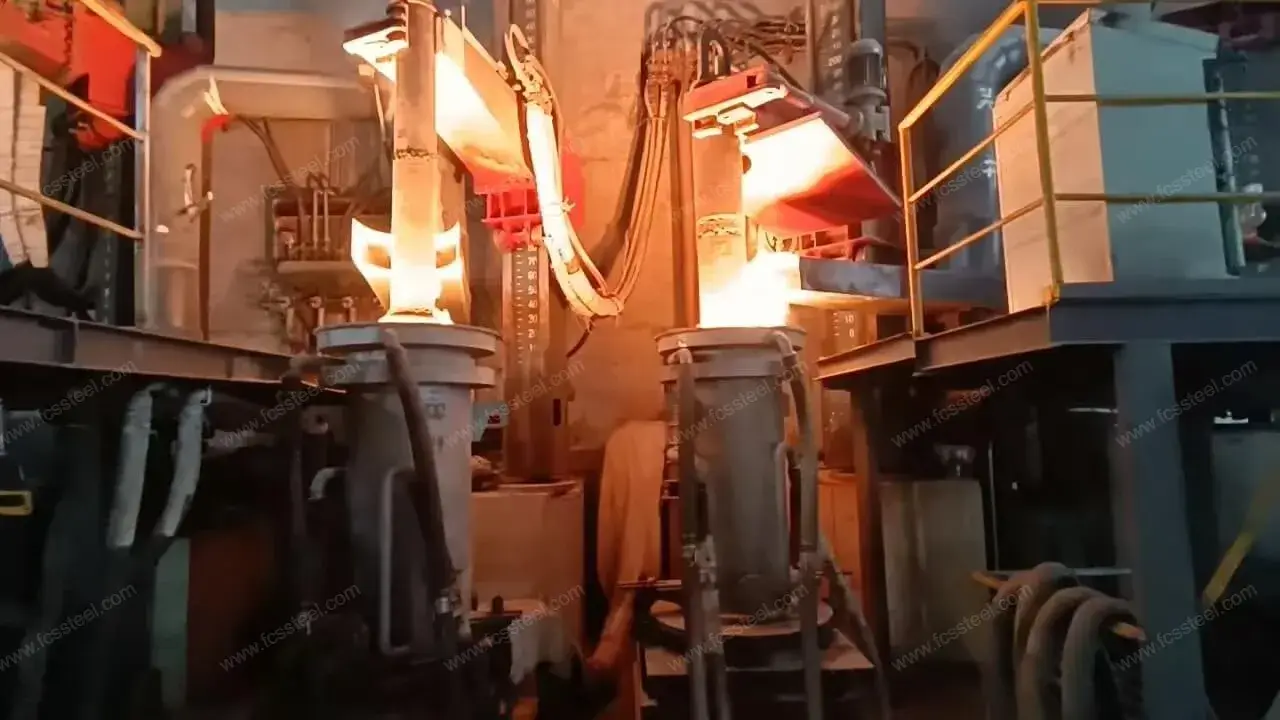
ESR is one of the most effective technologies for producing premium tool steel.
During ESR, a consumable electrode is remelted through a molten slag bath. The slag absorbs inclusions while directional solidification reduces segregation.
Typical improvements include:
| Quality Indicator | Conventional Steel | ESR Steel |
|---|---|---|
| Sulfur | 0.010–0.020% | 0.003–0.008% |
| Total Oxygen | 20–30 ppm | 10–15 ppm |
| Inclusion Content | Baseline | 30–70% lower |
| Hardness Variation (Large Sections) | 5–8 HRC | 2–3 HRC |
For H13 tool steel, ESR commonly improves transverse impact toughness by 60–80% and significantly increases resistance to thermal fatigue cracking.
Not every tool steel grade requires ESR. The decision depends on section size, polishing requirements, toughness demands, and service conditions.
5. Casting Equipment
After refining, molten steel must be solidified.
Continuous casting is widely used for standard billets and bars because it provides high productivity and excellent material yield.
Large tool steel blocks typically rely on ingot casting, which supplies the mass required for heavy forging operations. The casting route directly influences segregation levels and the effectiveness of downstream processing.
6. Hydraulic Forging Press
Forging transforms cast steel into engineering steel.
Large ingots naturally contain shrinkage cavities, segregation zones, and coarse carbide structures. Hydraulic presses apply enormous compressive forces that close internal voids and improve structural uniformity.
| Material Type | Recommended Forging Ratio |
|---|---|
| Carbon steel | ≥4 |
| Hot Work Tool Steel | ≥5 |
| Cold Work tool steel | ≥6 |
| High-Speed Steel | ≥8 |
The larger the cross-section, the more important forging becomes. Proper forging improves toughness, fatigue strength, carbide distribution, and dimensional stability.
Even ESR steel requires sufficient forging to achieve its full performance potential.
7. Hot Rolling Mill
Following forging, steel is rolled into bars, plates, and other commercial forms.
Hot rolling typically occurs between 850°C and 1200°C. Controlled deformation refines grain structure while producing standard dimensions for machining and heat treatment.
Although rolling contributes to structural refinement, its primary role is dimensional control and production efficiency.
Heat Treatment Equipment
No manufacturing stage has a greater influence on final tool steel performance than heat treatment.
Even perfectly refined and forged steel can fail if heat treatment is poorly controlled.
Annealing Furnace

Annealing improves machinability and relieves internal stress.
| Grade | Typical Annealed Hardness |
|---|---|
| H13 / 1.2344 | 180–230 HB |
| D2 / 1.2379 | 220–255 HB |
| P20 / 1.2311 | 280–320 HB |
Spheroidizing annealing creates rounded carbide particles that reduce cutting forces and improve machining efficiency.
Vacuum Hardening Furnace
Modern vacuum furnaces maintain temperature uniformity within ±3–5°C.
Typical austenitizing temperatures include:
| Grade | Austenitizing Temperature |
|---|---|
| H13 | 1000–1050°C |
| D2 | 1000–1040°C |
| M2 | 1180–1230°C |
| 1.2316 | 1020–1050°C |
Precise temperature control is critical for achieving consistent hardness and microstructure.
Quenching System
Different steels require different cooling rates.
| Quench Medium | Cooling Rate |
|---|---|
| Water | 500–1000°C/s |
| Oil | 80–200°C/s |
| Polymer | 200–600°C/s |
| Gas (6–10 bar) | 10–60°C/s |
Vacuum gas quenching significantly reduces oxidation, decarburization, and distortion compared with conventional oil quenching.
Tempering Furnace
Tempering balances hardness and toughness after quenching.
High-speed steels such as M2 require Triple Tempering at approximately 540–560°C to achieve secondary hardening and final hardness levels of 64–67 HRC.
Cryogenic Treatment System
For high-performance grades such as D2 and M2, cryogenic treatment at −80°C to −196°C reduces retained austenite and improves dimensional stability and wear resistance.
8. Quality Inspection Equipment
Premium tool steel is not only produced—it is verified.
Optical Emission Spectrometer (OES)
OES verifies chemical composition, including carbon, chromium, Molybdenum, Vanadium, and Silicon levels.
Hardness Testing Equipment
Brinell and Rockwell hardness testers confirm whether the steel meets specification requirements.
Ultrasonic Testing (UT)
UT detects internal discontinuities such as shrinkage cavities, porosity, and inclusion clusters.
Inspection is commonly performed according to:
Depending on customer requirements, acceptance criteria may range from Class D to the more stringent Class C level.
Metallographic Laboratory
Microscopic examination verifies grain structure, carbide distribution, and inclusion ratings.
Standards commonly referenced include ASTM E45 and DIN 50602.
9. Band Saw and Six-Face Milling Machine
The final production stage prepares steel for immediate use.
Modern CNC band saws typically achieve cutting tolerances within ±2–5 mm, depending on section size.
Six-face milling machines improve dimensional accuracy, flatness, and squareness.
| Parameter | Typical Value |
|---|---|
| Thickness Tolerance | ±0.10–0.30 mm |
| Width Tolerance | ±0.10–0.30 mm |
| Flatness | ≤0.10–0.30 mm/m |
| Surface Roughness | Ra 3.2–6.3 μm |
For mold manufacturers, six-face milling can reduce preparation machining by 30–50%, lowering overall production costs and shortening lead times.
Questions to Ask a Tool Steel Supplier
Before purchasing tool steel, consider asking:
- Is the steel vacuum degassed?
- Is ESR available for this grade?
- What forging ratio is used?
- Which ultrasonic testing standard is applied?
- Is the material supplied in the annealed condition?
- Are six-face milling services available?
- Can metallographic and UT reports be provided?
The answers often reveal more about expected performance than the grade designation itself.
Conclusion
Tool steel quality is built through a chain of controlled manufacturing processes rather than a single operation.
The EAF establishes chemistry. The LF refines it. VD removes harmful gases. ESR improves cleanliness and homogeneity. Forging increases density. Heat treatment develops the final mechanical properties. Inspection verifies quality before shipment.
Understanding the equipment behind tool steel manufacturing helps engineers, mold makers, and purchasing managers evaluate suppliers based on manufacturing capability rather than material designation alone.
Looking for Premium Tool Steel?
Whether you need H13 (1.2344), D2 (1.2379), P20 (1.2311), 1.2316, S136, or ESR grades, FCS Tool Steel provides complete manufacturing support from melting and forging to heat treatment, inspection, and precision machining.
Contact the FCS engineering team today for material selection assistance, technical recommendations, or a quotation for your next tooling project.