
Pick the wrong tool steel and you’ll find out the hard way—usually mid-production run, when a die cracks under thermal fatigue or a punch wears out three batches too early. Cold work grades like D2 and O1 are built for wear resistance at room temperature; hot work grades like H13 survive repeated thermal cycling without cracking. Mix them up, and you’re paying for downtime, scrapped tooling, or worse—a safety failure on the shop floor.
This guide breaks down where each category excels, covers the most common tool steel grades (D2, A2, SKD11, H13, H11, and more), and walks you through a practical decision framework so you can match the right steel to your process before you ever cut metal.
1. Cold Work vs. Hot Work: Overview & Key Differences
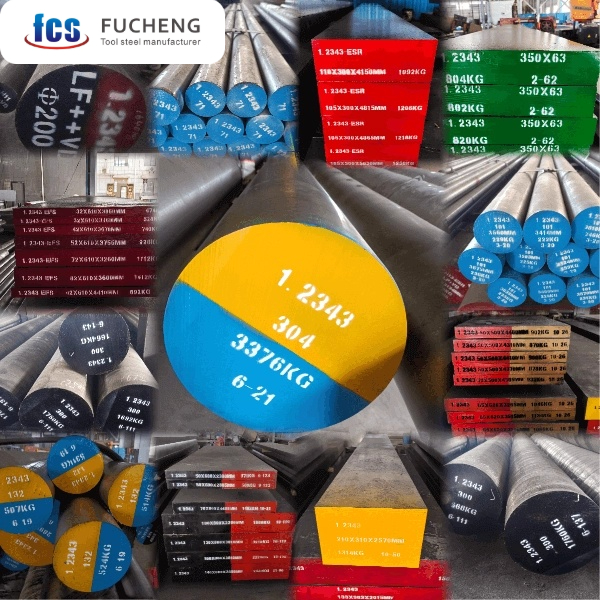
Selecting between cold work and hot work tool steel starts with understanding the operational environment, specifically operating temperature and primary mechanical loads.
- Cold Work Tool Steels: Cold work tool steels are mainly used in applications where the tooling temperature remains below approximately 200°C, where wear resistance and compressive strength are the primary requirements. They feature high carbon and high alloy contents (chromium, molybdenum, vanadium) to form dense, hard carbides (M7C3, M23C6). They achieve high post-heat treatment hardness (58–64 HRC) to deliver maximum wear resistance and edge retention.
- Hot Work Tool Steels: Hot work tool steels are designed for tooling applications where the working temperature typically ranges from 300°C to 650°C, with specialized grades extending to higher temperature environments. Carbon content is kept lower (0.3%–0.6%) to retain impact toughness. Alloying elements (Cr, Mo, V, W) provide hot hardness, softening resistance, and thermal fatigue resistance under repeated thermal shock.
Direct Comparison Matrix
| Parameter | Cold Work Tool Steel | Hot Work Tool Steel |
|---|---|---|
| Operating Temp Range | Room temp to <200°C (up to <260°C max) | >300°C up to 600°C–1000°C (die casting, hot forging) |
| Typical Working Hardness | 55–64 HRC (e.g., D2 at 60–62 HRC) | 42–52 HRC (e.g., H13 at 44–48 HRC) |
| Dominant Failure Modes | Edge wear, chipping, brittle cracking, galling | Heat checking, thermal fatigue cracking, hot softening, erosion |
| Priority Properties | Wear resistance, compressive strength, edge retention | Hot strength, thermal shock resistance, tempering resistance |
| Heat Treatment Focus | Low-temp temper (150°C–250°C) or high-temper for toughness | Austenitize + High-temp double/triple temper (540°C–650°C) |
2. Process & Failure-Mode Mapping
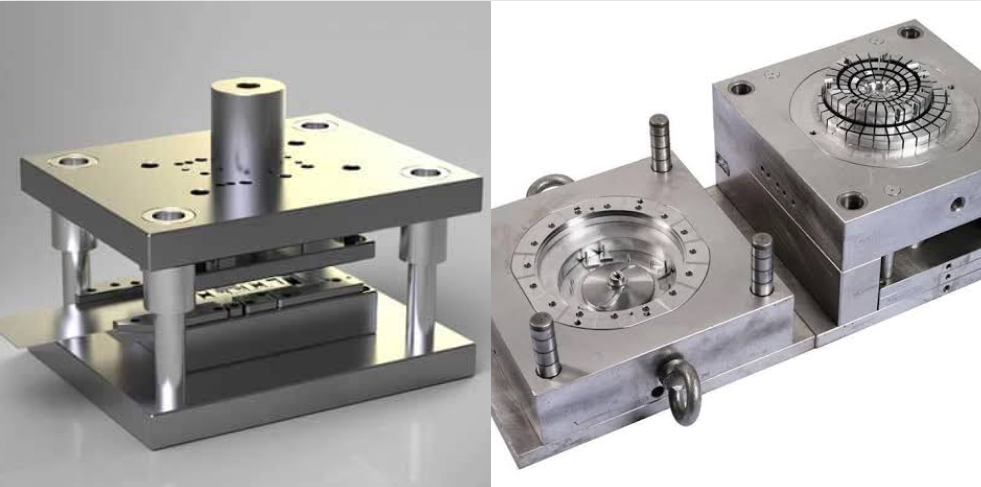
Every metalworking process introduces unique failure modes. Matching the steel category to the primary stress mode prevents premature tooling breakdown.
| Process | Primary Application Examples | Dominant Failure Mode | Priority Material Property | Recommended Category & Grade |
|---|---|---|---|---|
| Blanking / Punching | Sheet cutting, appliance panels, automotive stampings | Edge wear, edge chipping, fatigue fracture | High hardness + abrasive wear resistance | Cold Work (D2, SKD11, DC53) |
| Bending / Forming | Formed cups, structural brackets | Springback drift, surface scuffing, dimensional shift | High yield strength + dimensional stability | Cold Work (A2, D2) |
| Deep Drawing | Shells, cans, structural enclosures | Galling, adhesion, tearing, wall thinning | Anti-adhesion + uniform hardness + toughness | Cold Work (A2, DC53) |
| Cold Extrusion | Precision fasteners, gear blanks | Brittle cracking under extreme pressure | High compressive strength + bulk toughness | Cold Work (DC53, A2) |
| Die Casting | Aluminum/Magnesium structural housings | Thermal fatigue (heat checking), erosion, soldering | Thermal shock resistance + erosion resistance | Hot Work (H13, SKD61) |
| Hot Forging | Crankshafts, connecting rods, heavy gears | High-temp wear, thermal shock cracking | Hot strength + impact toughness balance | Hot Work (H11, 1.2714) |
3. Cold Work Steel Grades Compared: D2 vs. A2 vs. O1 vs. DC53
Five primary cold work grades dominate toolroom operations: D2, SKD11, A2, O1, and DC53.
D2 / SKD11 / DIN 1.2379 (High-Carbon High-Chromium):
Chemistry: ~1.40%–1.60% C, 11.0%–13.0% Cr, 0.7%–1.0% Mo, 0.7%–1.0% V.
Heat Treatment: Preheat ~820°C, austenitize/quench at 1000°C–1010°C, air cool, followed by double tempering.
Performance: Reaches 58–62 HRC. High carbide volume gives exceptional abrasive wear resistance. Ideal for long production runs in blanking and punching thin sheet metal.
Shop-floor Note: High carbide volume makes D2 prone to edge chipping under high impact. If punches chip, switch to DC53 or drop hardness via high-temperature tempering (520°C–540°C).
A2 / DIN 1.2363 (Medium-Alloy Air-Hardening):
Chemistry: ~1.0% C, 5.0% Cr, 1.0% Mo, 0.15%–0.50% V.
Performance: Balances wear resistance and toughness. Lower distortion during air quenching makes it safer for complex die geometries. Excellent for bending, forming, and medium-impact punching.
O1 / DIN 1.2510 (Oil-Hardening):
Chemistry: ~0.90% C, 1.0%–1.4% Mn, 0.5% Cr, 0.5% W.0.5–0.7%
Performance: Cost-effective, easy to machine, lower heat treatment costs. Achieves 58–62 HRC. Ideal for low-volume runs, short-run stamping dies, gauges, and fixture components.
DC53 (Advanced Cold Work Grade):
Performance: An upgraded modification of SKD11/D2. Tempered at high temperatures (520°C–540°C) to achieve 60–62 HRC while delivering double the impact toughness of D2. Significantly reduces edge chipping risk compared with conventional SKD11 grades.
Cold Work Grade Quick Summary
| Grade | Hardness Range | Primary Advantage | Best Fit |
|---|---|---|---|
| D2 / SKD11 | 58–62 HRC | Maximum wear resistance, low deformation | Blanking, punching, shearing thin sheet |
| A2 | 56–60 HRC | Balanced toughness & wear resistance | Bending, forming, medium-impact dies |
| O1 | 58–62 HRC | Budget-friendly, easy machinability | Short runs, prototypes, gauges |
| DC53 | 60–62 HRC | Superior toughness + high hardness | High-load punching, thick plate stamping, cold heading |
4. Hot Work Steel Grades Compared: H13 vs. H11 vs. 1.2714 vs. H21
Hot work tool steels must maintain structural integrity under severe thermal shock and mechanical fatigue.
H13 / DIN 1.2344 / SKD61 (5% Cr Chromium-Base Industry Benchmark):
Chemistry: ~0.32%–0.45% C, 4.75%–5.50% Cr, 1.10%–1.75% Mo, 0.80%–1.20% V.
Metallurgy: The higher Vanadium content forms hard, heat-stable Vanadium Carbides (VC) that protect against thermal softening and hot abrasive wear up to 550°C–600°C.
Performance: Tensile strength 1200–1590 MPa; typical working hardness 44–50 HRC. The universal standard for aluminum/magnesium die casting molds, hot extrusion dies, and hot shear blades.
H11 / DIN 1.2343 / SKD6 (Leaner Vanadium):
Chemistry: ~0.33%–0.43% C, 4.75%–5.25% Cr, 1.10%–1.60% Mo, 0.25%–0.50% V.
Performance: Lower carbide volume gives H11 higher bulk impact toughness and superior resistance to thermal fatigue crack propagation compared to H13. Preferred for heavy-impact hot forging dies and hot punches where catastrophic cracking is the dominant risk.
DIN 1.2714 (56NiCrMoV7 / Low-Alloy Nickel-Cr):
Performance: Built for massive die blocks and heavy forging applications. High nickel content provides deep hardenability across large cross-sections and maximum impact shock resistance.
H21 / DIN 1.2581 (Tungsten-Base Hot Work):
Chemistry: ~9% Tungsten content.
Performance: Retains high red hardness at extreme operating temperatures (>600°C). Reserved for high-temperature hot extrusion mandrels and hot shearing tools where resistance to thermal softening supersedes thermal shock requirements.
5. International Grade Cross-Reference Table
Always verify Mill Test Certificates (MTCs) against applicable standard specifications. Chemistry variances (especially Mo and V content) directly affect heat treatment response and core toughness.
| Category | AISI / UNS | DIN / EN (W.-Nr.) | JIS | GB (China) | GOST (Russia) | Equivalency Confidence & Notes |
|---|---|---|---|---|---|---|
| Cold Work | D2 / T30402 | X153CrMoV12 / 1.2379 | SKD11 | Cr12MoV | Х12М | ✅ High (GB Cr12MoV has slightly lower Mo/V window) |
| Cold Work | D3 | X210Cr12 / 1.2080 | SKD1 | Cr12 | Х12 | ✅ High (Officially recognized high-C grade) |
| Cold Work | A2 / T30102 | X100CrMoV5 / 1.2363 | SKD12 | Cr5Mo1V | — | ⚠ Approximate (Minor variances in Mo/V ranges) |
| Cold Work | O1 / T31501 | 90MnCrV8 / 1.2510 | SKS3 | 9Mn2V | — | ✅ High (Minor Mn/V range variations) |
| Hot Work | H13 / T20813 | X40CrMoV5-1 / 1.2344 | SKD61 | 4Cr5MoSiV1 | 4Х5МФ1С | ✅ High (Universal die casting standard) |
| Hot Work | H11 / T20811 | X38CrMoV5-1 / 1.2343 | SKD6 | 4Cr5MoSiV | 4Х5МФС | ✅ High (Slight Si & toughness variances) |
| Hot Work | H21 | X30WCrV9-3 / 1.2581 | SKD5 | 3Cr2W8V | 3Х2В8Ф | ⚠ Approximate (W/V ratio divergence across regions) |
6. Practical 5-Step Selection Framework
Follow this practical engineering workflow before specifying or purchasing tool steel:
Identify Operating Temperature First:
- <200°C ⟶ Select Cold Work Tool Steel.
- >300°C ⟶ Select Hot Work Tool Steel.
Evaluate Workpiece Material & Sheet Thickness:
- Thin gauge material (<1.0 mm) or abrasive plastic: Prioritize maximum wear resistance (e.g., D2, SKD11).
- Thick plate (>3.0 mm), high-strength steel (AHSS), or heavy impact: Prioritize toughness to prevent shattering (e.g., DC53, A2).
Calculate Required Production Volume:
- Prototypes / Short runs (<10,000 cycles): Lower-cost, easily machined grades (O1, A2).
- Mass production (>500,000 cycles): Premium high-wear grades (D2, DC53) or ESR (Electroslag Remelted) refined H13.
Target the Dominant Failure Mode:
- Edge dulling / Abrasive wear: Increase working hardness and carbide volume (e.g., D2 at 60–62 HRC).
- Chipping / Gross cracking: Lower working hardness slightly and switch to high-toughness chemistry (e.g., switch D2 to DC53, or H13 to H11).
- Heat checking / Thermal stress cracks: Switch to higher thermal fatigue resistant grades (e.g., ESR-grade H13 or H11).
Specify Heat Treatment & Acceptance Parameters:
- Define precise target hardness (e.g., 58–60 HRC for stamping; 46–50 HRC for die casting).
- Require double or triple tempering cycles to transform retained austenite and relieve residual stress.
- Validate incoming raw material against MTCs for alloy chemistry and ultrasonic tightness (e.g., SEP 1921 / EN 10228-3) prior to machining.
7. Crucial Tool Steel Mistakes to Avoid
- Using Cold Work Steel above 300°C: High room-temperature hardness rapidly degrades under heat due to tempering response. Thermal fatigue will crack the die within short cycles.
- Chasing Maximum Hardness while Ignoring Toughness: Higher HRC increases wear resistance but drastically reduces fracture toughness. In impact loading, a chipped die edge destroys tooling just as fast as abrasive wear.
- Mismanaging Heat Treatment Tempering: Neglecting double/triple tempering leaves untreated retained austenite. Over time or under impact, retained austenite converts to un-tempered martensite, causing untraceable dimensional drift or sudden brittle failure.
- Treating Equivalent Grade Names as Identical: A grade named “equivalent” on a sales sheet may sit at the loose end of chemical tolerances. Always verify actual Mo, V, and impurity levels on the Mill Test Certificate.
8. Tool Steel Selection Reference Matrix
One page beats twenty emails. Build a quick-reference table with these fields, and half your sourcing calls disappear: temperature range, load type, wear requirement, recommended grade, hardness/heat-treatment state, purchase channel, price range, common suppliers, MOQ, lead time, alternate grades.
The 3D Matrix That Actually Works
Cross temperature × load × wear resistance, and each cell spits out an answer:
- Room temp + high impact + moderate wear → cold work grade, tempered low, keyword: toughness
- High temp + high load + high wear → hot work/heat-resistant alloy, quenched-and-tempered, keyword: hot hardness, thermal fatigue resistance
- Mid temp + mid load → alloy tool steel, general-purpose
Table Header Template
Use this row structure for procurement teams:
| Grade | Standard | Temp Range | Load Level | Wear Level | Hardness | Heat Treatment | Channel | Price Range | MOQ | Lead Time | Alternate |
|---|---|---|---|---|---|---|---|---|---|---|---|
| Score each candidate 1–10 on need-fit, machinability, scalability, and cost: weighted total wins. | |||||||||||
Tool Steel Sourcing FAQs
Can one steel handle both hot and cold work? Technically yes, practically no. You’ll compromise. Pick hot work steel if thermal cycling dominates; cold work steel if room-temp wear dominates.
How do I know I picked wrong? Three signals: excessive wear, heat checking/cracking, dimensional drift beyond tolerance.
Which variable matters first? Temperature, then load, then wear resistance: heat rewrites the strength equation before hardness numbers even matter.
9. Quick Selection Guide: Cold Work vs Hot Work Tool Steel
| Application | Recommended Grade | Main Requirement |
|---|---|---|
| Sheet metal stamping | D2 / SKD11 | Wear resistance |
| Precision punching | DC53 | Toughness + hardness |
| Forming dies | A2 / D2 | Dimensional stability |
| Aluminum die casting | H13 / 1.2344 | Thermal fatigue resistance |
| Hot forging dies | H11 / 1.2343 / 1.2714 | Impact toughness |
| Hot extrusion | H13 / H21 | Hot hardness |
Conclusion:
Choosing between cold work and hot work tool steel comes down to one simple question: what exactly is your tooling fighting? If it is room-temperature abrasion, grades like D2 or DC53 are your answer. If it is glowing metal and rapid thermal shock, you need H13 or 1.2714.
Getting this wrong means scrapped dies and expensive downtime. Getting it right guarantees longer production runs and better margins.
You don’t have to leave your tool lifespan to guesswork. If you are still weighing trade-offs for a specific stamping, forging, or die-casting project, let us do the heavy lifting. Send us your working conditions, workpiece material, and target cycle life. Our material experts will give you a precise grade recommendation and a fast quote to keep your production line moving.
Standard References & Technical Sources
- ISO 4957:2018 — Tool Steels Specification.
- ASTM A681-08 — Standard Specification for Tool Steels Alloy.
- ASM Handbook, Volume 1 — Properties and Selection: Irons, Steels, and High-Performance Alloys.