Introduction:
Sourcing 1.2365 tool steel in Taiwan shouldn’t feel like a gamble — but without the right supplier, it often does. You might be tooling up for high-pressure die casting. Or you need consistent hot-work performance across long production runs. Either way, the supplier you pick will shape your results more than you’d expect.
Taiwan’s steel distribution landscape has real depth, but it’s uneven. A handful of suppliers deliver on material traceability, certification, and technical support. Others don’t. The gap between them is bigger than it looks on paper.
This guide cuts through the noise. You’ll find an honest evaluation of the top 1.2365 tool steel suppliers in Taiwan. It covers the criteria that matter most when comparing them. Plus, you get a clear recommendation to help you make a confident buying decision.
How to Evaluate a 1.2365 Tool Steel Supplier in Taiwan
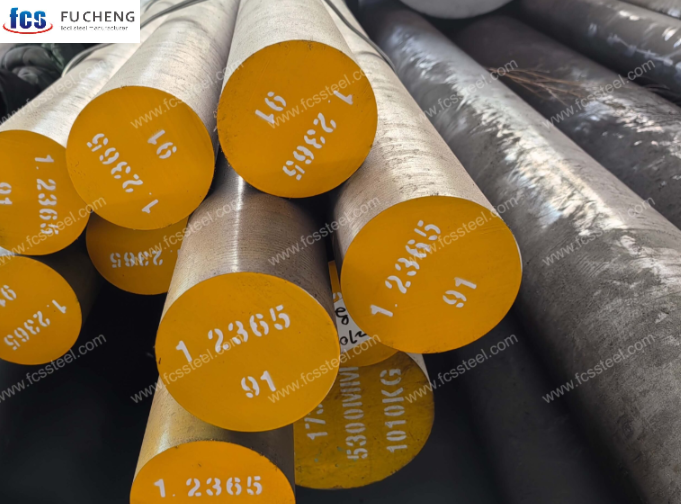
1.2365 (DIN X32CrMoV12-28, equivalent to H10) is not a commodity steel. It is a chromium-molybdenum-vanadium hot work tool steel used in die casting, extrusion tooling, and hot forming dies where thermal fatigue resistance, high-temperature strength, and dimensional stability are critical.
Because of its alloy cost structure and heat-treatment sensitivity, the difference between a reliable stockholder and a trading intermediary is significant. Before examining specific suppliers, it is important to define what qualifies as a high-quality 1.2365 source.
A credible supplier should provide:
- Traceable heat numbers with EN 10204 3.1 certification
- Clear disclosure of melting route (EAF + ESR where applicable)
- Verified chemical composition within DIN tolerances
- Transparent hardness condition (annealed vs. pre-hardened)
- Measured ultrasonic testing (UT) conformity
- Consistent section size availability
- Realistic lead times, not “indicative” promises
In European markets especially, documentation integrity and repeatability often matter more than headline pricing. The following companies are widely referenced within the hot work tooling sector and represent different supply chain models: fully integrated mill, mill-direct service center, specialized European distributor, and export-focused stockholder.
Dörrenberg Edelstahl GmbH

Metallurgical Background and Production Control
Dörrenberg, based in Germany, operates as a specialty steel producer with in-house melting capabilities. Unlike pure distributors, it controls melting, remelting (including ESR for selected grades), forging, and heat treatment. For toolmakers who prioritize metallurgical consistency, this vertical integration reduces variability between heats.
The company’s product portfolio includes hot work grades equivalent to 1.2365 under its proprietary naming system. Industry documentation indicates strict adherence to DIN chemical tolerances, particularly regarding molybdenum and vanadium balance — two elements that directly influence secondary hardening response and temper resistance.
Because the material is produced in Europe under established quality systems, traceability documentation is typically complete and structured according to EN norms. For automotive and aerospace subcontractors operating under ISO/TS frameworks, this level of control is often mandatory rather than optional.
Market Position and Customer Feedback
Within German and Central European toolmaking networks, Dörrenberg is regarded as a technically conservative but dependable producer. Public procurement data and long-standing distributor relationships indicate recurring orders from die casting and extrusion tooling sectors.
Customer discussions in European technical forums frequently highlight dimensional stability after quenching and tempering as a positive attribute. The feedback pattern tends to emphasize consistency rather than aggressive pricing. Lead times, however, can extend during periods of high alloy demand, especially when ESR variants are specified.
The company’s positioning aligns more with premium metallurgy than high-volume distribution.
Supply Structure and Practical Implications
Because Dörrenberg is a producer, minimum order quantities and mill production cycles can influence delivery speed. Standard annealed blocks are generally available through partnered service centers, while custom forged sizes may require mill scheduling.
For buyers operating on longer production planning cycles, this structure provides stability. For urgent tooling replacements, delivery timing should be confirmed carefully.
Buderus Edelstahl GmbH
Integration Within the Voestalpine Group
Buderus Edelstahl operates under the Voestalpine High Performance Metals division and has long been associated with premium tool steel production in Germany. The company manufactures hot work steels, including grades equivalent to DIN 1.2365, primarily for die casting and forging applications.
Being part of a larger metallurgical group allows access to coordinated R&D and standardized melting procedures. Publicly available corporate documentation confirms electric arc furnace production with secondary metallurgy refinement, ensuring controlled alloy chemistry.
For customers requiring alignment with global automotive supplier chains, Buderus benefits from established compliance infrastructure.
Reputation Among Toolmakers
In practical tool shop discussions, Buderus material is frequently described as predictable during heat treatment. Predictability in distortion control and hardness distribution is often cited as a deciding factor for repeat purchases.
While price levels are generally positioned in the upper tier of the European market, customers tend to associate the brand with low rejection rates. The cost differential is often justified through reduced scrap risk in high-value die casting inserts.
Feedback patterns suggest that reliability and documentation quality outweigh cost sensitivity for their core clientele.
Distribution and Lead Time Dynamics
Buderus supplies both directly and via Voestalpine service centers across Europe and Asia. Standard dimensions are typically stocked, but large forged blocks may involve extended lead times depending on forging schedules.
For multinational operations, the advantage lies in consistent specification alignment across regions, minimizing requalification requirements when transferring tooling programs internationally.
Schmolz + Bickenbach Deutschland GmbH
Distribution Model and Product Range
Operating under the Swiss Steel Group umbrella, Schmolz + Bickenbach (S+B) functions primarily as a distributor and service center rather than a primary melt producer for all grades. It supplies tool steels sourced from affiliated mills within the group.
For 1.2365 equivalents, the advantage lies in stock availability and cutting services rather than proprietary melting. Buyers often choose S+B when shorter delivery windows are required compared to mill-direct orders.
Material documentation is typically standardized, and the group maintains ISO-certified processes aligned with European norms.
Customer Experience Patterns
Public business directories and industrial procurement reviews frequently reference responsive logistics and structured sales coordination. Customers appreciate the ability to source multiple tool steel grades within one purchasing channel.
Because S+B is not solely focused on one niche, its strength lies in breadth rather than metallurgical specialization. For buyers managing diversified tooling materials, consolidated procurement can reduce administrative complexity.
Pricing tends to reflect distribution margins, though the trade-off is faster dispatch for common sizes.
Operational Considerations
Stock depth may vary by regional branch location. Buyers requiring specific ESR-melted variants should confirm origin and remelting details.
For routine die casting insert replacement where material specifications are standardized, S+B’s model provides flexibility and simplified sourcing.
FCS STEEL
Export-Focused Inventory Model
FCS STEEL operates primarily as an export-oriented tool steel stockholder supplying international markets. Unlike European integrated mills, FCS sources from qualified melting partners and focuses on inventory rotation, cut-to-size services, and overseas logistics coordination.
For DIN 1.2365, the company provides annealed stock with EN 10204 3.1 documentation and declared chemical analysis. ESR options are available upon request depending on project requirements.
The operational model prioritizes responsiveness in international trade environments rather than vertical metallurgical integration.
Market Position and International Buyers
Within Southeast Asia and parts of Europe, export distributors are often used to balance cost structure and lead time risks. Industry procurement discussions highlight pricing competitiveness compared to direct European mill supply, particularly when alloy surcharges fluctuate.
Customer feedback commonly references communication speed and shipping coordination as strengths. For tooling manufacturers managing cross-border supply chains, this logistical focus can reduce procurement friction.
Because the company operates internationally, buyers should confirm melting route transparency and inspection requirements in advance to align with internal QA protocols.
Role Within a Dual-Channel Strategy
Rather than competing directly with German integrated mills on metallurgical branding, FCS functions effectively as a secondary channel in risk-balanced sourcing strategies. When regional stock shortages or extended production cycles occur in Europe, having an alternative inventory-based exporter can prevent downtime.
For cost-sensitive projects where certification requirements remain standard rather than aerospace-level, this model can provide economic efficiency without sacrificing basic compliance documentation.
Final Industry Perspective
No single supplier universally outperforms others in every scenario. Integrated German mills such as Dörrenberg and Buderus emphasize metallurgical control and documentation integrity. Large distribution groups like Schmolz + Bickenbach prioritize availability and network coverage. Export-focused stockholders such as FCS STEEL offer flexibility and cost-adjusted international logistics.
For professional toolmakers working with 1.2365, the decisive factors are rarely marketing claims. They are consistency of chemistry, heat-treatment response, traceability clarity, and supply continuity under real production pressure.
Selecting the right partner depends less on brand hierarchy and more on how well the supplier’s structure matches the operational risk profile of the tooling program.