
Introduction:
For global steel stockholders and regional distributors, maintaining market reputation relies on absolute material integrity. When a local steel trader unknowingly imports substandard or mislabeled tool steel (such as Cr12Mov passed off as genuine 1.2379, or standard EF steel sold as ESR quality), the downstream consequences are disastrous: widespread customer rejections,costly insurance claims, and ruined distributor trust.
The material arrives in the correct dimensions. Its surface is clean, its hardness appears normal, and the accompanying certificate looks complete. Nothing seems wrong until the buyer has invested in sawing, drilling, machining, heat treatment.
This is why material substitution is so costly. The saving occurs when the raw steel is purchased, but the failure appears at the most expensive stage of production.
Based on nearly 20 years of tool steel manufacturing and customer failure analysis, we have found that these cases are rarely detected through appearance or hardness alone. To prevent them, buyers first need to understand how the wrong steel enters the supply chain and why it can remain hidden for so long.
Tool Steel Material Substitution: A Real Case of K110 vs Cr12MoV
A customer contacted us after his end user experienced cracking while drilling a cold-work tool steel round bar. The material was still in the annealed condition and had not undergone heat treatment.
The round bar had been purchased locally as K110 tool steel, corresponding to the 1.2379/D2 tool steel family. Because drilling cracks can result from material quality, carbide segregation, residual stress or unsuitable machining parameters, we did not immediately blame either the steel supplier or the drilling process.
The customer sent a fractured sample to our factory. Our first step was chemical composition analysis because the material grade had to be confirmed before any further failure analysis would be meaningful.
The result showed that the sample was not 1.2379/D2. Its composition was closer to Cr12MoV.
|
Key element |
Typical 1.2379/D2 |
Typical Cr12MoV |
Main influence |
|---|---|---|---|
|
Molybdenum (Mo) |
0.70–1.20% |
0.40–0.60% |
Hardenability and tempering response |
|
Vanadium (V) |
0.70–1.10% |
0.15–0.30% |
Carbide formation and wear resistance |
|
Price difference in this case |
— |
— |
Approximately USD 1,300–1,800 per ton |
The exact chemical limits can vary slightly according to the standard used, but the difference in molybdenum and vanadium was sufficient to establish one important fact: the delivered material did not match the ordered grade.
However, chemical composition alone could not prove that the wrong grade was the only cause of cracking. A complete investigation would still need to examine the annealed hardness, carbide segregation, internal defects, residual stress, drilling parameters, cooling conditions and fracture characteristics.
This distinction reflects an important principle in failure analysis: we should state what the evidence proves and continue investigating what it does not.
Why Do Some Suppliers Dare to Substitute Tool Steel?
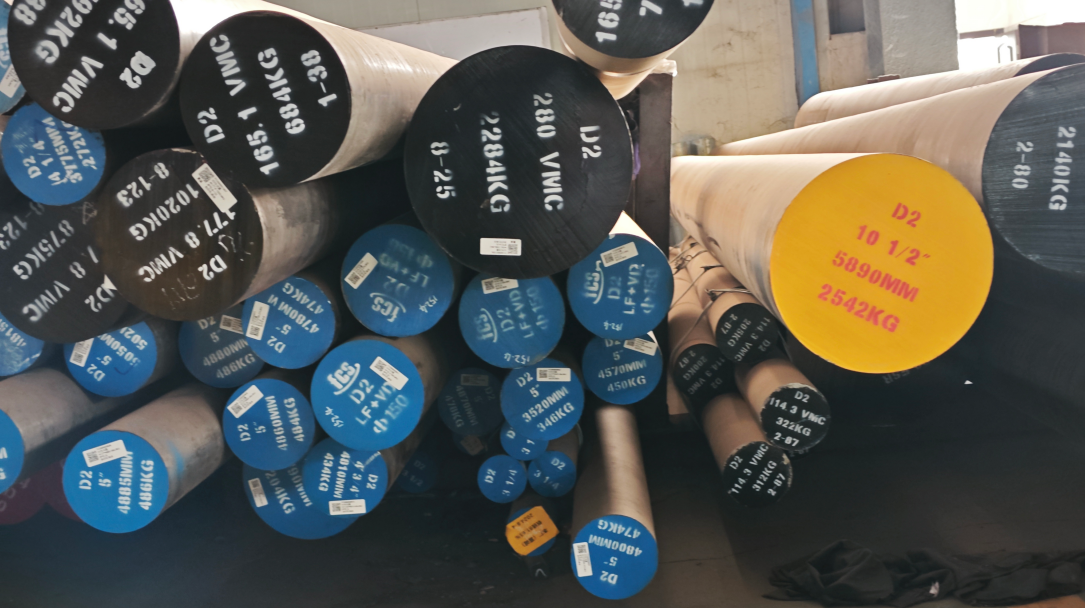
The commercial logic behind material substitution is frustratingly simple. Suppliers know that different tool steel grades can look identical and pass basic checks, creating a huge information advantage. Based on our experience, here is why they get away with it:
-
The Hardness Illusion: Grades like Cr12MoV and 1.2379/D2 can both reach 58–62 HRC. A standard hardness test won’t reveal missing molybdenum and vanadium, nor will it show poor internal cleanliness.
-
Expensive Testing Equipment: While checking dimensions is cheap, verifying chemistry isn’t. A lab spectrometer can cost upwards of RMB 300,000 to 800,000. Many small and medium-sized shops simply don’t have the in-house metallurgical lab needed to catch a substitution.
-
The Blame Game: Tool failure rarely has a single cause. When a die cracks, a bad supplier will instantly blame your EDM process, mold design, or heat treatment, knowing it’s hard for you to prove otherwise without independent chemical evidence.
-
The Timing of Failure: The wrong steel usually passes receiving inspection just fine. Cracking or excessive wear only appears after you’ve invested heavily in CNC machining and heat treatment. By then, recovering the full loss requires lengthy negotiations, and sellers gamble that you’ll just absorb the cost.
-
Rushed Orders & Messy Warehouses: It isn’t always deliberate fraud. Sometimes, offcuts lose their heat numbers or get mixed up. Add an urgent production schedule where inspections are skipped, and the wrong steel slips right into your supply chain.
Why a Correct MTC May Still Be Insufficient
An MTC is valuable only when it can be connected to the physical steel.
The correct traceability chain should be:
Physical steel → heat number → inspection record → MTC
Problems often begin when a master bar or block is cut. If each new piece is not remarked immediately, the original heat identity may be lost. Similar-looking offcuts can then be mixed and later shipped under the wrong grade.
In other situations, the certificate may contain genuine and compliant test data but belong to a different production heat. The document itself is not necessarily false; it is simply disconnected from the delivered material.
For this reason, buyers should not stop at asking whether the supplier can provide an MTC. They should ask how the supplier proves that the MTC belongs to the exact physical piece being delivered.
Common Forms of Tool Steel Downgrading
Material substitution does not always mean replacing one grade with a completely different steel. Sometimes the nominal grade is correct, but the supplied quality level or production route is lower than the one ordered.
|
Material ordered |
Material or quality supplied |
Hidden difference |
Possible result |
|---|---|---|---|
|
1.2379/D2 |
Lower Mo and V |
Faster wear, chipping and inconsistent heat-treatment response |
|
|
1.2379/D2 |
Little or no intentional Mo and V addition |
Reduced performance in applications designed around D2 |
|
|
Lower-quality conventional H13 |
Different cleanliness, segregation and microstructure |
Early heat checking, cracking or inconsistent die life |
|
|
ESR quality |
Standard EF material |
More inclusions and lower structural uniformity |
Polishing pits, poor surface finish or reduced reliability |
|
P20/1.2311 |
1045 or 40Cr |
Lower through-hardening capability |
Soft core, deformation and dimensional instability |
Cr12MoV, Cr12, standard EF steel and 40Cr are not inherently defective materials. They all have appropriate applications and price levels.
The problem begins when one is sold under another name, when the steelmaking route is concealed or when the customer pays for a quality level that was never supplied.
The Grade Can Be Correct While the Quality Is Still Wrong
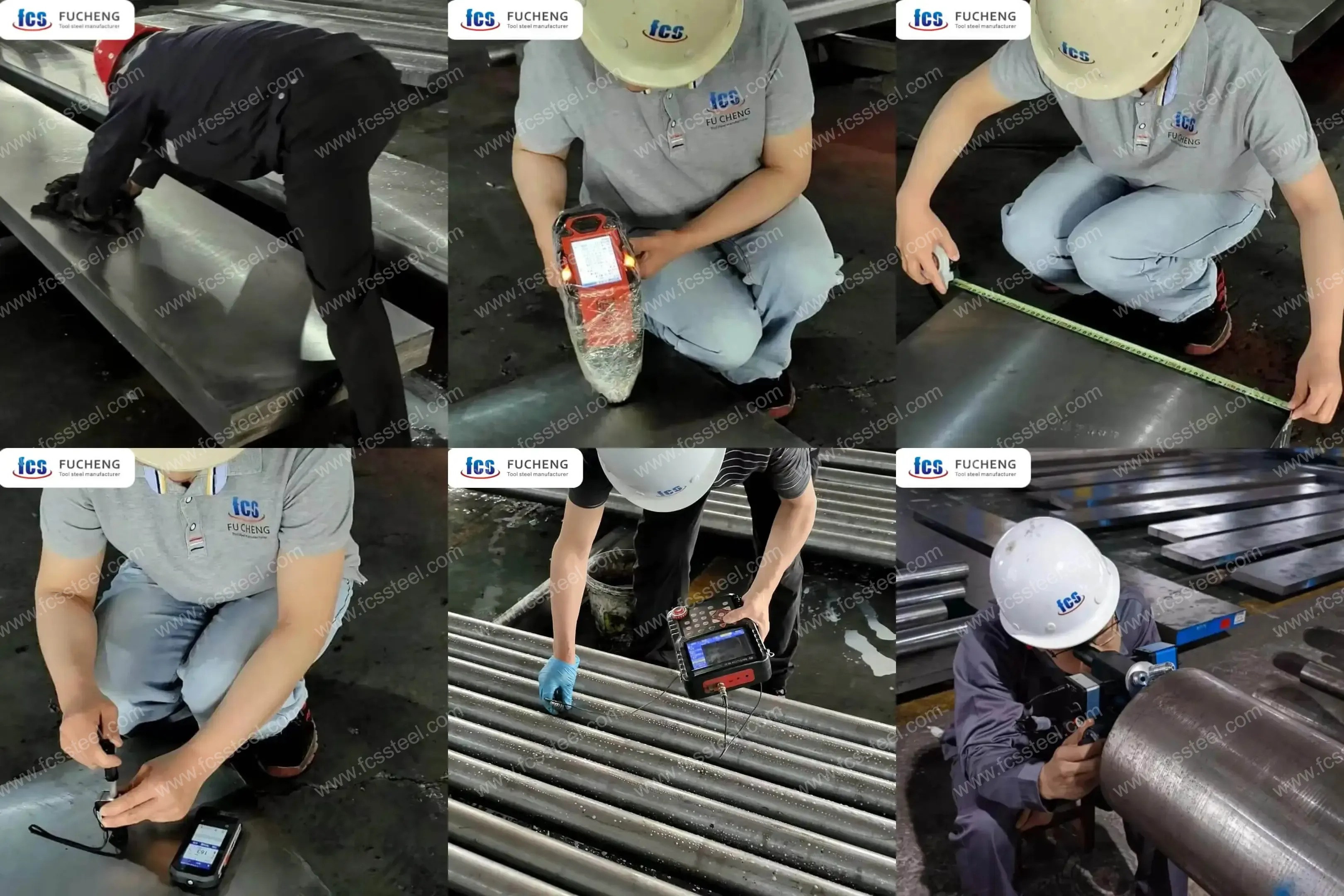
Chemical composition confirms whether the steel falls within a specified grade range, but it does not describe the complete metallurgical condition.
Two pieces of H13 may both meet the nominal chemical standard while having different levels of cleanliness, segregation and structural uniformity. Steelmaking route, refining, forging reduction and heat treatment can significantly affect toughness and thermal-fatigue resistance.
The same issue exists in cold-work steel. Insufficient forging may leave coarse carbide networks or severe carbide segregation. Poor refining may leave excessive inclusions. Improper annealing or straightening may leave residual stress.
These differences may appear during production as difficult machining, wire-EDM cracking, heat-treatment distortion, edge chipping, polishing defects or premature fracture.
This is why a hardness report and chemical analysis cannot replace UT or metallography when the application has demanding internal-quality or structural requirements.
The Real Cost of Cheap Tool Steel
A lower price is not automatically suspicious. It may result from a different order quantity, stock condition, steelmaking route, inspection scope or commercial strategy.
The warning sign is an unusually large difference that the supplier cannot explain clearly.
In the case described above, the approximate price difference between the ordered D2-grade material and the supplied Cr12MoV was USD 1,300–1,800 per ton. The initial saving became insignificant once the customer had invested in machining and faced a cracked component.
The real cost of a failed tool may include CNC and EDM hours, heat treatment, replacement material, remanufacturing, press downtime, delayed delivery and damage to the mold maker’s relationship with the end customer.
The cheapest quotation is therefore not necessarily the lowest total cost. A buyer needs to understand exactly what was removed, changed or downgraded to create the price difference.
How Buyers Can Reduce the Risk
Buyers do not need to purchase an entire metallurgical laboratory, but they should complete five essential checks before accepting critical tool steel.
-
Match the heat number on the physical steel with the MTC. If the material was cut from a larger bar or block, confirm how the original identity was transferred.
-
Review the key alloying elements. For 1.2379/D2, pay particular attention to molybdenum and vanadium rather than looking only at the grade name printed on the certificate.
-
Check hardness without treating it as proof of grade. Hardness is useful for confirming the delivery condition, but similar steels can produce similar readings.
-
Independently test the first order or critical batches. A third-party chemical test costs far less than remanufacturing a failed die.
-
Preserve evidence before machining. Photograph the markings, retain the MTC and incoming inspection records, and keep a reference sample when practical.
These checks create a usable evidence chain if a problem later occurs.
How FCS Steel Controls Material Identity
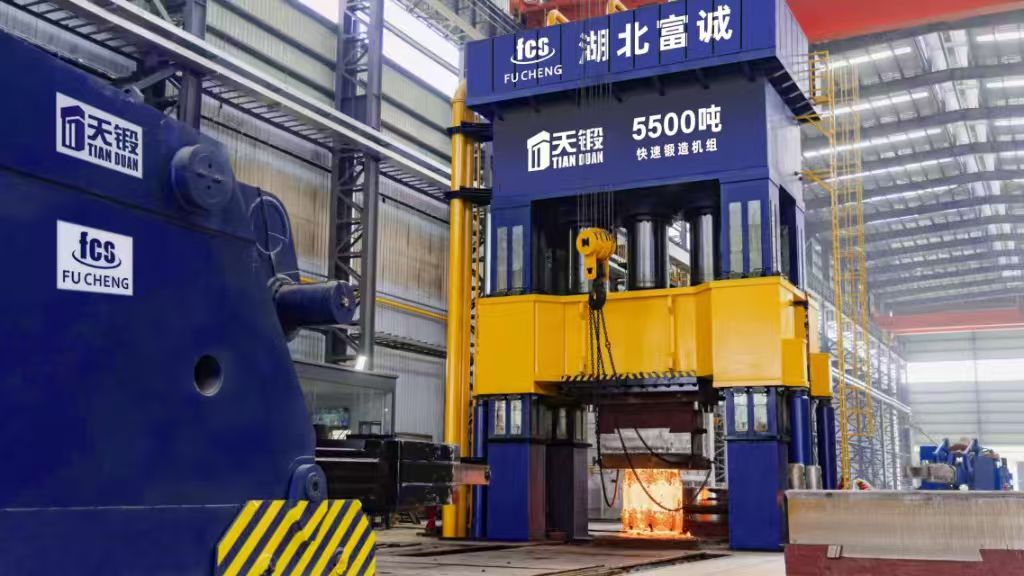
Most overseas stockists do not carry OES equipment in their receiving yards. That is why FCS performs 100% OES chemical verification at our mill prior to container loading, ensuring you never gamble on received stock.We keep things simple: what you order is exactly what you get. We guarantee this through four strict rules:
-
Honest Quoting: If you order 1.2379/D2, you get D2. If Cr12MoV fits your budget better, we quote it as Cr12MoV. We never secretly substitute cheaper grades.standard EF steel is identified as standard EF steel, and ESR material is supplied only when the actual production route and documentation support that description.
-
Unbroken Traceability: Heat numbers are strictly transferred every time a block is cut. This ensures your EN 10204 3.1 MTC actually matches the physical metal on your shop floor.
-
Transparent Inspection: We define testing requirements at the quotation stage—whether it is standard chemistry or advanced UT. We also welcome independent checks by SGS, TÜV, or BV.
-
Evidence-Based Accountability: With an annual capacity of 50,000 tons exported to over 20 countries, we protect our reputation with facts. If an issue arises, we check retained samples and heat records instead of automatically blaming your machining process.
Stop Gambling with Your Tool Steel Supply
A slight discount on raw material simply isn’t worth a ruined project and a damaged reputation. If you are tired of second-guessing your steel deliveries and need a partner who guarantees 100% material integrity, we should talk.
Send us your material specifications for your next die or mold project. We will provide a straightforward, transparent quotation with absolutely no hidden downgrades. Contact the FCS Steel team today and get exactly what you pay for.