
Choosing between ASTM 420H and AISI 410 stainless steels, the technical details can be overwhelming. So, how do you pick the one that best suits your needs? The differences in strength, hardness, and corrosion resistance are important.Whether you’re using them for cutting tools or industrial equipment. But there’s one key factor that could affect your decision—how their heat treatments influence performance. Let’s explore this.
Chemical Composition
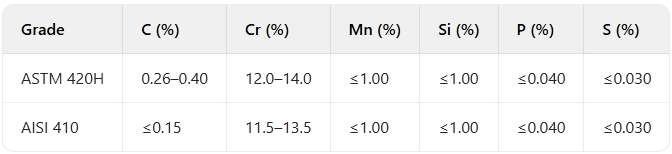
The chemical composition of ASTM 420H and AISI 410 stainless steels reveals important differences, particularly in their carbon content. ASTM 420H contains more carbon, ranging from 0.26% to 0.40%, while AISI 410’s carbon content is limited to 0.15%. This extra carbon in ASTM 420H makes it more resistant to wear and tear and allows it to achieve greater hardness after heat treatment. Both alloys have similar chromium levels, which provide good corrosion resistance, but the additional carbon in ASTM 420H significantly enhances its durability and strength.
Mechanical Properties

I compare the mechanical properties of ASTM 420H and AISI 410 stainless steels, I notice clear differences in how they perform in different applications. It’s like comparing two athletes: one excels in endurance, while the other is better in agility.
420H has much higher strength and hardness, making it better for wear-resistant applications.
410 offers more ductility and better impact toughness, making it ideal for flexible, shock-resistant uses.
420H’s properties are more sensitive to tempering temperature, so its performance can change depending on the heat treatment.
| Mechanical Property | Grade | Value | Treatment Condition | Comparison Summary |
|---|---|---|---|---|
| Tensile Strength | 420H | 1580 – 1620 MPa | Tempered at 316 – 427°C | 420H has much higher tensile strength than 410, better for high – strength needs. |
| 410 | 520 – 770 MPa | Annealed | ||
| Yield Strength | 420H | 1360 – 1420 MPa | Tempered at 316 – 427°C | 420H outperforms 410, more resistant to deformation under stress. |
| 410 | 290 – 580 MPa | Annealed | ||
| Elongation | 420H | 10 – 14% | Tempered at 316 – 427°C | 410 is more flexible due to higher elongation, better for forming. |
| 410 | 16 – 22% | Annealed | ||
| Hardness | 420H | 444 – 461 HB | Tempered at 316 – 427°C | 420H is harder and more wear – resistant, 410 is easier to machine. |
| 410 | 201 – 255 HB | Annealed | ||
| Impact Strength (Charpy V – notch) | 420H | 19 – 20 J | Tempered at 316°C | 410 has better impact toughness, 420H is more brittle under shock. |
| 410 | 30 – 36 J | Tempered at 204 – 316°C | ||
| Elastic Modulus | 420H | 200 GPa | Both materials have comparable resistance to elastic deformation. | |
| 410 | 190 – 200 GPa | |||
| Poisson’s Ratio | 420H | 0.28 | Both materials behave similarly when stressed. | |
| 410 | 0.28 | |||
| Shear Modulus | 420H | 78 GPa | 420H has a slightly better ability to resist shearing forces. | |
| 410 | 76 GPa |
Heat Treatment
Heat treating ASTM 420H and AISI 410 stainless steels requires different processes because of their distinct alloy compositions. 420H has more carbon, making it harder than 410. This gives the steel a tough, durable quality that other materials might envy. Each heat treatment boosts the alloy’s strength and resistance to corrosion, allowing it to perform well in tough conditions.
| Heat Treatment Process | Grade | Treatment Details |
|---|---|---|
| Annealing | 420H | Heat to 840 – 900°C, slowly cool in a furnace to 600°C, then air cool. |
| 410 | Heat to 815 – 900°C, furnace cool to 540°C, then air cool. | |
| Hardening | 420H | Heat to 980 – 1035°C, quench in oil or air. |
| 410 | Heat to 925 – 1010°C, quench in oil or air cool. | |
| Tempering | 420H | Temper at 150 – 370°C to reach desired hardness. |
| 410 | Temper at 205 – 595°C based on required mechanical properties. | |
| Typical Hardness After Heat Treatment | 420H | Up to 53 – 55 HRC. |
| 410 | Up to 48 – 50 HRC. | |
| Preheating Before Welding | 420H | Preheat to 150 – 320°C. |
| 410 | Preheat to 200 – 300°C. | |
| Post – Weld Heat Treatment | 420H | Post – heat at 610 – 760°C. |
| 410 | Post – heat at 650 – 760°C. |
Corrosion Resistance
ASTM 420H stainless steel is highly resistant to corrosion because it has more chromium than AISI 410. AISI 410 contains 11.5-13.5% chromium, while ASTM 420H has 12-14%. This extra chromium adds another layer of protection against harsh conditions. It acts like a shield, keeping the metal strong and durable in tough environments.
Corrosion Performance in Mild Environments
Both steels show moderate corrosion resistance in less aggressive environments, like fresh water, steam, and food products. However, AISI 410 resists atmospheric corrosion, fresh water, and mild acids or alkalies better when it has been heat-treated and properly finished.
Performance in Specific Corrosive Media
ASTM 420H performs better than AISI 410, particularly against food acids, detergents, and some petroleum-based products. It’s a tough material that lasts longer and resists corrosion better. Here’s a comparison of how both steels handle corrosion in different environments:
| Corrosive Medium | ASTM 420H Corrosion Rate (mm/year) | AISI 410 Corrosion Rate (mm/year) |
|---|---|---|
| 5% acetic acid | 0.025 | 0.05 |
| 10% citric acid | 0.05 | 0.1 |
| Seawater | 0.25 | 0.5 |
Considerations for Corrosion Resistance
Neither ASTM 420H nor AISI 410 is suitable for highly corrosive environments like marine or industrial settings with strong chemicals. For the best corrosion resistance, both grades should be hardened, tempered, and finished with a smooth surface. Passivation treatments can also improve corrosion resistance, especially for machined or welded parts.
Applications
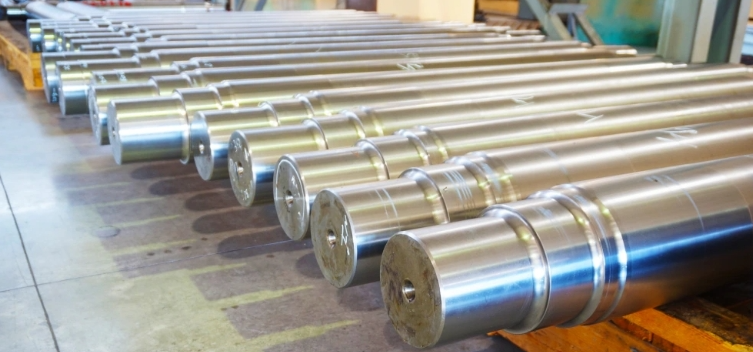
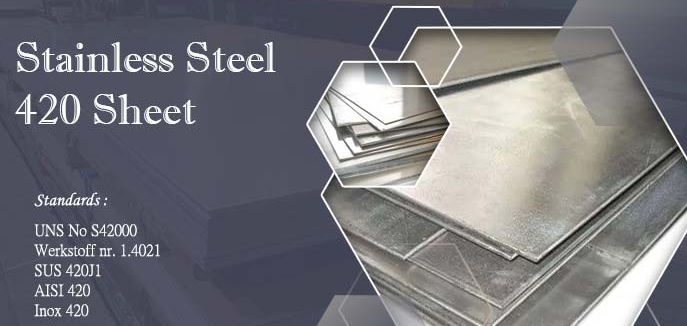
Grade 420 stainless steel is a great choice when you need strength and durability. It offers strong protection for your tools, resisting wear and tear while also standing up to moderate corrosion. On the other hand, Grade 410 stainless steel is ideal when you need extra rust resistance. It strikes a good balance between corrosion protection and toughness. It’s like choosing the right armor—strong, reliable, and ready for any challenge.
Some key uses are:
| Application Category | Grade 420 Stainless Steel | Grade 410 Stainless Steel | Comparison |
|---|---|---|---|
| Cutting Tools | Kitchen knives, pocket knives, hunting knives, shear blades, scissors | – | 420 excels in cutting tools due to higher hardness (53–55 HRC) and wear resistance. |
| Medical/Dental | Surgical scalpels, forceps, dental picks | – | 420’s balance of hardness and corrosion resistance suits medical precision. |
| Industrial Equipment | Needle valves, pump shafts, gears, bearings, hand tools (chisels, punches) | Turbine blades, steam/gas turbine parts, high-temperature bolts/nuts, valve components | 420 for wear resistance; 410 for high-temperature corrosion resistance. |
| Manufacturing | Plastic injection molds, food processing equipment (grinders, slicers) | Petroleum production equipment | 420 for mold durability; 410 for oil/gas industry applications. |
| Automotive | Valve stems, fuel injector components | – | 420’s strength suits engine components. |
| Key Differentiation | 420: Higher hardness/wear resistance. 410: Better high-temperature corrosion resistance. |
Key Differences
I compare ASTM 420H and AISI 410 stainless steels, I notice clear differences. They are similar in some ways but have unique characteristics. Both have strengths, but their variations in composition and performance make them suitable for different tasks.
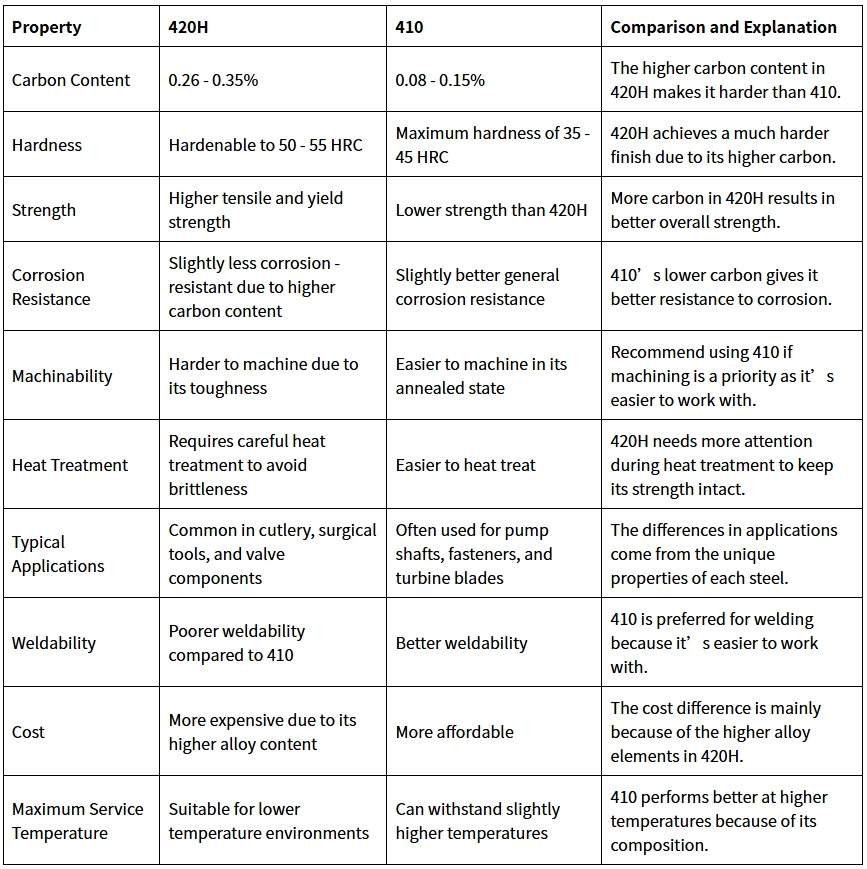
summary
Comparing ASTM 420H and AISI 410 is about understanding their advantages and choosing the right standard for your project. It’s like picking the best tool for a job—neither is better, but one may be perfect for your needs. From my experience with industrial equipment, I’ve seen 420H’s hardness perform well in tough, high-wear environments. On the other hand, 410 is great when you need flexibility and resistance to impact. Instead of just focusing on specifications, consider the strengths of each alloy and match them to what your project needs.