Introduction: 2026 SKD61 Sourcing
Sourcing SKD61 in 2026 is more than a procurement decision. It’s a bet on geopolitics, logistics, and currency shifts — and getting it wrong is costly.
Nearshoring is reshaping supply chains. Asian manufacturing costs keep moving. The gap between a smart sourcing strategy and an expensive mistake is bigger than ever.
This 2026 Global Sourcing: SKD61 Price Comparison Between Thailand, Vietnam, and Mexico covers what buyers need to know:
- Real price benchmarks
- Hidden supply chain costs
- Key variables that will shift outcomes this year
Diversifying away from a single supplier? Building a sourcing strategy from scratch? The numbers here show you where to look — and where to walk away.
What Is SKD61 Tool Steel
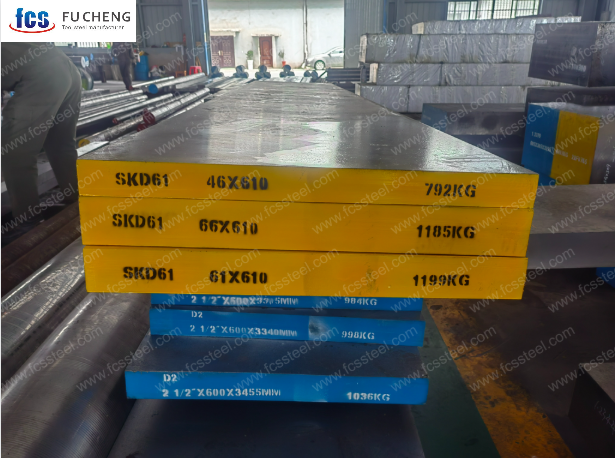
SKD61 is a Japanese Industrial Standard designation — the same alloy the West calls H13, the Europeans call 1.2344. Different names, same DNA.
The chemistry is built for precision: 0.32–0.40% carbon, 4.75–5.50% chromium, molybdenum and vanadium held in a tight range. That combination delivers one defining trait — maintaining hardness and structural stability more consistently in the 550–600°C range compared to standard H13 grades
2026 SKD61 Pricing Drivers
Four external pillars are reshaping SKD61 cost structures beyond traditional manufacturing:
- Currency Fluctuations: The US Dollar Index (forecasted at 95–100) directly impacts landed costs for buyers in Southeast Asia and Mexico dealing with USD-denominated contracts.
- Market Divergence: While global growth slows to 3.1%, robust 4.5% expansion in emerging markets and consistent 4–6% demand in aluminum die casting provide a price floor.
- Surging Input Costs: Massive price hikes in essential alloys—Molybdenum (up 24%) and Vanadium (up 31%)—force mills to pass expenses downward.
- Policy Risks: Escalating trade uncertainties disrupt supply chains, adding a significant risk premium to sourcing.
Die Casting Demand Pressures
Die casting demand keeps climbing. Aluminum die casting alone is growing 4–6% per year. Every new mold cavity runs hotter and longer than the last generation. SKD61 handles that load better than H11. Better than 4Cr5MoSiV1. It offers improved toughness and thermal fatigue resistance compared to standard H13, depending on processing and heat treatment,and its mirror-finish capability is stronger across the board.
Prices reflect that demand pressure:
| Region/Period | Price Range | Notes |
|---|---|---|
| Shanghai Benchmark (H13 equivalent, not certified SKD61) | ~¥18,000-25000/ton | 2025 Projection |
| Global Q1 2026 Estimate | $4,850–$6,200 USD/ton | |
| Q2–Q4 2026 Projection | $5,200–$6,400 USD/ton | |
| Spot Market Premium | $150–$250 USD/ton above contract pricing | Driven by Japanese mill shutdowns running 3–5 weeks behind schedule |
Global benchmark for certified SKD61 (Japanese origin / ESR-grade) is estimated at $4,800–$6,400/ton.
Broader market transactions typically range between $2,500–$3,500/ton depending on origin and quality level.
Thailand SKD61 Sourcing:
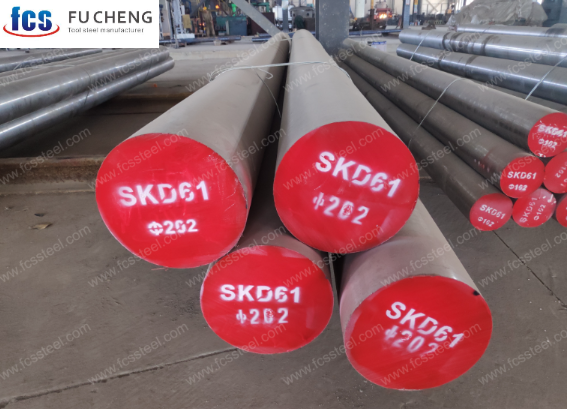
Thailand doesn’t manufacture SKD61. That fact shapes everything else here.
All SKD61 in Thailand comes in as imports. The main sources are Japanese mills like Hitachi Metals and Daido Steel, European producers like Böhler, and Chinese suppliers pushing certified-grade material into Southeast Asian markets. That layered import structure means landed costs carry more variables than most buyers plan for upfront.
What the price stack looks like:
- Base material cost: Aligns with global benchmarks — expect $5,000–$6,200 USD/ton for certified SKD61 (HRC 48–52, full Cr/Mo/V composition)
- Import duty: Thailand applies a standard tariff on tool steel — factor 3–7% based on HS code classification and country of origin
- VAT: 7% at import — recoverable for registered manufacturers, but impacts short-term cash flow and trading costs
- Freight and handling (CIF Bangkok): Add $180–$320/ton based on shipment origin and port congestion at Laem Chabang
The costs stack up fast. Start at a Japanese mill base price of $5,400/ton. Add duties, VAT, and domestic trucking to the factory floor. You land at $6,100–$6,500/ton. That’s a meaningful gap buyers often underestimate at the planning stage.
Where Thailand’s supply chain creates friction
Lead times are the real pressure point. Japanese mills are running 3–5 weeks behind schedule right now. Those delays flow straight into Thai inventory gaps. Local distributors hold no more than 4–6 weeks of specialty tool steel stock. For SKD61, safety stock buffers are thin — there’s little cushion.
Baht volatility adds another layer. USD-denominated contracts look stable on paper. But the exchange rate can shift 3–5% inside a single quarter. That’s not a hypothetical risk — it happened twice in 2024.
What bulk purchasing does for unit cost
Orders above 5 tons can bring 4–8% price reductions from distributor-level suppliers. The tradeoff is real — capital sits tied up in inventory that moves slower than rubber or commodity steel. You’ll need to weigh cash flow against the per-ton savings.
Third-party material certification adds cost too. For aerospace and precision die casting buyers, it’s non-negotiable. Budget an extra $200–$600 per batch, depending on the testing scope.Thailand is a workable sourcing market. It’s not a cheap one.
Vietnam SKD61 Sourcing
Vietnam’s SKD61 market runs on imports. Full stop. There is no domestic production. Every ton arrives from Japan, China, or Korea. That means every cost variable sits somewhere in that transit chain.
Vietnam pricing varies widely by origin, ranging from $3,500–$5,000/ton for Chinese supply to $5,200–$6,200/ton for Japanese-origin material.
Vietnam’s Supply
Japanese mills dominate the quality end. Daido Steel is the go-to reference supplier for precision die casting buyers in Vietnam. Out-of-factory prices have moved up recently.
Molybdenum and vanadium input costs drove that increase, and it hasn’t come back down. Need consistency across production runs? Japanese-origin SKD61 is still the benchmark. It costs more. That premium is real.
Chinese-sourced SKD61 and similar die steel grades come in at lower price points. But Vietnam-specific price gaps between Chinese and Japanese material aren’t well documented in current market data. Build your comparison from landed cost up — not from headline quotes.
Korean material exists but stays in the background. No clear price-band data covers Korean-origin SKD61 moving into Vietnam.
FDI & Tool Steel Demand Growth
Foreign direct investment is reshaping the market fast. Large-scale Chinese manufacturers — operations running 2,000+ CNC machines, with global production footprints — are buying land and building factories in Vietnam. That FDI wave brings aluminum cold-heading tooling requirements with it. SKD61 sits right in the middle of that demand spike.
Large-format processing is a real pressure point too. Tests on 400mm diameter SKD61 bar stock show cutting cycles running close to 19 minutes per pass. That’s a lot of machining time. It points to a gap in local supply that buyers need to know about:
Vietnam’s critical weakness — large-format inventory
- Bar stock above 400mm diameter has very low local availability
- Oversized material ships in on demand — nothing sits in stock
- Phuong Trang Special Steel (CONG TY THEP DAC BIET PHUONG TRANG) is the most active importer in this category, with customs records showing steady activity since 2021
- Safety stock for large-diameter SKD61 is essentially zero at the local distributor level
Bottom line for 2026 sourcing decisions:
Vietnam offers competitive labor and growing manufacturing infrastructure. But SKD61 availability here is thin in the specs that matter most — certified large-diameter bar stock, consistent delivery against a Japanese-origin quality standard, and predictable lead times.
Buyers treating Vietnam as a low-cost alternative to Thailand on tool steel will run into inventory gaps they didn’t plan for. The FDI inflow is building future demand. It’s not fixing today’s supply constraints.
Mexico SKD61 Sourcing
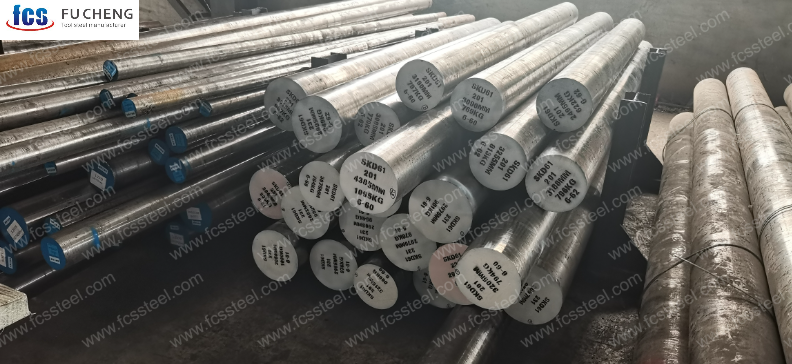
Most Mexico market pricing reflects H13 equivalents or non-certified SKD61, rather than Japanese-origin certified material.Nearshoring changed the math. Not gradually — fast. Mexico’s H13/SKD61 demand has grown at 12.5% CAGR since 2021. Automotive and electronics manufacturers moved operations out of Asia, and that drove it. In the Monterrey and Guanajuato corridors alone, H13/SKD61 demand is up 30%. That’s not a forecast. That’s where the market already is.
The global hot-work tool steel market sits at $1.2B today. It’s tracking toward $2.1B by 2033 at 5.6% CAGR. Mexico holds an 8% share of that growth — and nearshoring is the engine behind it.
Mexico Steel Supply Comparison
| Channel | Product | Price (USD/kg) | MOQ | Lead Time | Notes |
|---|---|---|---|---|---|
| Local Distributor | H13 | $2.80–$3.50 | 5 tons | 1–2 weeks | +15–20% cost |
| Direct Import | Hitachi SKD61 | $2.50–$3.00 | — | 4–6 weeks | 0% tariff (USMCA); risk of +25% if non-compliant |
Mexico pricing at $2,500–$3,500/ton primarily reflects locally stocked H13 equivalents or non-Japanese SKD61.
Certified SKD61 from Japanese mills aligns closer to the global premium range.
European brands sit in a higher price tier
Uddeholm (Sweden): $4.20–$5.00/kg for ESR-grade material in 20–200mm sizes — a 40–50% premium over local pricing
Villares (Brazil): $3.80–$4.50/kg from Monterrey warehouse, USMCA-compatible, with 10% bulk discounts above 20 tons
Port routing and inland freight are real cost variables:
| Port | Import Cycle | Monterrey Inland | Guanajuato Inland |
|---|---|---|---|
| Veracruz | 25–35 days | $120–150/ton | $180–220/ton |
| Manzanillo | 20–30 days | $200–250/ton | $150–180/ton |
Total inland freight runs $0.15–$0.25/kg by 20-ton truck over 800–1,200km. Build in a 20% delay buffer for strikes and customs holds — both showed up in recent quarters.
Currency risk is not theoretical here. The MXN/USD rate moved 18% in 2025. Molybdenum prices climbed 24%, vanadium iron 31%. Both fed straight into H13 production costs, pushing them up 15%. Buyers on open pricing took the full hit. Those with 3–6 month futures hedges didn’t.
Volume is a key factor for US-based buyers comparing Mexico against domestic sourcing:
| Annual Volume | Mexico Local Cost | US Import Cost (USMCA 0%) |
|---|---|---|
| Under 10 tons | $3.20/kg | $3.80/kg |
| 10–50 tons | $2.90/kg | $3.40/kg |
| Above 50 tons | Mexico advantage widens further |
Under 10 tons a year, Mexico’s local pricing still beats US import costs — and that’s before you factor in shipping speed. Above that threshold, the gap grows further in Mexico’s favor.
Mexico isn’t a backup sourcing market. For North American buyers running high-volume die casting operations, it’s now a primary option. You get real price advantages, a maturing supply chain, and geographic proximity that Asian alternatives can’t match.
Overall costs in the Three regions

Three countries. Three very different cost structures. One material.
Thailand, Vietnam, and Mexico each tell a different story. The numbers don’t stand alone — they tie into lead times, tariff exposure, currency risk, and certification costs. Cut through the complexity and the comparison gets simple..
The practical ranking for global sourcing:
- Total landed cost (low to high): Mexico → Vietnam → Thailand
- Supply reliability: Mexico → Thailand → Vietnam
- Large-format SKD61 availability: Thailand → Mexico → Vietnam
- Tariff advantage: Mexico (USMCA 0%) pulls far ahead of the other two
For North American operations, Mexico wins on most dimensions. For Southeast Asian manufacturing bases, Thailand is the more reliable choice over Vietnam. Yes, it costs more — but that premium is worth it when on-time delivery matters more than chasing the lowest quote.
Global Selection Guide
The data is clear. The prices are on the table. Now comes the real decision — and that takes a framework, not just numbers.
Here’s how to cut through it.
Where your end product ships should drive where your SKD61 comes from. That sounds obvious. Most buyers ignore it until the freight bill shows up.
- North America operations: Mexico wins. USMCA’s 0% tariff, 1–2 week local lead times, and solid distributor depth in Monterrey make it the go-to choice. The math holds at volumes above 10 tons per year — and gets stronger above 50.
- Southeast Asian manufacturing bases: Thailand is generally more reliable than Vietnam for certified SKD61 supply, despite higher costs. Vietnam’s pricing looks good on paper. But push for large-diameter bar stock and you’ll find local inventory is near zero.
- European or global mixed operations: Japanese-origin SKD61 through established distributors sets the quality standard. Plan for the premium — it’s worth it.
Relying on a single source is the most expensive mistake in SKD61 procurement. The fix is straightforward:
China (East China production cluster, ~50% of national capacity) + one Southeast Asian or Mexican partner cuts your exposure by 30–50% against single-market price swings. Running two suppliers adds under 5% in management overhead. That’s a trade worth making.
Notice for buyers:
Look closely at the market variables—surging alloy costs, shifting exchange rates, and unpredictable trade policies. Waiting to secure your SKD61 supply is a costly gamble. With Japanese mills already pushing delays and spot premiums rising, hesitation will simply wipe out your margins.
Stop waiting for prices to drop. Lock in your Q1 contracts immediately before these external pressures dictate your 2026 tooling budget.