
Introduction:
Finding reliable D6 tool steel wholesale factories affects your manufacturing success. Your efficiency and profits depend on it. You need suppliers for aerospace parts, high-performance dies, or precision tooling. The real challenge? Finding partners who deliver consistent quality, good pricing, and reliable shipping.
This guide shows you verified D6 tool steel wholesale sources across major manufacturing hubs. We cover Shanghai’s busy ports, Germany’s precision steel districts, and North America’s specialty metal centers. You’ll learn how to evaluate suppliers by region. Port advantages matter—they affect your final costs. We share a proven decision framework that looks beyond price. It helps you assess long-term partnership value.
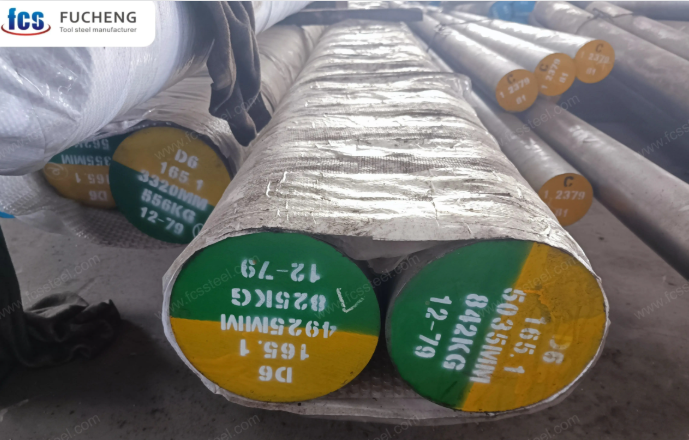
Asia-Pacific Region D6 Tool Steel Wholesale Sources
The Asia-Pacific region produces over 60% of global tool steel output. China alone operates more than 150 specialized alloy steel plants. You get competitive pricing here. Plus, massive production capacity. Port networks connect to every major market.
China’s Manufacturing Powerhouses
Shanghai, Guangzhou, and Wuxi form China’s tool steel triangle. These cities have factories with ISO 9001 and ASTM A681 certifications. Most need minimum orders of 500kg to 2 tons. That’s smaller than European suppliers.
Fushun Special Steel has 100,000-ton annual capacity for tool grades. Order above 10 tons and bulk pricing drops 15-22%. They handle custom specs: specific hardness ranges, dimensional tolerances down to ±0.05mm, surface finish needs. English-speaking technical teams handle overseas inquiries.
Daido Steel’s Chinese network covers 12 cities. You’ll find them in Suzhou, Dongguan, Tianjin. They stock standard D6 bars. Delivery takes 7-14 days for common sizes. Pricing runs 8-12% above local Chinese makers. But you get Japanese quality protocols.
Made-in-China.com lists 2,026 D6 tool steel products from verified suppliers. Use these filters: “Assessed Supplier” badge (on-site factory audits), transaction history over 3 years, Trade Assurance protection. The platform holds payments in escrow. You confirm receipt first.
Strategic Port Selection
Shanghai and Ningbo ports handle 70% of China’s tool steel exports. Container costs to Los Angeles average $2,200-2,800 (20ft container). European destinations run $3,500-4,200. Processing takes 3-5 days with standard documentation. Customs clearance moves faster here. Steel export procedures cut paperwork delays.
Guangzhou and Shenzhen ports serve Southern China’s Guangdong province factories. Freight rates run 5-8% lower to Southeast Asian destinations. You need these documents: commercial invoice, packing list, certificate of origin, mill test certificates. Some buyers want SGS inspection reports. Arrange these before shipping.
Port choice impacts your landed costs. A Guangzhou supplier shipping to Singapore pays $800 less per container than routing through Shanghai. But Shanghai offers more frequent departures. Better tracking systems too.
Japan-Affiliated Operations Across Asia
Daido Steel runs subsidiaries in Thailand, Singapore, Indonesia, Vietnam, Malaysia, and the Philippines. Their Thailand facility (DAIDO DMS) keeps 500-ton local inventory of common D6 sizes. You skip Japan import lead times. Get material in 5-7 days versus 4-6 weeks.
Quality varies between locations. Japanese parent company needs specific testing: hardness check on every batch, dimensional inspection at 0.02mm tolerance, material composition analysis. Local testing varies by country. Thailand and Singapore facilities match Japanese protocols. Vietnam and Indonesia operations do basic inspections.
Pricing shows this quality gap. Japan-origin D6 costs 18-25% more than Chinese options. Local Asian Daido subsidiaries price 12-15% above Chinese suppliers. A middle ground for buyers wanting better assurance without full Japanese premiums. Payment terms include Letter of Credit (common for first orders) and T/T with 30-50% deposits.
South Korean Precision Manufacturers
Wonil Special Steel, YDP Steel, and WONWOO focus on tight-tolerance D6 production. They offer surface treatments: precision grinding to Ra 0.4μm, nitriding for wear resistance, EDM-grade finishes. Korean manufacturers handle custom cross-sections and small-batch specialty sizes well.
Busan and Incheon ports give direct routes to Americas and Pacific islands. Transit times to US West Coast run 12-14 days. That’s 3 days faster than Chinese ports. Shipping costs stay competitive at $2,400-3,000 per container.
Korean steel costs 10-18% more than Chinese material. But you get tighter chemistry control. Buyers pick Korean sources for aerospace tooling, precision injection molds, and applications where material consistency prevents expensive failures. The price difference pays off. Lower rejection rates. Longer tool life.
Southeast Asian Distribution Hubs
Thailand’s DAIDO DMS works as a regional inventory center. They stock 800+ tons across common tool steel grades. Ship to Myanmar, Cambodia, Laos within 2-3 days. Malaysia has branches in Selangor, Johor, and Penang. Located near major manufacturing zones.
Laem Chabang (Thailand) and Port Klang (Malaysia) work as transshipment hubs. Material shipped here reaches Australia in 8-10 days. Middle East in 12-15 days. Warehousing costs run lower than Singapore. $45-65 per ton each month versus $80-120.
ASEAN free trade agreements cut import duties between member countries to 0-5%. Local content needs affect automotive and electronics sectors mostly. Tool steel imports face fewer restrictions. But verify specific country rules before large purchases.
India’s Emerging Market
Daido D.M.S. India has branches in Faridabad (near Delhi), Bangalore, and Pune. They compete against local suppliers like IMI Alloys and Mukand Sumi Metal Processing. Local Indian D6 prices run 12-20% below imported Japanese material. Quality consistency varies though.
Mumbai, Chennai, and Nhava Sheva ports process tool steel imports. GST (Goods and Services Tax) adds 18% to import value for foreign buyers without local registration. Import procedures need DGFT registration and steel-specific import licenses for certain quantities.
India’s domestic tool steel capacity grows 8-12% each year. Local producers improve quality standards. But they still import high-grade D6 for critical applications. Test small batches from Indian suppliers before big orders.
UAE as Middle East Gateway
Dubai and Sharjah stockists like Nifty Alloys and Reliance Group keep 200-400 ton inventories. They stock bars (rounds from 16-300mm diameter), plates (10-100mm thick), and blocks for die applications. Many offer cutting services: saw cutting, wire EDM, milling to rough dimensions.
Jebel Ali Free Zone gives unique benefits. Store material duty-free. Then re-export to African or European customers without UAE customs involvement. Warehousing runs $70-95 per ton each month. The zone hosts 50+ metal trading companies. Easy to compare suppliers and negotiate.
Use UAE for market testing. Order 500kg-1 ton samples. Evaluate material performance, then scale up. Lead times from UAE stockists: 1-3 days for in-stock items. Import from Asia to Dubai takes 14-18 days. Then redistribute as needed.
North American Sources D6 Tool Steel Wholesale
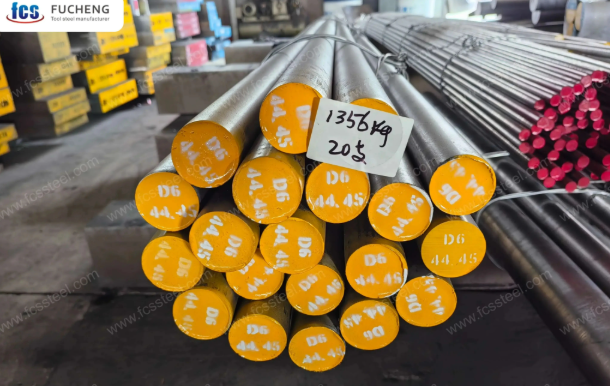
Daido Steel (America) runs manufacturing and distribution facilities in Illinois. This central hub serves the entire North American market. USMCA trade benefits cut out tariffs for US, Canadian, and Mexican buyers. You skip the Section 232 steel tariffs that hit Asian imports.
Domestic pricing runs 25-35% higher than Chinese imports before tariff calculations. But total landed costs show a different picture. Chinese material gets hit with 25% Section 232 tariffs. Freight costs $2,200-2,800 per container. Customs clearance delays run 5-10 days. The gap shrinks to 8-15% for orders under 5 tons.
Specialized Distribution Networks
International Mold Steel in Kentucky stocks D6 rounds up to 8 inches diameter. Most Asian suppliers don’t keep sizes this large ready. They cut custom lengths. Precision saw cutting to ±1mm tolerance costs $0.80-1.20 per cut. Surface grinding adds $3.50-5.00 per square foot.
Tremblay Tool Steels covers Eastern US and Canada from multiple warehouses. Boston, Toronto, and Montreal locations deliver next-day to manufacturing clusters. They stock 150-200 tons of D6 in standard sizes: 1″ to 6″ rounds, 0.5″ to 4″ plate thickness, blocks from 4×4″ to 12×12″.
Pacific Machinery & Tool Steel serves West Coast buyers. California, Oregon, and Washington warehouses stock Japanese-origin Daido material plus US-made alternatives. They offer will-call pickup. Manufacturers can grab emergency stock same-day. This saves production downtime from tool failures.
Distributors accept minimum orders of 100-250 pounds. Chinese factories want 500kg minimum. Small tool shops and prototype operations get flexible order sizes.
Strategic Port Infrastructure
Port of Los Angeles handles 65% of Asian tool steel imports to North America. Material clears customs in 7-12 days with proper documentation. You need a commercial invoice, packing list, mill test certificates, and country of origin declarations.
Section 232 tariffs add 25% to steel value for most countries. Japan, South Korea, and EU nations have partial exemptions through quota systems. Your supplier files exclusion requests. Approval takes 90-180 days. Plan your shipments around these timelines.
Houston port serves Midwest and Southern manufacturers. Container drayage costs less to Texas, Louisiana, and Oklahoma facilities. Rates run $400-600 less than routing through LA to these states. New York/Newark ports feed Northeast manufacturing. Lead times from Asian suppliers: 18-22 days ocean transit, plus 7-10 days customs and inland delivery.
Domestic vs. Import Economics
Break-even analysis matters for volume buyers. Orders under 3 tons favor domestic distributors. You skip import paperwork. Material arrives in 2-5 days versus 30-45 days from Asia. Emergency surcharges for fast domestic delivery run 15-25%. Still faster and cheaper than air freight imports at $8-12 per kilogram.
Chinese D6 costs $4.20-5.80 per kilogram FOB. Shipping adds $0.60-0.85 per kg. Then comes the 25% tariff. Total lands at $6.00-8.31 per kg. US domestic suppliers price $6.80-9.20 per kg for similar quantities. The 12-15% premium buys you speed and certainty.
Orders above 10 tons shift economics toward imports. Negotiate direct with Asian mills. You get better container utilization. Per-unit shipping drops. You absorb tariff costs but gain 18-25% savings on base material price.
Just-in-time manufacturers pay premiums for local stock. Tool failure during production runs costs $500-2,000 per hour in downtime. A $200 premium for same-day domestic D6 delivery prevents $10,000+ in lost production. Calculate your actual cost of delays before picking the cheapest material source.
European Market Access
Germany anchors Europe’s D6 tool steel distribution network. DAIDO Steel Group Europe operates from Frankfurt. Their warehouses span 12 countries. They stock 400-600 tons across standard grades. Rail connections deliver material to Poland, Czech Republic, and Hungary in 2-3 days. Technical teams speak German, English, French, Italian, and Polish. You get help with custom heat treatment specs or dimensional tolerances in your language.
Gebrüder Recknagel shows what German precision means. Their D6 production meets DIN 17350 standards. Chemistry control beats standard ASTM specs. Carbon content holds within ±0.03% variance. Chromium and molybdenum stay within ±0.08% bands. Aerospace and medical device tooling buyers choose German sources for this consistency. Material costs 28-35% more than Asian imports. But rejection rates drop to under 0.5%.
German suppliers stand out for tolerance capabilities. Recknagel grinds D6 bars to ±0.01mm diameter accuracy. Surface finish reaches Ra 0.2μm without extra processing. You get EDM-ready material straight from stock. Small tool shops save $45-80 per piece in prep work. The premium pays back fast on precision injection molds or tight-tolerance stamping dies.
Strategic Port Infrastructure
Hamburg and Rotterdam handle 75% of European tool steel imports. Both ports offer container consolidation services. Ship 2-3 tons instead of full container loads. Costs run €180-240 per cubic meter versus €2,800-3,400 for dedicated containers. Rail networks reach Czech Republic in 14 hours. Poland takes 18 hours. Austria needs 12 hours. Truck delivery costs €120-180 per ton to German manufacturing centers.
Customs clearance in Hamburg takes 3-5 days with proper docs. You need commercial invoices, EUR.1 certificates for tariff breaks, and mill test reports showing material makeup. German buyers often ask for TÜV inspection certificates for critical uses. Get these ready before shipping to skip port delays.
Rotterdam serves Benelux and French manufacturers. Drayage costs less here. Material reaches Amsterdam in 4 hours, Brussels in 6 hours, Paris in 8-10 hours. Port storage runs €55-75 per ton each month. That’s 15-20% cheaper than Hamburg for buyers who need flexible delivery schedules.
UK Market Shifts Post-Brexit
Brexit changed UK tool steel sourcing economics. Carrs Tool Steels and Barrett Steel now stock heavier inventories of common D6 sizes. EU supplier lead times stretched from 5-7 days to 12-18 days after customs procedures changed. UK distributors keep 150-200 ton buffer stocks to maintain service levels.
Import duties hit 3.2% on tool steel from EU sources without special agreements. CE marking doesn’t work for UK sales anymore. Material needs UKCA (UK Conformity Assessed) marking instead. Suppliers who ship to both EU and UK markets carry dual certifications now. This adds £80-150 per batch in compliance costs.
Felixstowe and Southampton ports process most UK tool steel imports. Brexit expanded documentation needs: customs declarations, safety data sheets, UKCA statements, and origin certificates all required. Processing delays run 5-8 days versus 2-3 days pre-Brexit. Plan for this in your delivery schedules.
Smart buyers split their European sourcing now. UK facilities order from UK distributors. This skips customs delays and UKCA hassles. EU facilities source from German or Dutch warehouses. Cross-border shipments make sense for orders above 5 tons. Price gaps offset the paperwork at that volume.
Pricing tells the story. UK domestic D6 costs £6.20-7.80 per kilogram. German material landed in UK runs £7.40-8.90 per kg after duties and customs fees. The 15-19% gap makes local stock better for orders under 2 tons. Larger buyers still import direct. But they plan 3-4 week lead times instead of the old 10-day standard.
Wholesale Buying Decision Matrix
Stop guessing. Use this checklist to validate potential D6 tool steel suppliers before committing to large orders. This framework filters out high-risk vendors quickly.
| Checklist Item | Standard / Benchmark | Red Flag Warning ???? |
|---|---|---|
| Material Certificates (MTC) |
|
Generic certificates not linked to specific heat numbers or batches. |
| Independent Verification |
|
Supplier refusal to allow 3rd party sampling before shipment. |
| Production Traceability |
|
Paper logs only (no digital records) or missing heat stamps on bars. |
| Hardness Consistency |
|
Variation > ±3 HRC within a single shipment implies poor process control. |
| Supplier Audit |
|
“No photography” policies in non-proprietary areas or dirty raw material storage. |
| Risk Mitigation |
|
Minimum Order Quantities (MOQ) only >10 tons for new clients. |
Pro Tip: Always prioritize suppliers with digital traceability systems. If they can trace a specific bar back to the melting furnace in under 5 minutes during a video call, they are likely a professional partner worth keeping.
Conclusion
Sourcing D6 tool steel wholesale factories worldwide goes beyond chasing the lowest price. You need reliable partners who deliver consistent quality, fast logistics, and real value.
You have options across major regions. Asia-Pacific offers manufacturing power through Shanghai and Ningbo ports. North America brings precision suppliers via Houston and Los Angeles. Europe provides premium-grade steel through Rotterdam and Hamburg. Your success depends on three key factors: certification standards, logistics efficiency, and supplier transparency.
Smart procurement teams do more than compare quotes. They verify certifications like ISO 9001 and ASTM compliance. They audit production capabilities. They set clear quality benchmarks before placing orders.
Start by requesting material test reports and samples from 3-5 suppliers across different regions. Compare lead times, MOQs, and payment terms. The best D6 tool steel wholesale factory for your needs offers competitive pricing plus proven reliability. Don’t just pick the cheapest option on paper.
Your next move? Shortlist suppliers by region. Contact them with specific technical requirements. Always request third-party inspection before bulk orders ship.