
Introduction:
Production costs depend on tool longevity. Reject rates cut into profit margins. So choosing between 1.2365 steel ESR and conventional ingot steel isn’t just a material spec—it’s a business decision with real financial impact.
The electroslag remelting (ESR) process delivers superior cleanliness, reduced segregation, and extended tool life. But it costs 20-50% more than standard ingot variants. Many toolmakers report 2-3x longer service intervals with ESR grades. Others question if the performance gains justify the upfront investment.
This analysis uses hard metallurgical data and real-world case studies. You get a practical decision framework. It shows when 1.2365 ESR’s performance advantages translate into bottom-line value. And it shows when conventional ingot steel remains the smarter choice for your specific application.
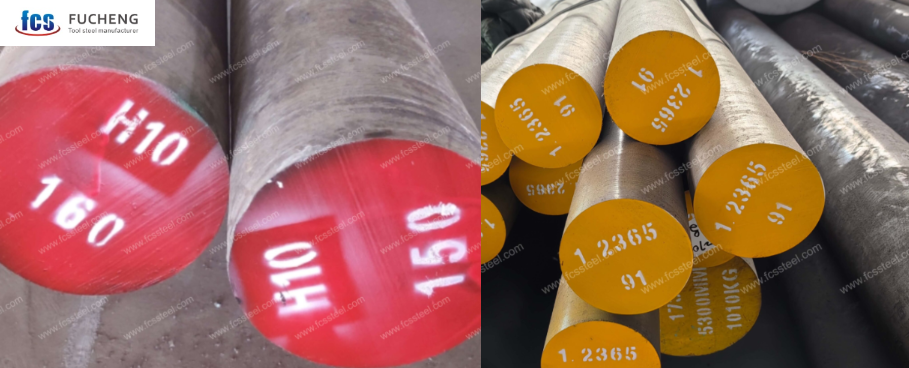
What Makes 1.2365 ESR Different
Electroslag remelting takes raw steel through a second melt cycle. Everything happens under tight control. The process uses a consumable electrode—your starting ingot—dropped into molten slag. Electric current flows through the slag. This creates heat that melts the electrode tip. Droplets fall through the slag bath. The slag acts as a filter. Non-metallic bits float away. Clean metal collects in a water-cooled mold below.
This isn’t just theory. 1.2365 ESR variants get 100% ultrasonic inspection after production. Why? Manufacturers bet their name on ESR cleanliness.
What Changes at the Microstructure Level
Standard ingot casting traps dirt during cooling. Slag bits, gas pockets, and uneven zones create weak spots. These flaws stick around through heat treatment. They turn into crack starting points under heat cycling.
ESR removes most of these defects. The slag bath filters out oxides and sulfides. Controlled cooling in the water-cooled mold stops large-scale separation. You get finer, more even grain structure.
Check your TTT diagrams. ESR-grade 1.2365 shows more reliable change patterns during hardening. Continuous cooling curves stay tighter. Isothermal holds give you the same microstructure throughout.
Thermal Stability Under Real Working Conditions
Die casting tools face huge heat swings. Surface temps jump to 600°C. Then they drop fast during water cooling cycles. Standard ingot steel gets microcracks after repeated heat shocks.
ESR-processed material takes this beating better. Heat flow stays steady: 32.0 W/m·K at 350°C in tempered condition. The refined structure fights off heat fatigue cracking. Tools run through 2-3x more production cycles before problems show up.
ESR variants rule heavy metal die casting for this reason. Running brass or aluminum at high tonnage? Tool failure costs you serious downtime.
Where 1.2365 Steel ESR Excels
| Feature | 1.2365 ESR Variant | Standard H13 / Ingot Steel |
|---|---|---|
| Hot Hardness | Retains 50-52 HRC past 500°C. Stable Mo-V carbides resist softening. | Loses hardness rapidly. Carbide structures break down under high heat. |
| Thermal Fatigue | Superior. Cleaner matrix & lower carbon (0.32%) absorb thermal shock without cracking. | Prone to early heat checking due to higher carbon brittleness and inclusions. |
| Corrosion vs. Toughness | Prioritizes thermal shock survival. Lower Cr (3.0%) boosts mechanical stability. | Prioritizes corrosion resistance (High Cr) but sacrifices toughness at high temps. |
The Bottom Line: It comes down to Molybdenum and Vanadium. While standard steels rely on carbides that dissolve under heat, 1.2365 ESR builds carbides that fight back. You might trade a bit of corrosion resistance due to lower Chromium content, but in heavy die casting, heat checking kills your tooling long before rust ever does.
Why 1.2365 ESR Costs 20-50% More
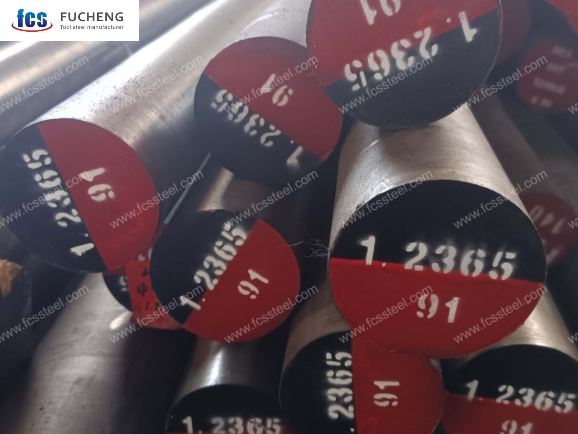
Standard bars run $400-420 while ESR variants jump to $500+. That gap isn’t just profit—it is the direct cost of making cleaner steel. Here is where your money goes:
- Expensive Ingredients: You are buying premium chemistry first. High Molybdenum (2.8%) and Vanadium levels drive base material costs far above standard H13 or H10 grades.
- The “Double Melt”: You pay for a second full production cycle. Remelting the ingot through electrically charged slag consumes massive energy and requires specialized copper molds.
- Slow Output: Quality takes time. ESR production rates crawl compared to standard casting. That extra machine time increases overhead per unit.
- Zero-Defect Standards: 100% ultrasonic inspection is mandatory. Meeting strict ASTM E45 cleanliness specs means manufacturers reject any batch that misses the mark—costs that get baked into the final price.
Real-World Longevity:
Lab data predicts it, but production floors prove it. Here is why 1.2365 ESR consistently delivers longer service intervals in high-stress applications:
- Beats the Competition: Direct forging trials show significantly less surface degradation compared to 1.2344 and Unimax. The material stays intact where others erode.
- Carbide Advantage: ESR processing spreads carbides evenly throughout the matrix. You don’t get the brittle “clusters” found in ingot steel. Fewer stress points mean fewer cracks.
- Hot Hardness Retention: The steel maintains 50-52 HRC even past 500°C. Stable Molybdenum-Vanadium carbides prevent the surface from softening and washing away during long runs.
- Shock Absorption: With over 20% elongation, the tool absorbs heavy impact loads rather than snapping. It bends just enough to survive.
- Thermal Fatigue Resistance: Cleaner metal means fewer inclusions to start heat checks. In brutal brass or aluminum die casting, this delays surface cracking and can double or triple your tool life.
Decision Matrix:
Your decision comes down to four critical factors. First, Size: molds thicker than 600mm need ESR to handle internal cooling stresses without cracking. Second, Heat: if your working surfaces exceed 500°C, you need ESR’s fine grain structure to stop thermal creep.
Then look at Volume and Finish. High-speed production lines recover the 30-50% cost premium quickly by cutting downtime. Likewise, medical or optical parts requiring a mirror polish demand ESR’s cleanliness to avoid pitting. If your project hits any of these markers, standard ingot steel isn’t a savings—it’s a risk.
Application-Specific Selection Guidelines
Choose ESR variants:
– Tool cross-sections exceed 600mm diameter or thickness
– Working temperatures stay above 500°C for extended periods
– Annual production exceeds 100,000 cycles per tool
– Single tool failure costs exceed $50,000 in lost production
– Part rejection rates must stay below 0.1%
– Aerospace or medical certification needs material traceability
Select conventional ingot:
– Prototype tooling with uncertain production volumes
– Dies smaller than 600mm with moderate heat cycling
– Budget-tight projects with acceptable 2-3 year tool life
– Surface finish can tolerate minor flaws
– General manufacturing with tool replacement in maintenance schedules
Blanking dies running abrasive materials show where both compete. Standard 1.2365 delivers good strength for medium-volume stamping. But ESR grades with enhanced vanadium carbides boost wear resistance. The smaller cost gap in smaller tooling makes ESR attractive for moderate runs. Calculate your cost per stamped part. Include die replacement downtime and setup costs. The numbers often favor ESR past 50,000 parts per tool life.
Alternative Upgrade: 1.2367 ESR for Extreme Duty
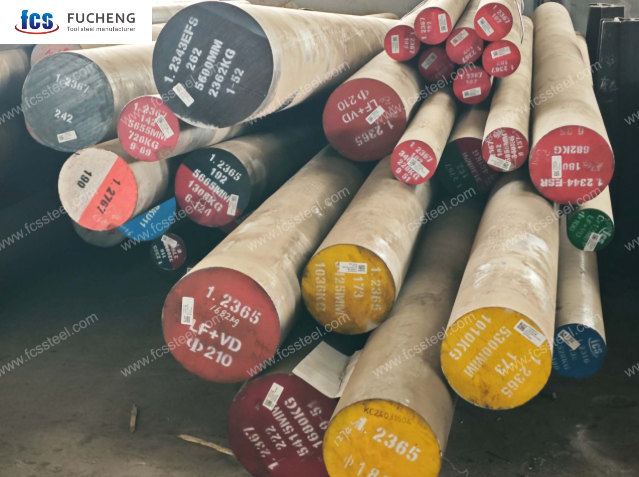
When 1.2365 hits its limit, 1.2367 ESR steps in. This grade packs significantly more chromium (5.0%) and optimized carbon content. The result? You get superior hot hardness and wear resistance that standard hot work steels can’t match. You might trade a small amount of toughness compared to 1.2365, but you gain incredible stability when surface temperatures scream past 600°C.
This is the smart choice for heavy-duty die casting—especially magnesium or aluminum operations with fast cycle times and brutal thermal shock. It’s also perfect for precision mold inserts requiring mirror finishes or nitrided surfaces (reaching 1000 HV). If heat checking or abrasive wear is killing your tools too early, the upfront premium for 1.2367 pays off fast by potentially tripling your service life in these unforgiving environments.
Technical Tips: Get Best 1.2365 ESR Performance
1. Precise Hardening: Keep heat between 1020-1060°C. Go lower, and you risk brittle carbides. Go higher, and you hurt thermal fatigue resistance.
2. Soak Well: Give it 1 hour per 100mm of thickness during stress relief. Don’t rush. Speeding up traps stress. That twists your parts later.
3. Double Tempering: Run two cycles at 500-570°C. Keep them at 2 hours minimum each. This locks in a steady 50-52 HRC.
4. Surface Protection: Try carburizing on high-wear zones. Or use TiN PVD coatings. These cut friction. You also delay heat checking by 20-30%.
5. Smart Machining: Do rough work in the soft annealed state (max 229 HB). Save a 0.5-1.0mm gap for that final grind.
6. Quality First: Run 100% ultrasonic testing before you start. Bad blanks happen. Don’t waste pricey machine time on them.
Conclusion
1.2365 ESR versus conventional ingot steel – there’s no universal “best” choice here. You need to match the material to what your operation actually needs.
High-volume production with costly downtime? ESR’s tool life lasts 2-3x longer. This justifies the 20-50% higher price through fewer changeovers and steady part quality.
Short-run jobs or simpler applications? You might never recover that extra cost.
The data is clear: ESR gives you cleaner steel, better toughness, and more stable dimensions. These gains matter most for precision molding, abrasive materials, or parts facing heat cycling stress. Outside these areas, the benefits may not justify the price.
Check three key factors before you decide:
- Annual tool replacement costs
- Production volume economics
- Quality requirements
Run your numbers through the decision matrix we showed you. Stuck in the middle? 1.2367 ESR/Mod splits the difference. You get better performance without paying for full ESR treatment.
Your next step? Look at your tool failure patterns. Your scrap data tells you if ESR is worth it – not the marketing materials.