
A steel block arrives without visible defects. Its hardness meets the specification, and ultrasonic testing may show no rejectable indications.
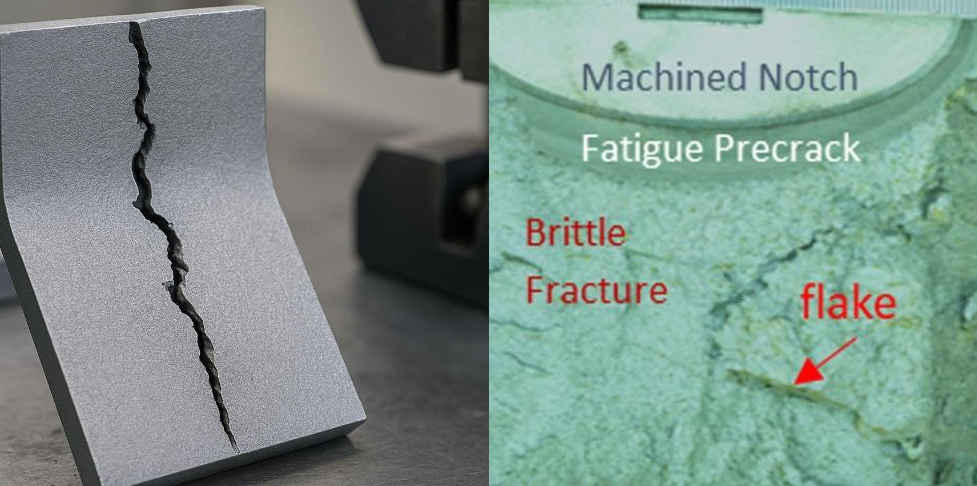
Several weeks or months later, the customer makes the first saw cut and finds internal cracks or white, flake-like defects.
Did the steel crack in storage—or was the defect already developing before delivery?
We have received this type of feedback involving large-section 1.2083/4Cr13, 1.2316 and 1.2714 blocks. These cases are often called “storage cracking,” but storage is rarely the root cause. The problem usually begins during melting, forging, cooling or heat treatment. Time and cutting simply allow it to appear.
Why Are These Grades Sensitive?
These steels have different compositions and applications, but large blocks share two important characteristics: high hardenability and slow cooling at the core.
|
Grade |
Relevant alloy content* |
Main risk in large sections |
|---|---|---|
|
1.2083/4Cr13 |
Approximately 13% Cr |
Hydrogen flakes, internal cleanliness and cooling stress |
|
1.2316 |
Approximately 16% Cr with Mo; some variants contain Ni |
Deep hardenability, section effect and residual stress |
|
1.2714 |
Approximately 4% Ni, 1.2% Cr and 0.5% Mo |
Slow core cooling, transformation stress and hydrogen |
|
1.2080/D3 |
Approximately 2% C and 12% Cr |
Carbide segregation, low toughness and residual stress |
*Exact ranges depend on the applicable standard and individual supplier specification.
In a large forged block, the surface cools first while the center may remain hot for many hours. Temperature gradients and phase transformation occur at different times across the section, producing internal stress.
Alloying elements improve hardenability, corrosion resistance or mechanical properties, but they also make the cooling route less forgiving. This does not mean these grades naturally crack in storage. It means the steelmaker must control hydrogen, forging and cooling according to the actual section size.
Three Main Causes of Delayed Cracking
1. Hydrogen Flakes
Hydrogen enters molten steel through raw materials and furnace inputs. If it isn’t removed, it creates internal flakes and delayed cracks down the line. But let’s look at the actual business risk.
Some smaller mills simply lack Vacuum Degassing (VD) equipment. They skip the degassing step just to slash prices and offer a “cheap” quote. When a distributor buys this heavily discounted steel and passes it on to local clients, those hidden defects eventually surface. The result? Whole-batch returns, painful compensation claims, and lost clients.
At FCS, we refuse to cut corners. We strictly enforce deep VD treatment to control hydrogen levels to a safe ≤ 2 ppm, backed by mandatory SEP 1921 D/d ultrasonic testing. We do this for one simple reason: to completely protect your commercial reputation and secure your profit margins.
2. Residual Tensile Stress
Residual stress can come from uneven forging, rapid or non-uniform cooling, heat treatment, cold straightening and heavy machining.
A block may look sound because the stress remains balanced inside it. Sawing removes material and changes that balance. If the remaining tensile stress exceeds the local fracture resistance, an internal crack can propagate rapidly.
This is why the saw is often the trigger, not the original cause.
3. Internal Metallurgical Defects
Insufficient ingot cropping may allow heavily segregated material to enter the finished product. A low forging ratio can leave porosity, center segregation or remnants of the cast structure.
In high-carbon grades such as D3, carbide segregation can be especially important. In one D3 investigation, the eutectic carbide segregation reached Grade 6.0, providing direct evidence of a severely non-uniform and brittle structure.
Not every crack found after storage is a hydrogen crack. Macrostructure, microstructure and fracture evidence must be examined before deciding the cause.
How the Defect Develops
Stage 1: Melting and Refining
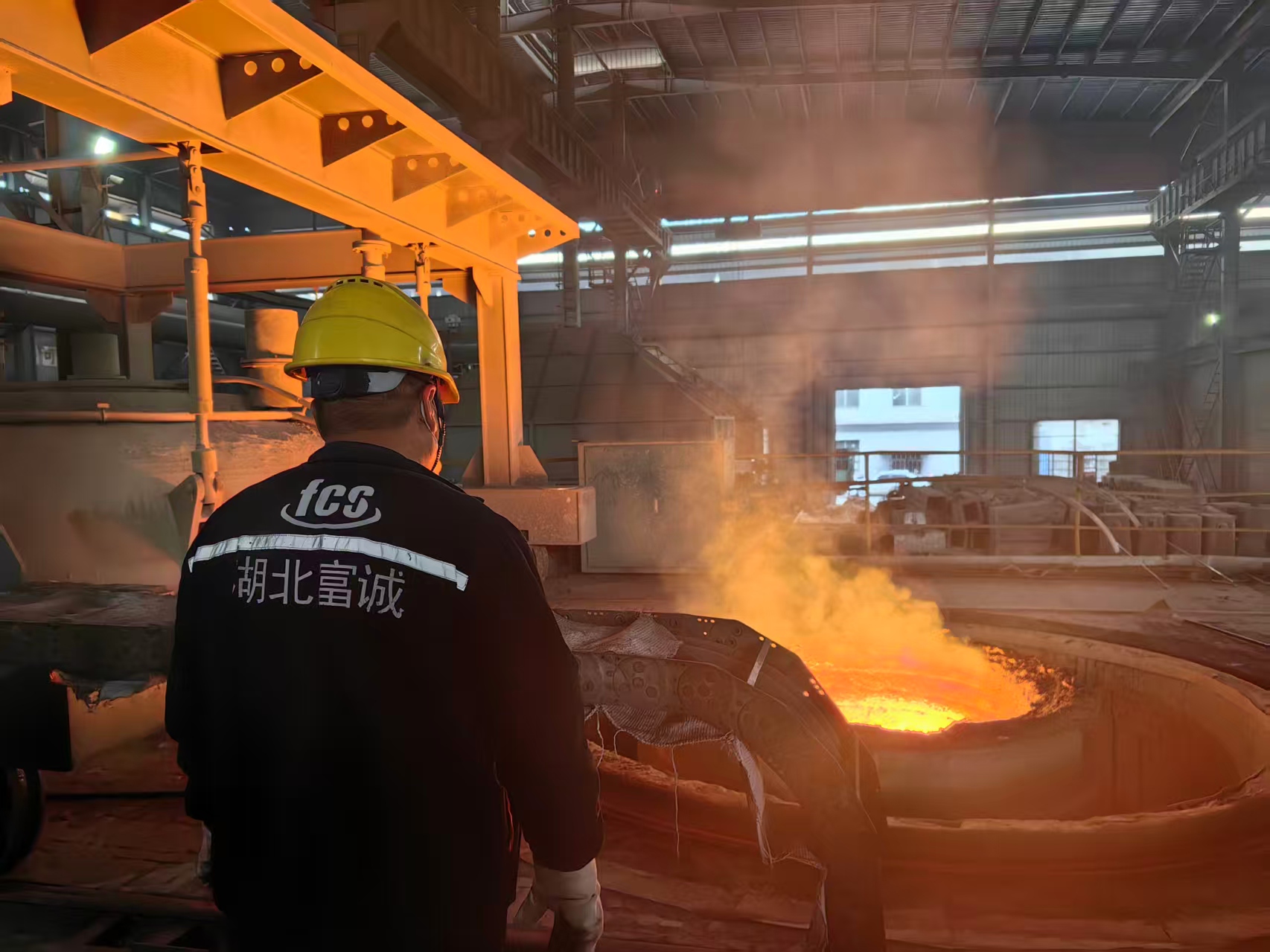
Hydrogen control starts with dry raw materials and suitable furnace practice. LF refining, vacuum degassing, slag control and protected casting work together to improve steel cleanliness.
Writing “VD” on the production route is not enough. The treatment must be effective for the actual heat, and the result should meet the agreed specification.
Stage 2: Casting and Forging
The center and head of an ingot generally contain more segregation than the outer region. Correct cropping removes unsuitable end material before it enters the finished block.
Forging must then produce enough deformation at the center. If only the surface is worked effectively, internal porosity and segregation may remain beneath a clean machined surface.
Stage 3: Cooling and Heat Treatment
This is the most sensitive stage for heavy sections.
If cooling is too fast, large thermal and transformation stresses can develop. If hydrogen removal and cooling are poorly coordinated, diffusible hydrogen may accumulate around internal defects.
Annealing or tempering must be based on grade and cross-section. Surface hardness alone cannot confirm that the core is uniform or stress-free.
Stage 4: Storage and Cutting
During storage, an existing microcrack may remain below the surface. Diffusible hydrogen can continue moving, while residual tensile stress continues acting on weak regions.
The first saw cut removes restraint and redistributes stress. Cutting force and vibration then provide the final trigger.
The accurate description is therefore not necessarily “the steel cracked because it was stored.” More often:
The defect originated during production, remained hidden in storage and was exposed or triggered by cutting.
What Evidence Supports Hydrogen-Assisted Cracking?
|
Evidence |
What it shows |
|---|---|
|
Flake-like internal cracks concentrated near the core |
Supports possible hydrogen-flake damage |
|
Hydrogen result above the agreed mill limit |
Supports hydrogen involvement |
|
Crack appearing after a delay |
Consistent with delayed cracking, but not proof |
|
Brittle fracture with little deformation |
Shows low fracture resistance, but is not unique to hydrogen |
|
Severe segregation or inclusions |
Identifies potential crack-initiation sites |
|
Passed UT result |
Only confirms no rejectable indication under that test procedure |
A final diagnosis should combine fracture examination, full-section macro testing, metallography, hydrogen data, UT records and manufacturing history.
UT can detect many internal discontinuities, but detection depends on defect size, orientation, probe frequency, coverage and acceptance class. Hardness testing cannot measure residual stress, hydrogen or center segregation.
Who Is Responsible?
Responsibility depends on where the defect originated.
The steel producer controls melting, hydrogen removal, cropping, forging and post-forging cooling. A processor may be responsible for later straightening, machining or heat treatment. The customer controls storage, support and sawing conditions.
If testing confirms hydrogen flakes, inadequate forging or another defect originating in production, responsibility normally lies upstream. However, this conclusion should be supported by three facts:
-
The crack origin and defect type have been identified.
-
The tested sample is traceable to the actual heat and block.
-
The result fails the agreed standard or contractual requirement.
Without these facts, blaming either the saw or the supplier is premature.
The Real Cost of Cheap Steel
A spectrometer may confirm the correct grade while missing an omitted production step. Hydrogen control, forging reduction and cooling practice cannot be verified from chemistry alone.
The saving achieved by shortening vacuum treatment, reducing forging work or accelerating cooling may be small per tonne. A failed block can cost far more:
-
The material and completed machining may be lost.
-
Other blocks from the same heat must be quarantined.
-
Production and customer delivery stop.
-
Laboratory testing and claims take additional time.
The cheapest quotation is not always the lowest total cost.
How to Choose a Reliable Supplier
Surface hardness checks at receiving won’t reveal internal core conditions or hydrogen levels. You have to rely on your manufacturing partner. Here is what to look for:
-
Verify equipment capabilities: The supplier needs Vacuum Degassing (VD) facilities and heavy forging presses to consolidate large blocks.
-
Demand strict testing standards: Don’t accept a vague “UT passed” stamp. Reliable mills specify the exact testing standard (like SEP 1921), the acceptance class, and strict hydrogen limits.
-
Ensure complete traceability: Every block should arrive with an MTC 3.1 certificate. The heat number on the physical steel must match the paperwork.
-
Assess technical transparency: Ask the supplier to explain their forging, cooling, and heat-treatment routes for your exact section size.
Preventing delayed cracking requires a supplier who controls the entire production process.
How FCS Controls the Risk
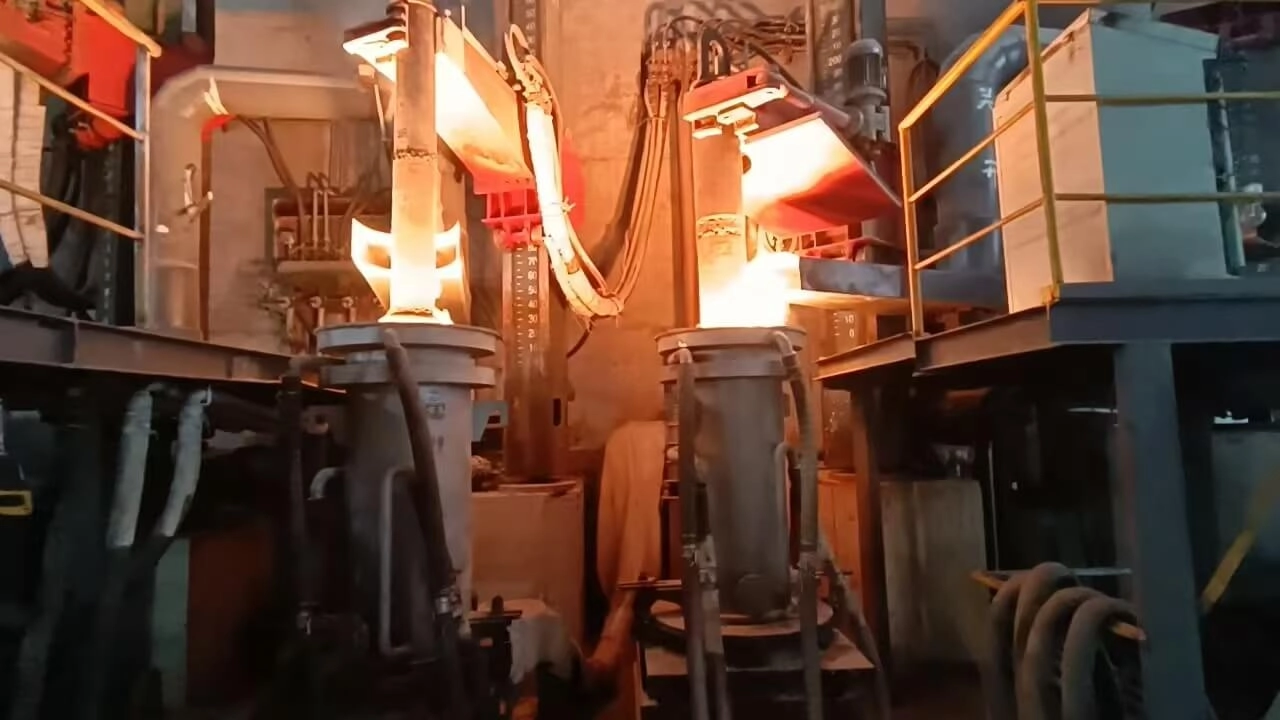
FCS Tool Steel treats section size as part of the material specification. A 500 mm block cannot follow the same cooling logic as a small bar.
To back this up, you need serious equipment. FCS operates a 5,500-ton heavy rapid forging press. This ensures that even for large bars and blocks over 500 mm, the core forging ratio easily exceeds 5:1, completely pressing out and consolidating any center porosity.
Our production route can include:
EF → LF → VD → ESR when specified → controlled forging → controlled cooling and heat treatment → machining → final inspection
We control the process where these defects originate: hydrogen during refining, center structure during cropping and massive forging, and residual stress during cooling and heat treatment.
Inspection is then linked to the heat number. Depending on the contract, this may include chemistry, hardness, UT (such as strict testing to the SEP 1921 standard), macrostructure and metallography, supported by MTC 3.1 documentation.
Conclusion
Let’s be clear: 1.2083, 1.2316, and 1.2714 steel blocks don’t just crack out of nowhere simply because they’ve been sitting in a warehouse for a few months.
The truth is, the underlying cause almost always begins much earlier in the production process. Whether it’s excessive hydrogen, inadequate forging, uncontrolled cooling, residual stress, or a hidden internal metallurgical defect—the damage is already done. Storage simply provides the time, and that first saw cut is just the trigger that exposes the weakness.
For large forged blocks, hitting the right chemistry and surface hardness is just the bare minimum. What really determines whether the steel will remain stable when you begin cutting is strict hydrogen control, proper forging reduction, precise cooling practices, and full heat-number traceability.
Securing Supply for Steel Stockists
For distributors, a cracked block found after months in storage means a direct hit to your margins and difficult conversations with buyers. Your inventory needs to remain stable.
FCS Tool Steel partners with bulk wholesalers. We supply stockists with large-section blocks that are degassed, forged, and safe to keep on your shelves.
Work with a manufacturing partner who understands how consistent quality protects your wholesale business.Contact us today to request a quote or start a technical inquiry. Let’s secure a reliable supply chain for your inventory.