
Introduction:
1.2842 tool steel is an established cold-work tool steel for punches, blanking dies, industrial knives, measuring tools, and selected guide components. These applications span metal-component manufacturing, paper converting, textiles, plastics recycling, and precision machinery.
Its value is the combination of machinability before hardening, high attainable working hardness, and practical finishing requirements. The right purchase depends on whether that combination meets the application—or whether greater wear resistance, toughness, or through-hardening capability justifies another grade.
Drawing on FCS’s manufacturing roots dating back to 2007, this guide connects industrial applications with the raw-material properties and supply requirements that matter when selecting 1.2842 tool steel.
Why Choose 1.2842 (O2) Tool Steel?
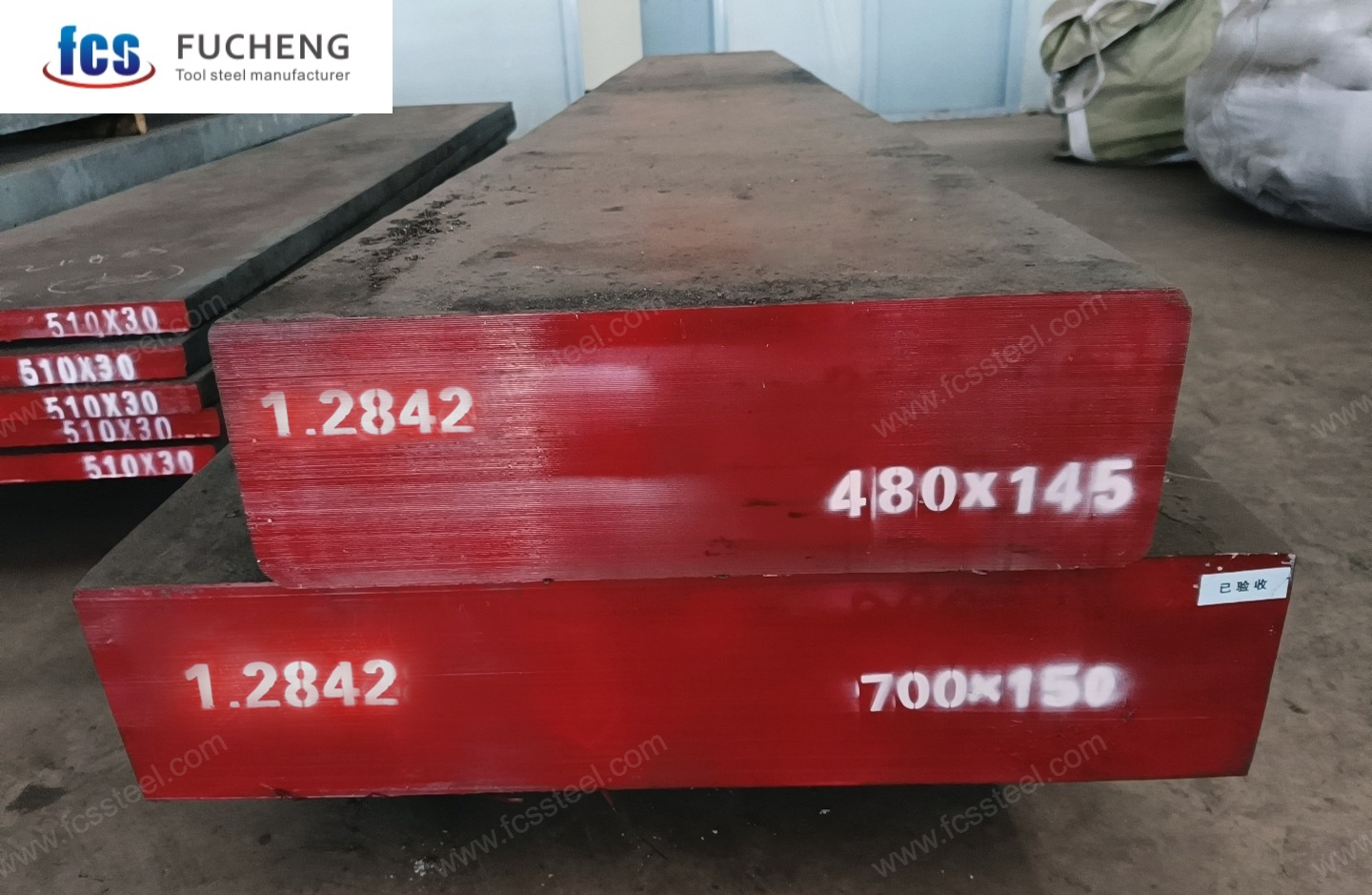
1.2842, designated 90MnCrV8 tool steel, is commonly cross-referenced to AISI O2 tool steel. Specify the applicable standard when ordering: commercial cross-references are useful for identification but do not establish identical composition requirements.
Its 0.85–0.95% carbon supports high hardness after suitable treatment. Manganese at 1.80–2.20% increases hardenability, making oil quenching practical. Chromium is relatively low at 0.20–0.50%, so this is neither a stainless grade nor a high-chromium wear-resistant steel.
A published controlled hardening test reports ≥60 HRC using 790°C austenitising and 180°C tempering. This demonstrates hardening capability; the final hardness and treatment must suit the component’s dimensions and duty.
|
Main advantage |
Value in the application |
Limitation |
|---|---|---|
|
High attainable hardness |
Helps cutting edges and contact surfaces resist indentation and wear |
Higher hardness does not automatically improve resistance to fracture |
|
Machinability in the annealed condition |
Allows holes, profiles, and other features to be produced before hardening |
The delivered annealed condition must be suitable and consistent |
|
Practical oil hardening |
Provides an established route to working hardness |
Distortion and cracking remain possible |
|
Useful grindability |
Supports finishing and resharpening of suitable tools |
Severe abrasion may justify a more wear-resistant alloy |
|
A balance of working performance and manufacturing effort |
Suits conventional cold-work tools without unnecessary alloy cost |
Large sections, severe impact, corrosion, and heat can exceed its capabilities |
These advantages are not exclusive to 1.2842 tool steel. Its appeal is their combination. A steel with a similar HRC value may behave differently because hardness alone does not describe wear resistance, toughness, or response to heat.
Key Applications of 1.2842 Steel
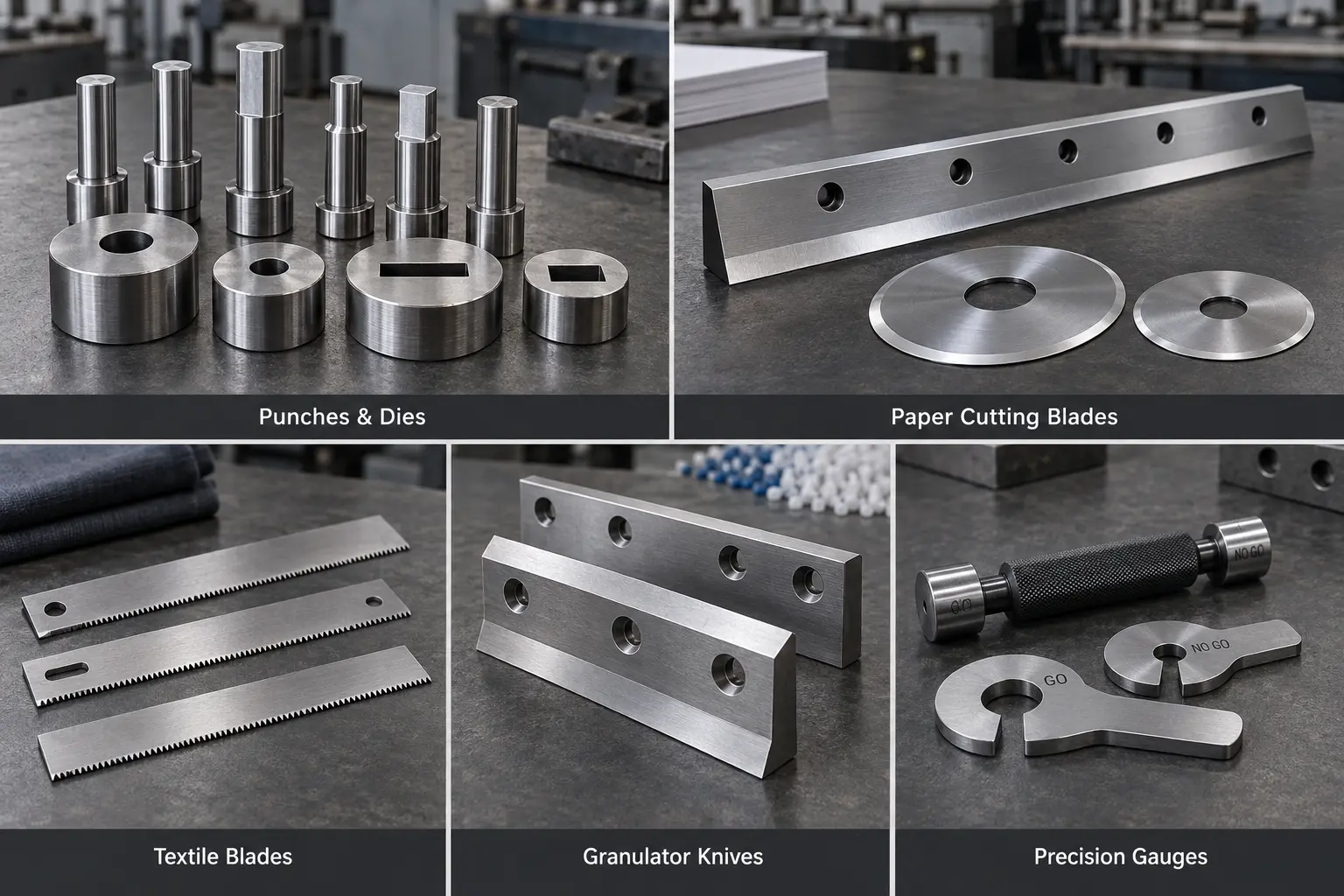
|
Industry |
Equipment or production process |
Components made from 1.2842 |
|---|---|---|
|
Metal-component manufacturing |
Punching, blanking, and suitable cold-forming operations |
Punches, blanking dies, small forming tools |
|
Paper converting and packaging |
Paper cutting and slitting |
Selected straight and circular cutting blades |
|
Textile processing |
Fabric cutting and sample preparation |
Selected serrated blades |
|
Plastics recycling |
Knife mills and suitable granulators |
Cutting knives |
|
Precision engineering and machinery |
Measurement, inspection, and guiding |
Measuring tools, gauges, selected guide rails |
These are application categories, not blanket approvals. Selection still depends on the material being processed, finished component size, operating conditions, and required working life.
1. Metal Stamping and Forming
Punches and blanking dies need a hard edge that resists chipping. 1.2842 tool steel provides a good balance for stamping brackets and mounting plates from mild steel or copper. Watch your section thickness. Since it hardens in oil, a massive tool block might not reach full hardness at the core. For thick sections, you might need A2 (1.2363) tool steel. If you stamp abrasive materials and replace tools frequently, D2 (1.2379) tool steel pays for itself despite the higher initial cost.
2. Paper Converting Knives
Standard clean paper is easy to cut. Coated boards and abrasive fillers wear down a cutting edge much faster. 1.2842 handles conventional paper slitting well, takes a sharp edge, and grinds evenly. The main issue for buyers is the raw material’s surface condition. If an O2 blank arrives with heavy surface decarburization (carbon loss), the final cutting edge will be soft and wear out early. Always specify a tight machining allowance.
3. Textile Cutting Blades
Serrated fabric blades must separate fibers without snagging or tearing. 1.2842 tool steel is a common choice for disposable and reusable induction-hardened blades because it holds fine teeth well. Material warpage is the biggest problem when making long, thin textile blades. If raw steel blanks lack tight straightness and thickness tolerances, you will spend hours fixing the material on the grinder, driving down your yield.
4. Plastics Recycling Mills
Granulator knives and knife mills take heavy abuse. They face abrasive wear from plastic feedstock (like PA6) and sudden impacts from foreign contamination. 1.2842 tool steel provides a tough edge that resists chipping better than brittle, high-alloy steels. For abrasive plastics, tests show a D2-type grade holds its edge longer. Base your material choice on whether you need to withstand impact or pure abrasion.
5. Precision Measuring Tools
Dimensional movement ruins measuring gauges, calipers, and cross-roller guide rails. 1.2842 works well for these parts because oil-quenching causes less distortion than water-hardening. You can machine it to tight tolerances, heat treat it, and trust it to hold its shape. If precision parts lose their micro-tolerances early, check your heat treatment parameters before switching to a more expensive grade. Poor temperature control causes more issues than the steel itself.
How to Specify 1.2842 When Ordering
For repeat industrial orders, four details make the material requirement more useful:
-
Standard and delivery condition. Identify the required specification and whether the material must arrive annealed. Do not substitute a finished-tool HRC requirement for the raw-material delivery hardness.
-
Usable dimensions. Include tolerances, supplied surface, and machining allowance. Nominally identical bars may leave different amounts of usable material.
-
Relevant quality requirements. Specify decarburisation limits, annealed-structure requirements, or ultrasonic inspection where the application warrants them. A test method should be accompanied by an acceptance criterion.
-
Repeat-order consistency. Keep the approved specification, dimensions, condition, and inspection requirements together so subsequent orders are purchased on the same basis.
These requirements address processing cost and acceptance risk more directly than an undefined request for “premium O2 tool steel.”
1.2842 vs. Alternatives: When to Upgrade
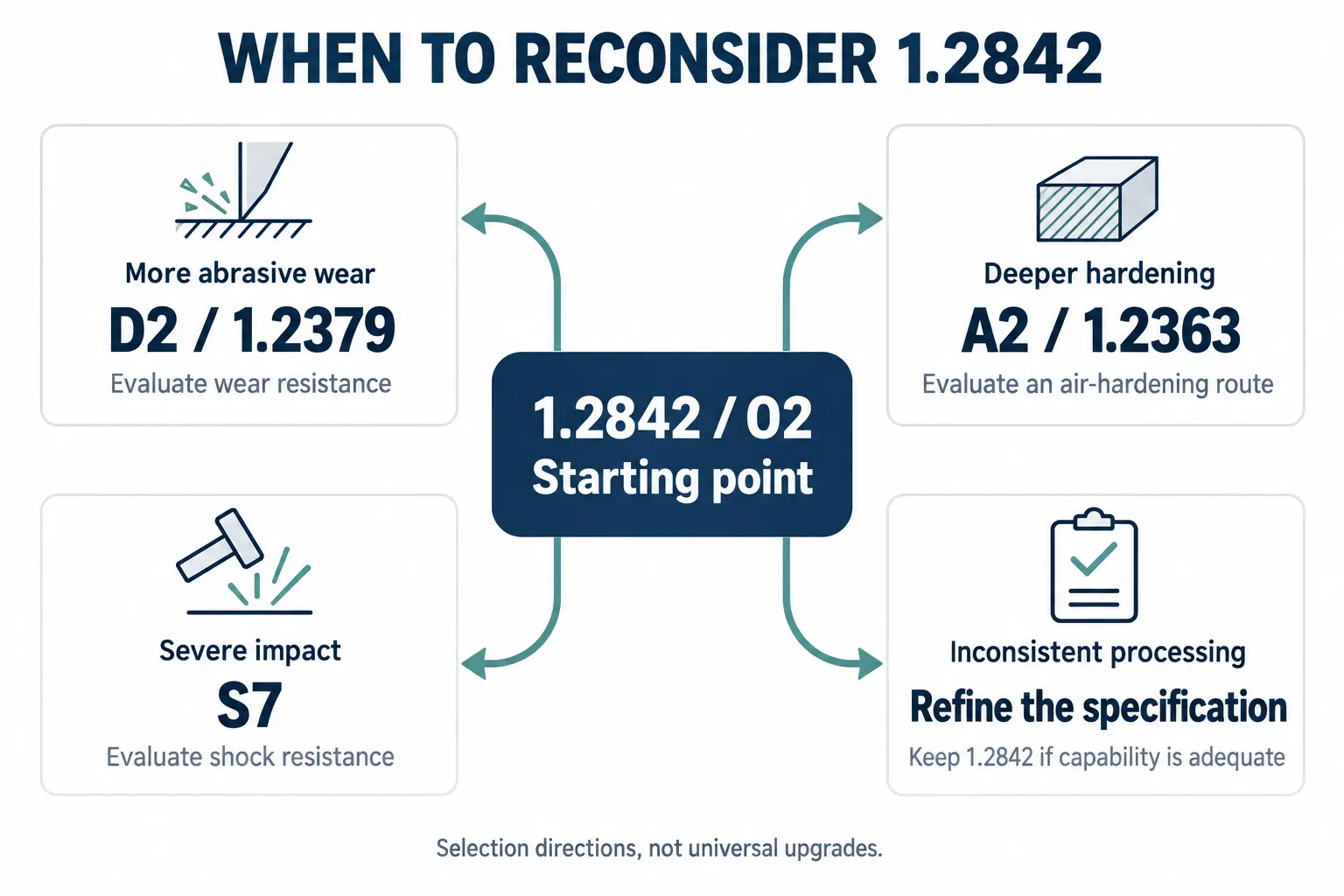
Improve the quality specification when 1.2842 tool steel already meets the application but material-related consistency is inadequate. Change grade when the application exceeds the alloy’s capability.
|
Requirement |
Direction to evaluate |
|---|---|
|
Proven performance with acceptable manufacturing cost |
Conventional annealed 1.2842 tool steel |
|
More consistent machining or treatment response |
Tighter annealed-condition and structural-quality requirements |
|
Reliability concerns associated with inclusions or internal quality |
Defined cleanliness and inspection criteria; ESR where justified and available |
|
Greater abrasive-wear resistance |
|
|
Greater through-hardening capability or an air-hardening route |
A2/1.2363 tool steel |
|
Greater resistance to severe impact |
A shock-resisting grade such as S7 tool steel |
|
Sustained hot-work performance |
A grade selected for that temperature and duty |
An EFS option should be assessed against the supplier’s defined refinement controls and supporting inspection results. Neither EFS nor ESR automatically gives 1.2842 the wear resistance of D2 tool steel or the thermal performance of hot-work steel.
A2’s air-hardening characteristics and S7’s impact-oriented applications offer different reasons for selection; neither is a universal upgrade.
Your Reliable 1.2842 Steel Supplier
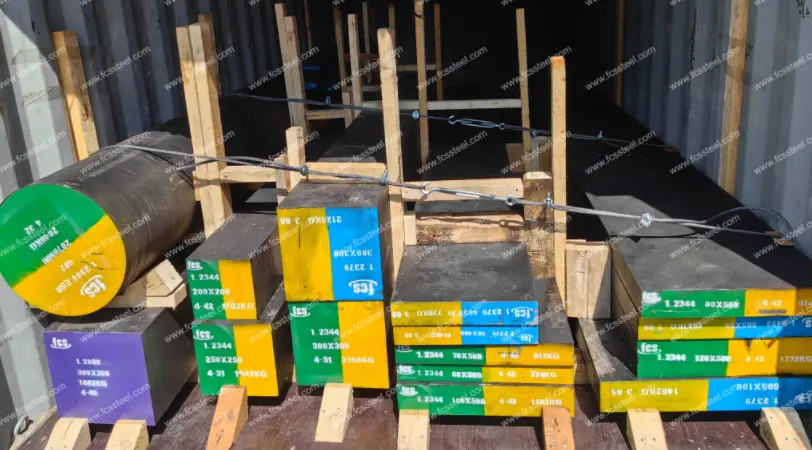
When buying tool steel in bulk, you need batch-to-batch consistency. FCS goes beyond generic grade designations. Our 1.2842 steel production route uses LF + VD + forging to give you a refined internal structure every time. We deliver it annealed at ≤212 HBS, so your machinists can get straight to cutting without fighting the material.
As a wholesale O2 tool steel supplier, we handle full-container orders starting at 25–26 metric tonnes for both bars and blocks. Whether you need standard dimensions or specific machining allowances, our manufacturing capacity keeps your production lines moving.
If your application demands tight processing consistency or strict internal quality controls, like specific ultrasonic testing criteria, tell us before production. We will match the manufacturing specification to your exact requirements, setting a repeatable standard for future purchases.
Secure a more reliable supply chain. Send us your size breakdown, required tonnage, delivery condition, and destination port, and our technical sales team will quote your customized order.