
An inquiry for “tool steel for stamping dies” leaves several questions unanswered. Is the material for a piercing punch, a blanking insert, a forming section, or a backing plate? What sheet material will the tool process? Does the existing component wear out gradually, chip at the edge, or break before its expected service life?
Whether you are a toolmaker designing a new die, or a steel distributor fulfilling a material request, these details matter. They influence which sizes to process, which specifications to prioritize, and whether an alternative material can actually improve die life.
A stamping die contains components with completely different duties. Selecting steel by component gives engineering teams and procurement staff a practical way to organize designs and communicate material requirements clearly.
This guide focuses on conventional cold stamping. Hot-stamping applications require a separate assessment of temperature, thermal cycling, and material performance.
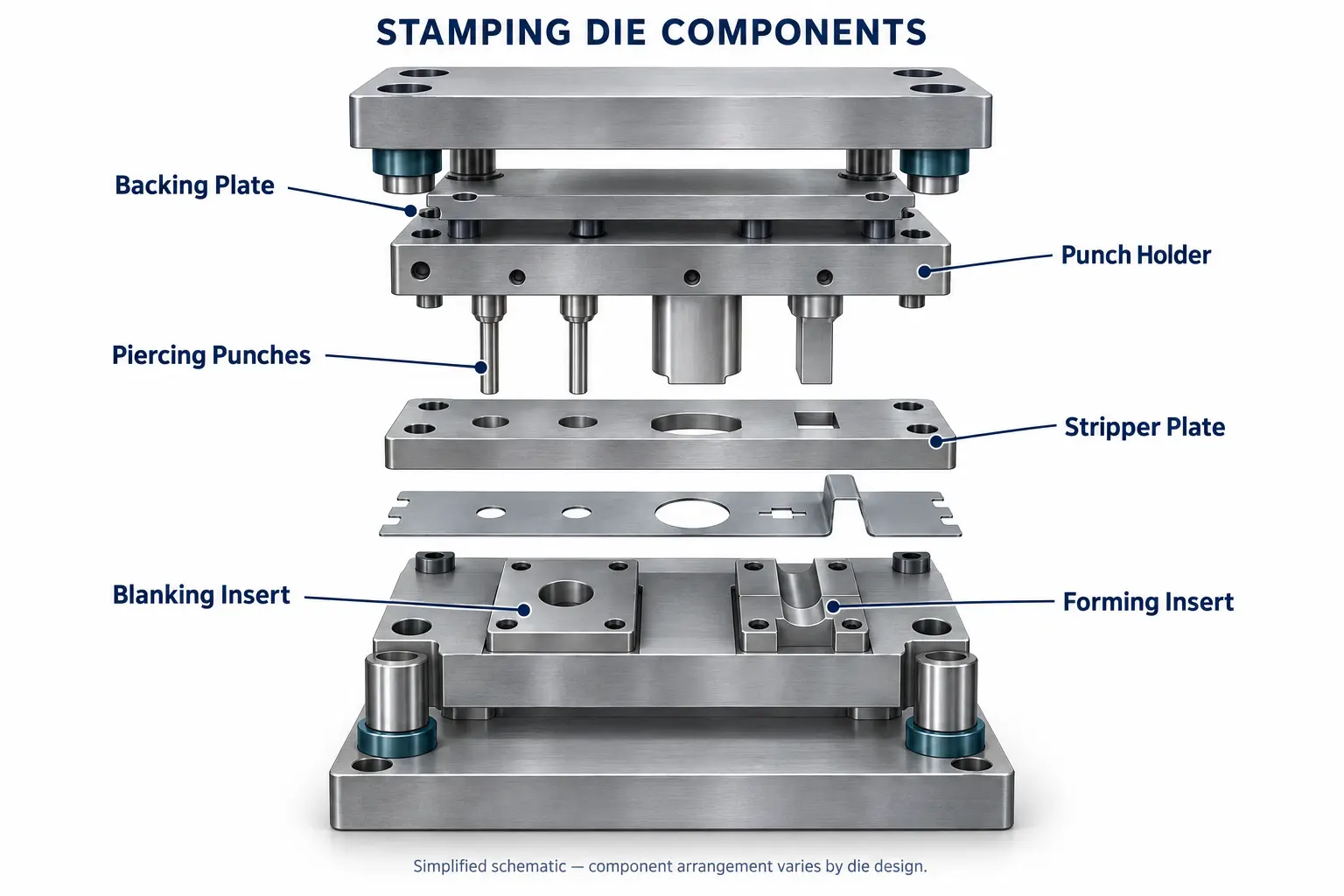
Tool Steel Selection Chart
The grades below are candidates for technical review, not automatic substitutions for a material specified on a drawing.
| Die Component | Main Demands | Grades to Consider | Key Selection Question |
|---|---|---|---|
| Piercing punches | Compressive strength, edge retention, resistance to chipping | A2, D2, M2; S7 where impact resistance is a priority | Is the punch wearing, deforming, chipping, or breaking? |
| Blanking dies and cutting inserts | Abrasive wear resistance, cutting-edge stability | D2, A2; O1 for suitable less-demanding applications | Does gradual wear or premature edge damage limit life? |
| Forming and bending inserts | Resistance to galling, wear, cracking, and deformation | A2, D2, or a tougher cold-work grade, depending on the duty | Is material pickup or mechanical damage the main problem? |
| Stripper plates and wear inserts | Local wear resistance, support, dimensional stability | O1, A2, D2 for selected hardened wear areas | Does the whole plate need wear resistance, or only specific contact areas? |
| Backing plates and punch holders | Resistance to indentation, adequate toughness and support | O1, A2, S7 where the design calls for hardened tool steel | What support load and hardness does the drawing require? |
A tool steel’s suitability depends on the stamped material, its thickness and strength, component geometry, production volume, and the failure mechanism that limits tool life. These factors should be reviewed before selecting a grade from the table.
Purchasing note: Keep the customer’s specified grade unless an alternative has been approved. If the inquiry gives only a component name, gather the operating details before treating any candidate as a confirmed recommendation.
Recommended Tool Steel by Die Component
1. Tool Steel for Piercing Punches
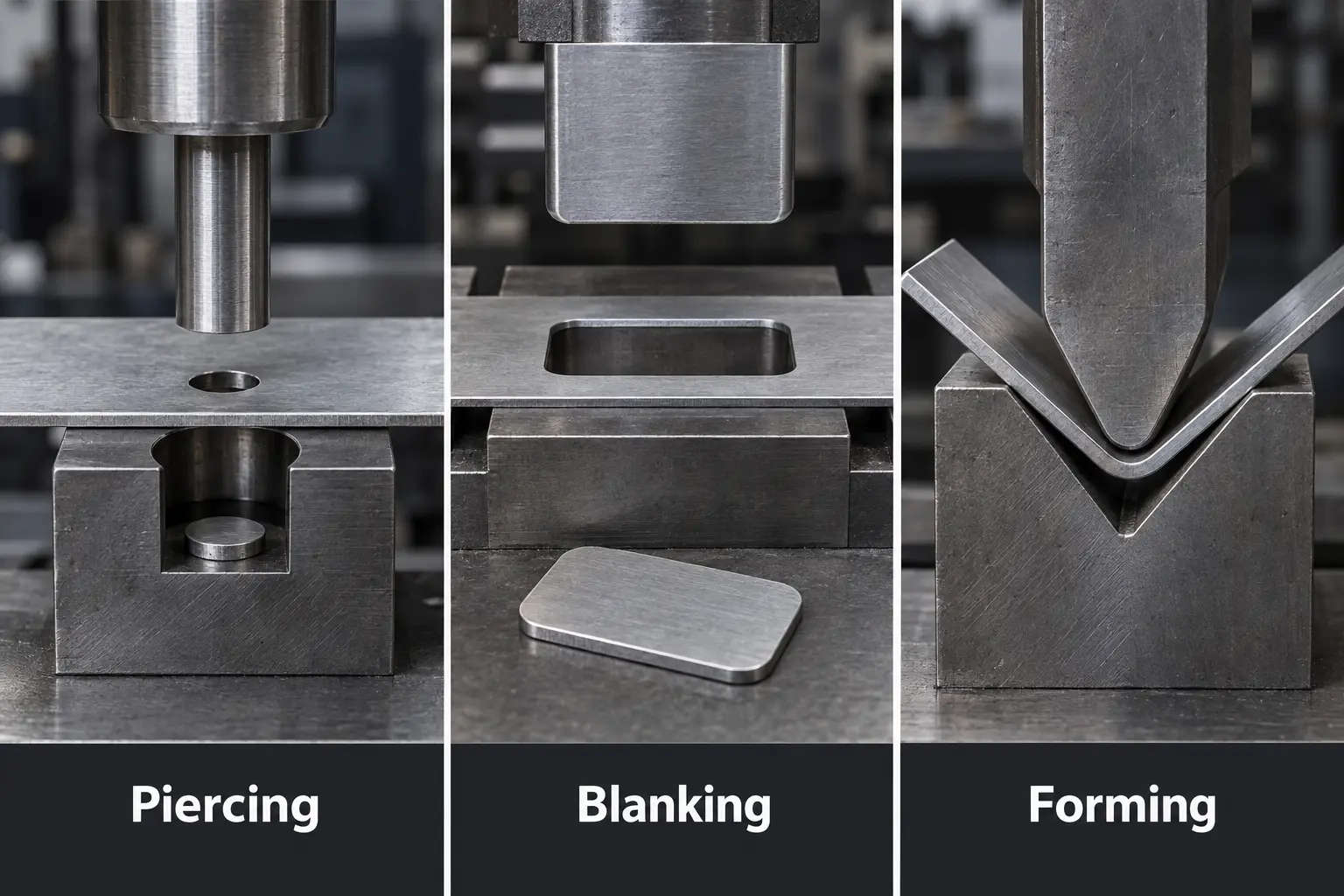
Piercing punches cut holes in sheet metal. Their working ends carry concentrated loads, so the steel needs sufficient compressive strength to resist deformation, wear resistance to maintain the cutting edge, and toughness to limit chipping or breakage.
Common options include:
- A2 tool steel: Offers a balance of wear resistance and toughness for a range of punching applications.
- D2 tool steel: Provides strong abrasive wear resistance, making it an option where edge wear is the main concern. It generally offers less toughness than A2 tool steel.
- M2 tool steel: Combines high attainable hardness with wear resistance and compressive strength. It is used for demanding punches, although its toughness must also suit the punch geometry and loading.
- S7 tool steel: Emphasizes toughness and shock resistance. It can suit applications where breakage is a greater concern than abrasive wear, but it does not offer the same wear resistance as D2 or M2 tool steel.
The choice depends on the sheet material, thickness, punch geometry, and production requirements. The hardest grade is not automatically the most suitable.
2. Steel for Blanking Dies & Inserts
Blanking dies and cutting inserts help produce the outside profile of a stamped part. Their cutting edges must resist wear while remaining stable under repeated loads.
D2 tool steel is a common option where abrasive wear resistance is important. A2 tool steel offers a different balance when greater toughness is needed. O1 tool steel can be suitable for less demanding or shorter-run tooling where its performance meets the production requirement.
Selection depends on more than the number of parts to be made. The strength and thickness of the sheet, the shape of the cutting edge, and the required tool life also matter. A wear-resistant grade provides little benefit if the edge chips before normal wear becomes significant.
3. Grades for Forming & Bending Inserts
Forming and bending inserts shape the sheet rather than cut it. Their steel needs to resist wear and deformation while remaining tough enough to withstand the forming load.
A2 tool steel is an option where toughness and wear resistance both matter. D2 tool steel may be suitable when abrasive wear is the main concern and the insert has adequate support. Neither grade is the best choice for every forming operation; the sheet material and the severity of the forming work also influence selection.
4. Steel for Stripper & Backing Plates
These components perform different supporting functions. Stripper plates help release the sheet from the punches, backing plates distribute pressure behind them, and punch holders keep the punches in position.
Their material requirements therefore differ from those of cutting edges. Wear resistance matters at contact areas, while strength and toughness matter in supporting sections. O1, A2, and S7 tool steel are possible choices where hardened tool steel is required, but some designs use carbon or alloy steel instead.
Using the same high-wear-resistance grade throughout a die is not always necessary. Each component should have the properties its function requires.
Solving Raw Material Pain Points
Specifying the right grade on a drawing is only half the battle. For stamping die manufacturers and the distributors who support them, sourcing the actual tool steel comes with its own set of challenges. Toolroom managers and procurement teams often face the same recurring headaches: inconsistent material performance, excessive machining waste, and missing documentation.
The success of a stamping die heavily relies on the quality of the steel block it starts from.
- Batch-to-Batch Consistency: High-volume stampers cannot afford unpredictable tool life. The raw material must deliver uniform microstructure and reliable hardness across every single batch to prevent premature die failure.
- Better Machining Yields: A cheaper block of steel isn’t a bargain if your CNC operators spend hours roughing off excess material. Working with mills that supply dimensions closer to your finished component sizes saves both time and tooling costs.
- Flawless Traceability: If a punch or insert cracks on the press line, engineering needs answers fast. Clear heat number tracking and reliable material certificates are non-negotiable for root-cause analysis.
Your Reliable Tool Steel Supplier
Whether you manufacture stamping dies or distribute tool steel, solving raw material headaches requires a supplier who delivers hard facts, not just promises. At FCS tool steel mill, we’ve spent 19 years manufacturing tool steel. We actually understand what it takes to prevent premature edge wear and cracking on the press line.
We know that waiting for raw material delays your entire tooling project. That’s why we maintain a stable, ready-to-ship inventory of over 5,000 tons. When you need specific grades or custom-milled dimensions for a critical die component, the material is already here.
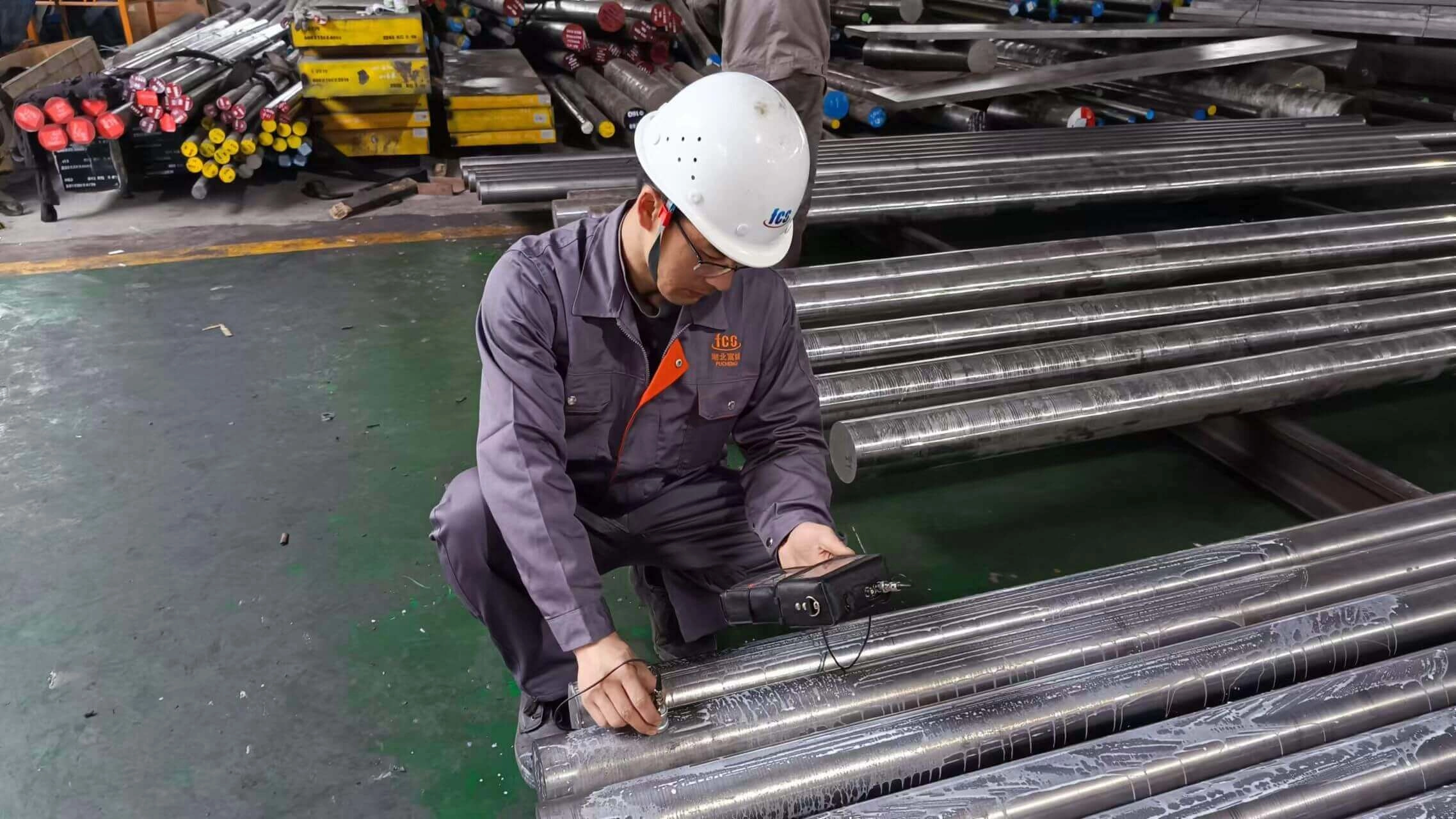
More importantly, we eliminate the guesswork. Every shipment arrives with comprehensive documentation—including Ultrasonic Testing (UT) and detailed metallurgical reports. You get the exact heat number traceability and batch-to-batch consistency your engineers demand.
Stop risking your die life on unpredictable steel. Send us your required grades and sizes today, and let’s secure your next project.