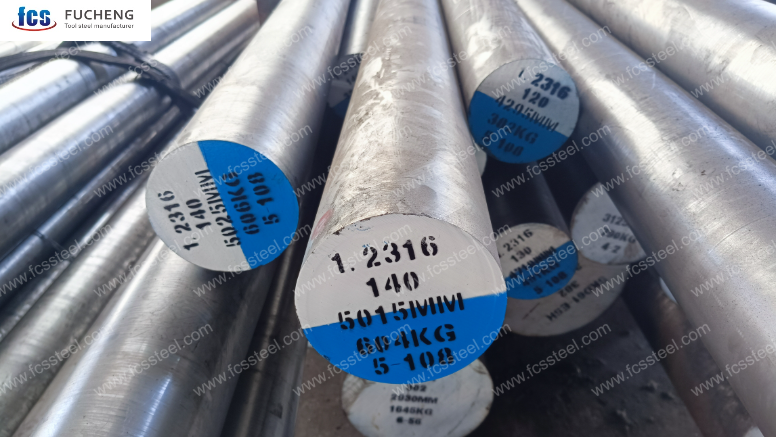
When it comes to manufacturing high-performance plastic injection molds, particularly those exposed to corrosive environments like PVC processing or high-gloss medical components, the material choice is the foundation of success. Among the specialized tool steels available, DIN 1.2316 (X38CrMo16) steel remains the global benchmark for its unique combination of high chromium content, exceptional corrosion resistance, and superior polishability.
As we move through 2026, South Korea has solidified its position as a primary hub for specialty steels. Korean manufacturers have mastered the delicate balance between European metallurgical precision and Asian industrial efficiency. For global procurement managers, understanding the distinct strengths of the top Korean players is essential to minimizing production risks and optimizing mold longevity.
In this guide, we analyze the top 6 manufacturers and their strategic partners, focusing on the technical capabilities and “factory-floor” realities that matter most to professional mold makers.
SeAH CSS (Changwon): The Master of Purity and ESR Technology
Founded in 1966 and based in the industrial heartland of Changwon, SeAH CSS (Special Steel) has evolved from a domestic supplier into a global leader in high-end specialty alloys. For the 1.2316 market, SeAH is widely considered the “Specialized Champion.”
When a procurement officer asks, “Can this steel handle a mirror polish without pitting?” the answer at SeAH lies in their ESR (Electroslag Refining) technology. Unlike standard melt processes, SeAH’s 1.2316 (marketed under the SMAT 316 series) undergoes a secondary remelting process that strips away non-metallic inclusions.
Why They Lead
Ultra-High Purity: Their internal standards for inclusion content are often stricter than international DIN standards. This makes their steel ideal for optical-grade lenses and transparent medical parts where even a micron-sized defect is a failure.
Vertical Integration: From the electric arc furnace to the finishing mill, SeAH controls every step, ensuring that the material’s DNA remains consistent.
Strategic Advantage: If your project involves a high-gloss finish that requires an Ra value below 0.05 µm, SeAH CSS is the technical frontrunner.
POSCO Special Steel (Pohang): Consistency at Global Scale
POSCO needs no introduction in the world of metallurgy. Established in 1968 and headquartered in Pohang, their special steel division leverages the massive R&D resources of the POSCO Group to provide 1.2316 with unmatched industrial consistency.
The primary concern for a buyer managing 50 different mold sets is, “Will block #1 behave exactly like block #50?” POSCO answers this through AI-monitored smelting. Every batch is tracked by sensors that adjust chemical inputs in real-time, ensuring that the Chromium 16.0% -17.5% and Molybdenum 0.80% -1.30% levels are perfectly balanced every time.
Why They Lead
ESG Compliance: “Green Steel” is no longer optional. POSCO provides documented carbon footprint data, which is essential for Tier-1 automotive and electronics manufacturers under strict environmental mandates.
Predictable Machining: Because the chemistry is so uniform, CNC programmers can set their feeds and speeds with confidence, knowing the tool wear will be consistent across all plates.
Strategic Advantage: For large-scale industrial projects and global supply chains requiring “Brand Name” trust and ESG documentation, POSCO is the definitive choice.
Hyundai Steel (Dangjin): The Automotive Workhorse
As the primary steel supplier for the Hyundai Motor Group, this manufacturer (founded in 1953) understands the automotive grind better than anyone. Their specialty steel complex in Dangjin is a testament to high-volume precision.
Automotive molders often deal with massive blocks for dashboards or bumpers. The nightmare scenario is “center softness”—where the surface of a 500mm block is hard, but the core is spongy. Hyundai Steel addresses this with Ultra-Deep Forging.
Why They Lead
Through-Hardness Stability: Their multi-directional forging kneads the steel from the center outward, ensuring a uniform hardness gradient.
Thermal Fatigue Resistance: Their 1.2316 is optimized for long-run automotive cycles, resisting the micro-cracking that can occur over hundreds of thousands of shots.
Strategic Advantage: If you are building large-scale automotive molds where core integrity and deep-cavity stability are paramount, Hyundai Steel is the specialist to call.
Doosan Enerbility (Changwon): Heavy-Duty Structural Integrity
Formerly known as Doosan Heavy Industries, this Changwon-based giant is the “big hitter” of the list. They don’t just roll steel; they forge it using a 17,000-ton hydraulic press, one of the most powerful in the world.
A procurement manager buying for high-pressure extrusion needs to know, “Is there internal porosity that will fail under pressure?” Doosan’s forging ratio is significantly higher than that of standard plate mills. This immense pressure crushes any dendritic structures in the ingot, resulting in a dense, flawless internal structure.
Why They Lead
UT Reliability: Doosan’s 1.2316 routinely passes SEP 1921 Class E/e ultrasonic testing, the highest standard for internal soundness.
Heavy Module Expertise: They are the go-to for massive forged blocks that weigh over 20 tons, where smaller mills simply lack the pressing force to guarantee core density.
Strategic Advantage: For extra-large mold cavities and high-pressure corrosive plastic extrusion, Doosan’s forged blocks provide the ultimate insurance against internal failure.
Dongkuk Steel (Busan): The Machinability Innovator
Founded in 1954, Dongkuk Steel has built a reputation for agility and technical pragmatism. In the 1.2316 market, they have focused on solving the material’s biggest drawback: its notoriously difficult machinability.
Tooling engineers often complain that 1.2316 is “gummy” and kills carbide inserts. Dongkuk has invested heavily in their Quenching & Tempering (QT) cycles. By precisely controlling the size and distribution of carbides, they have created a 1.2316 variant that is significantly easier to cut.
Why They Lead
Extended Tool Life: CNC shops reporting on Dongkuk material often see a 10-15% reduction in tooling costs.
Rapid Response: Their Busan facility is optimized for “just-in-time” deliveries of medium-sized plates, making them a favorite for fast-paced consumer electronics projects.
Strategic Advantage: When the project timeline is tight and you need to maximize CNC throughput without burning through expensive cutters, Dongkuk is the efficient choice.
SM Steel (Gunsan): The New Standard in Flatness
A relatively new but aggressive player, SM Steel opened its flagship Gunsan factory in 2020. They have rapidly ascended the ranks by focusing on the “Super Plate”—a product line that prioritizes geometric precision.
The frustration of “potato-chipping” (warping) after skinning a plate is a major time-sink. SM Steel uses 4th-generation levelers and advanced tension-free cooling zones to ensure their 1.2316 arrives with zero residual internal stress.
Why They Lead
Precision Flatness: Their plates arrive so level that “pre-squaring” time is virtually eliminated.
AI Surface Quality: Every centimeter of the “Super Plate” is inspected by high-resolution cameras that catch surface micro-cracks invisible to the human eye.
Strategic Advantage: For multi-cavity precision inserts where alignment and flatness are critical, SM Steel’s stress-free plates offer the best starting point.
The Vital Supply Partner: FCS Tool Steel
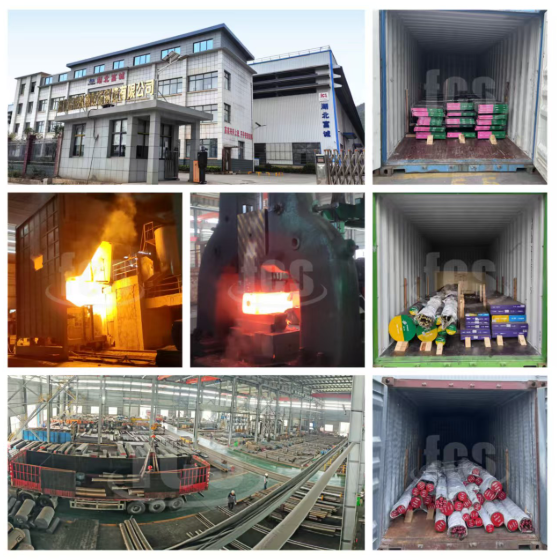
While the “Big 6” handle the massive smelting and forging, FCS Tool Steel has become the strategic bridge for international buyers in 2026. Established in 2007, FCS has filled a crucial gap in the market: the need for Customization and Speed.
Why Smart Procurement Uses FCS
The giant mills often have 3-month lead times and massive minimum order quantities. FCS maintains a rolling stock of over 2,000 tons of Korean-origin 1.2316, providing an “Agile Inventory” model.
Tailored Heat Treatment: FCS takes mill-run material and performs secondary vacuum heat treatment. If you need a specific hardness of 34 HRC instead of the standard 30 HRC, they can deliver it in a fraction of the time.
Ready-to-Use Blocks: FCS provides six-side milling, grinding, and precision cutting. Buying from FCS means your 1.2316 arrives at your shop ready to be put onto the machine table, eliminating the dirty and time-consuming “roughing” stage.
Logistics Expertise: For companies in Southeast Asia, Europe, or the Middle East, FCS acts as a quality filter, performing independent UT testing and chemical verification before the material ever leaves the floor.
Strategic Advantage: When your project demands high-quality Korean 1.2316 with precise dimensions and customized hardness, FCS is your most trusted partner. By maintaining a rigorous 4-week production and calibration cycle, they ensure every mold base meets the highest industry standards.
Comparison of Technical Business Metrics
| Manufacturer | Core Technology | Primary Strength | Ideal Industry |
|---|---|---|---|
| SeAH CSS | ESR Smelting | Mirror Finish (No pitting) | Medical & Optics |
| POSCO | AI Smelting | Global Consistency / ESG | Large Industrial |
| Hyundai Steel | Deep Forging | Through-thickness Hardness | Automotive |
| Doosan | 17k Ton Press | Structural Density | Heavy Extrusion |
| Dongkuk Steel | Advanced QT | High Machinability | General Tooling |
| SM Steel | 4th-Gen Leveling | Stress-Free Flatness | Precision Inserts |
| FCS Tool Steel | Custom Finishing | Rapid Logistics / Precision | Boutique & Export |
Practical Sourcing Advice: How to Buy 1.2316 Like a Pro
As a veteran of the tool steel world, I’ve seen many buyers get fooled by a low price tag only to pay for it later in failed molds. When sourcing from Korea, keep these rules in mind:
1. Verify the Chromium Content
1.2316 must have at least 16.0% Chromium to handle the hydrochloric acid released during PVC processing. If the Material Test Certificate (MTC) shows 13% or 14%, they are selling you a cheaper 1.2083 steel grade. Always demand a full chemical assay.
2. Match the Grade to the Polish
If your mold is for a hidden industrial part, standard rolled plate is fine. But if it’s for a transparent lens or a high-gloss consumer electronics case, you must specify ESR (Electroslag Refined). The small premium you pay upfront for SeAH or POSCO’s ESR grade will save you thousands in polishing labor.
3. Check for Stress Relieving
high-speed machining and complex wire-cut EDM (Electrical Discharge Machining) are standard. If the steel has internal stress, it will move or crack during EDM. Ask your supplier (like FCS) if the blocks have been stress-relieved after roughing.
Conclusion:
The South Korean steel landscape represents the pinnacle of “Value Metallurgy.” By choosing between the extreme purity of SeAH, the consistency of POSCO, the structural strength of Doosan, or the customized service of FCS, mold makers can secure a supply chain that is both technically superior and economically viable.
South Korean 1.2316 isn’t just a material; it’s a commitment to mold longevity. When you select one of these top 6 manufacturers, you are investing in a steel that will withstand the corrosive test of time and the high-gloss demands of the future.